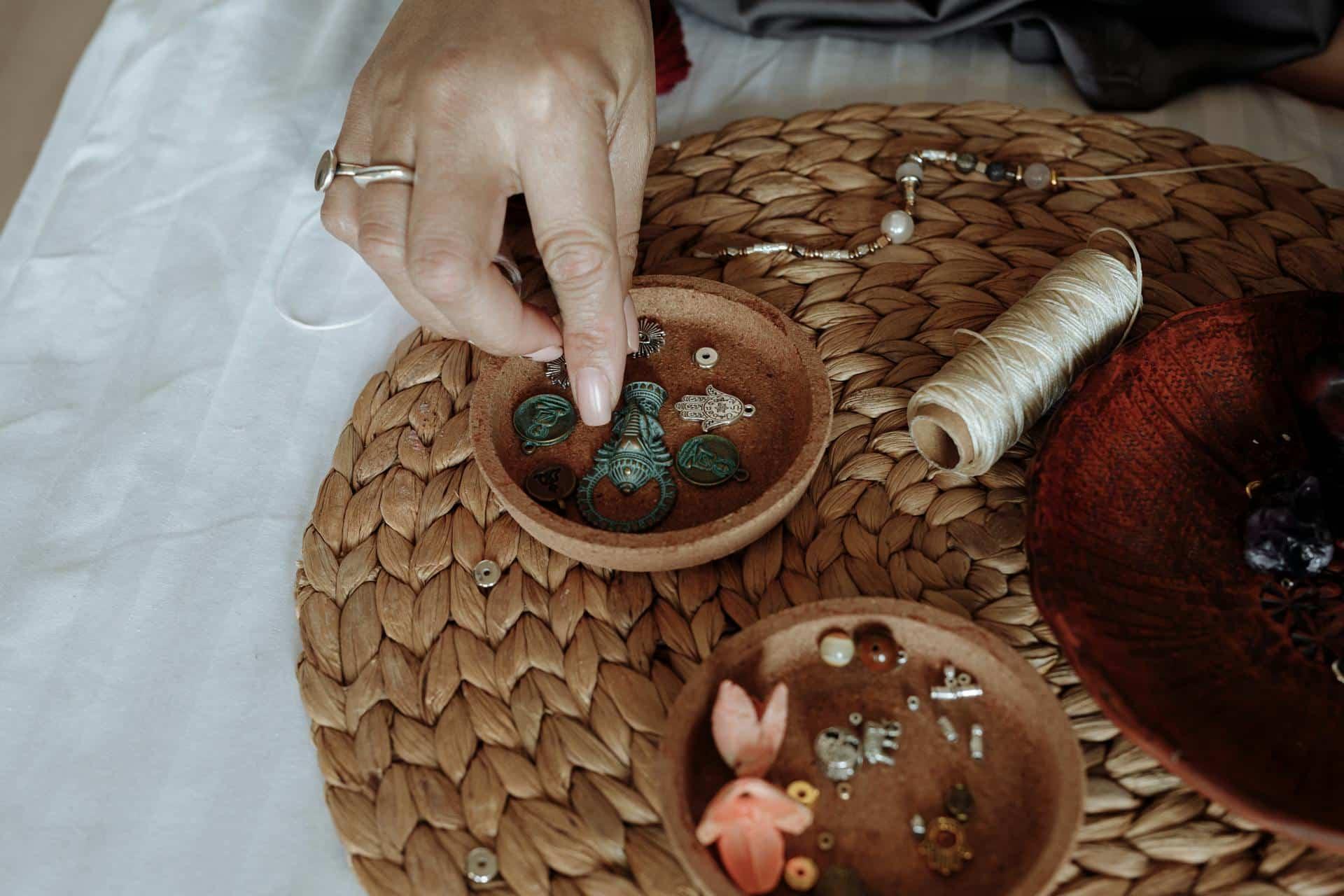
Every ancient religion, culture, and community had its own symbols, many of which are universal and still deeply influence our society today. The shape, placement, and even the color of these symbols carry powerful meanings. When they appear in our homes, they can influence the energy around us, radiating positive vibrations that can uplift our everyday experience.
These signs aren’t just decorative; they often play a role in meditation and spiritual practices, supporting emotional and physical healing. Many people wear them as jewelry or tattoos, not just as art, but to boost positive energy in their lives.
Circle
In many cultures, the circle represents the whole world. With no beginning or end, the circle symbolizes eternity, completeness, and unity. It reflects the endless cycle of life and renewal, often seen as a protective shield that guards against negative energy.
Hamsa
The protective hand-shaped Hamsa comes from the Middle East. Both Arabs and Hebrews regard it as the hand of God, believed to ward off negative energy and evil spirits—bringing protection and healing into daily life.
Yin-Yang
This classic Chinese symbol represents opposing forces that drive the world. It helps us find harmony amid contrasts, supporting physical and mental well-being by creating balance between extremes.
Ankh
The cross with a loop at the top symbolizes life, immortality, and the universe. Originating from ancient Egypt, the Ankh remains a powerful symbol of eternal life and healing, inspiring health and vitality today.
Spiral
The spiral represents continuous motion and rebirth, supporting the soul’s growth. It encourages energy flow, lifelong learning, and spiritual progress.
Lotus Flower
As a symbol of purity and spiritual protection, the lotus flower stands for beauty, happiness, loyalty, and spiritual awakening. Think of it as a shield against draining energies, helping you stay open-hearted and avoid getting stuck in negative vibes.
Mandala
More than just a popular coloring pattern that eases stress and sparks creativity, the mandala rooted in Indian and Tibetan traditions balances inner and outer chaos. It shields your mind from uncertainty, helps you connect with yourself, and gently eases anxiety and stress.
Nazar
The eye amulet is a key symbol in Mediterranean and Turkish cultures. Traditionally, it protects against the “evil eye” and negative energies, including curses. Many believe that harmful gazes carry negative energy, and the Nazar eye blocks, absorbs, and reflects this negativity back to its source.
Pentagram
The meaning of the pentagram varies by culture. In ancient Babylon, it marked directions; in the Middle Ages, it symbolized the classical elements; and in Christian symbolism, it represents the five senses and Christ’s five wounds. The pentagram can serve as a protective tool against negative forces, maintaining cosmic balance. Remember, only the upward-pointing pentagram radiates positive energy, while the downward-pointing version is traditionally linked to negative influences.
Infinity Symbol
The infinity or horizontal figure-eight symbol represents endless space and time, boundless love and connection, and the eternal cycle. Wearing it as a tattoo or jewelry can offer spiritual strength in commitment, perseverance, cycles, and timeless unity.