Something always feels missing from adult life. You've probably felt it more times than you can count — not quite able to name it, not sure what you're actually craving. It wasn't the plans that were wrong, or the company, or the destination. It was that feeling of summer simply being there — full, weightless, and completely worry-free. Here's how to find a little of that again.
Do something completely pointless
As kids, nobody ever asked "But what's the point of this?" We spent hours blowing bubbles, collecting pebbles, or searching for shapes in the clouds — no goal, no outcome, no metric for success. This summer, try doing something with zero practical value. Paint a picture you'll never show anyone. Build a sandcastle at the beach. Go to a playground and sit on the swings.
Genuine, result-free play is one of the most powerful ways to give an anxious mind some real rest. It sounds too simple to work — which is exactly why most of us never try it.
Plan a day with no plans
One of the greatest gifts of childhood was that the day shaped itself as it went. There was no agenda, no optimized itinerary — just whatever happened next. Try spending a single day where nothing is obligatory. If you head out for a morning walk and suddenly remember how much you used to love ice cream, let your feet take you there.
Notice how much lighter you feel by evening. You might be surprised to realize how much energy the constant planning and scheduling has been quietly draining from you.
Get outside — without a fitness goal
You can walk into a forest without logging a single mile. As a child, you were there for the snail crossing the path, the tree that looked like a face, the strange little world hiding under a rock. Pick a familiar route, leave the smartwatch at home, and if something catches your eye, stop and look at it properly.
There are so many small things you've never noticed — and some of them won't be there forever. Give yourself permission to slow down. Nature doesn't reward efficiency; it rewards attention.
Find someone to play with
As kids, we were almost never alone — there was always a sibling, a neighbor, or someone from down the street who had time. The real magic wasn't the activity; it was the connection. Invite someone over for a lazy afternoon — a backyard hangout, a local fair, a walk with nowhere to be. No special occasion needed. Sometimes just being together is enough.
If you're looking for more ways to reconnect and slow down, a great series binge with a friend counts too — no guilt required.
Allow yourself one truly guilt-free pleasure
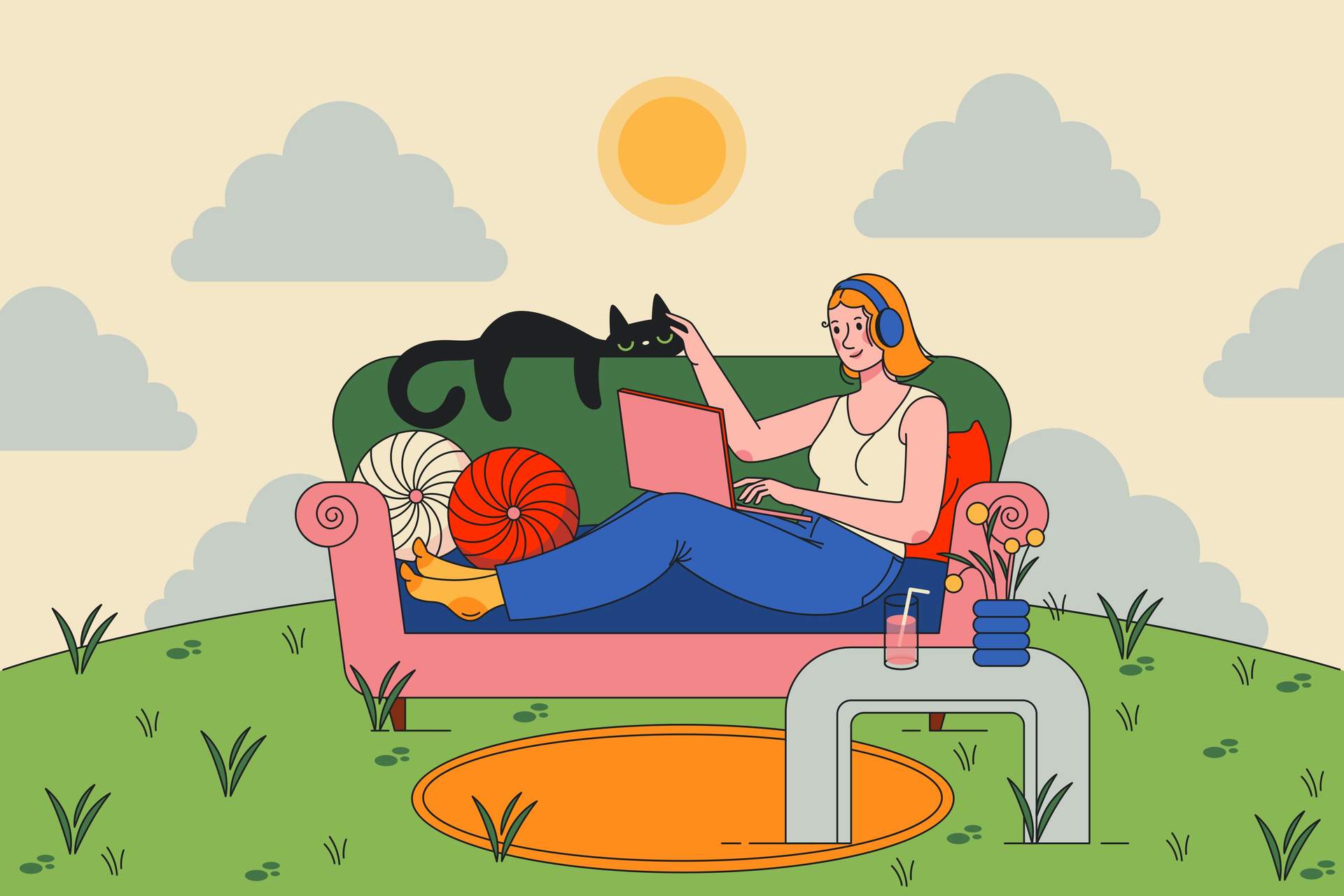
This is the hardest one. Lie down and stare at the ceiling. Watch an entire series in one sitting. Eat ice cream for lunch. Sounds forbidden? Good — let it be. The guilt and the endless to-do list are the only things actually standing in your way.
Sit on the balcony, do nothing, and notice how much more easily the evening lets you go. We rarely give ourselves permission to do this as often as we actually need it — the art of doing nothing, of letting go, of genuinely switching off. That's not laziness. That's something childhood understood instinctively, and that most of us have quietly forgotten.
Why do childhood summers feel so different from adult ones?
As children, summers had no agenda — days unfolded freely, without obligation or pressure. As adults, even leisure time tends to be scheduled and optimized, which strips away the effortless, present-moment quality that made childhood summers feel so magical.
Do I need a lot of free time to try these ideas?
Not at all. Most of these suggestions require just a few hours — or even a single afternoon. The key isn't the amount of time, but the willingness to spend it without a goal or outcome in mind.
Is doing nothing really good for mental well-being?
According to the article, genuine result-free play and deliberate idleness are among the most effective ways to rest an anxious mind. The constant pressure to be productive is what makes unstructured time feel so restorative when we finally allow it.
What if I feel guilty enjoying myself without being productive?
The article suggests that guilt and the endless to-do list are the main obstacles standing between you and real rest. Recognizing that guilt is the barrier — not the activity itself — is the first step to letting go of it.