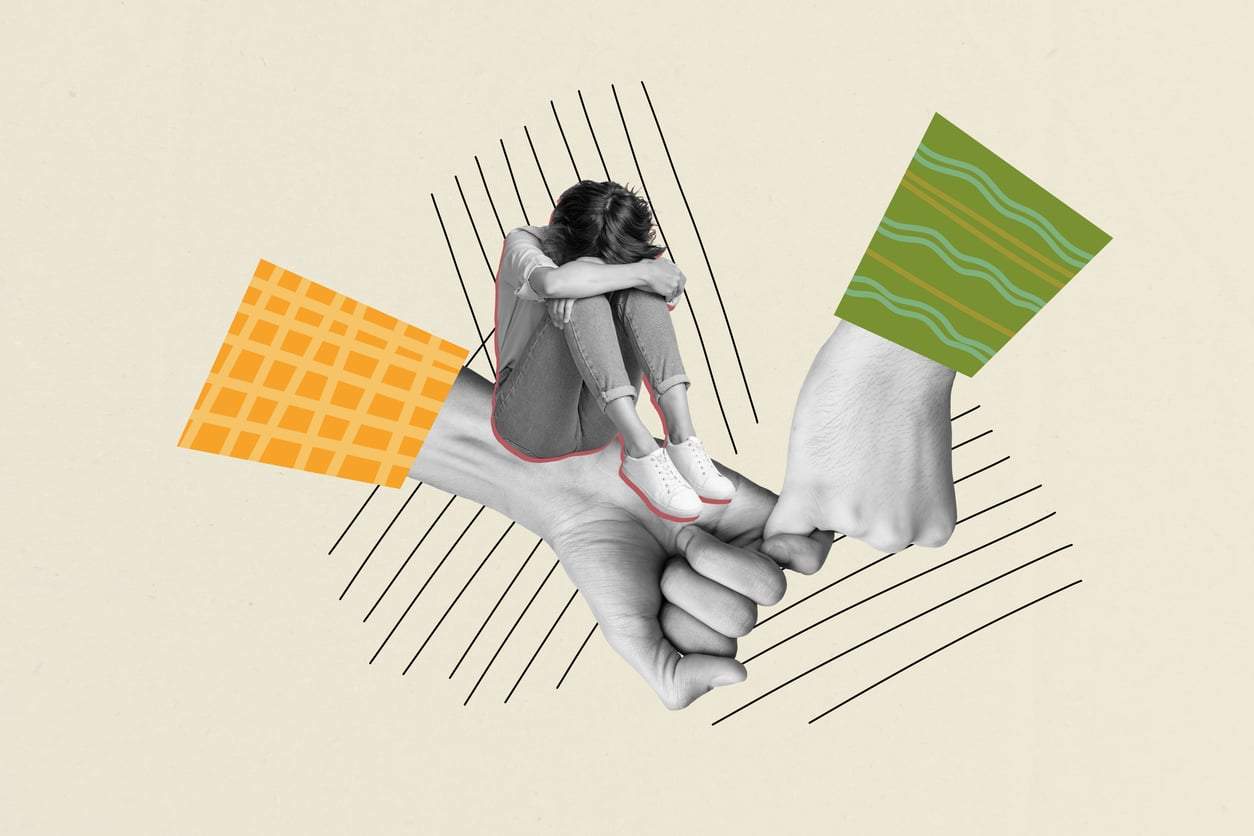
Almost nobody loses a close friend to a dramatic falling-out. What actually happens is far duller: two people who genuinely love each other keep meaning to sort out a date, the messages get shorter, someone moves house, a baby arrives or a parent gets ill, and eighteen months pass in what feels like a fortnight. Then you see her name on your phone and feel a small stab of shame, which makes you put off replying, which makes the gap wider. Neglect compounds quietly. That is the whole mechanism.
The mistake underneath it is treating friendship as a feeling. We assume that because the affection is intact, the friendship must be too. But affection is the raw material; the friendship itself is made of contact. And contact, in a busy adult life, does not happen spontaneously. It has to be practised, in the unromantic sense that a language or a running habit is practised.
Stop waiting to have time
The sentence that kills more friendships than any argument is "when things calm down." Things do not calm down. Life is a series of overlapping busy periods with brief interludes of exhaustion, and if your standard for seeing a friend is a free Saturday, a tidy house and the emotional energy for a three-hour heart-to-heart, you will see her twice a year.
Lower the bar until it is almost embarrassing. A ten-minute phone call while you walk to the shop counts. A voice note recorded in the car counts. A photograph of something she would find funny, with no caption, counts. These are not lesser substitutes for real friendship; they are the connective tissue that makes the occasional long dinner possible. Closeness is maintained by frequency far more than by duration.
Build a rhythm instead of relying on inspiration
The friends I have kept longest are the ones with a rhythm attached. One I walk with on the first Sunday of the month, weather irrelevant. One I ring every time I drive a particular stretch of motorway. Two of us have a standing video call that neither of us prepares for and which sometimes consists of us both doing our washing up in companionable half-attention.
Rhythms work because they remove the negotiation. Nobody has to be the one who always suggests things, which is the invisible labour that quietly exhausts one half of many friendships. If you have been the perpetual organiser and it has started to feel like proof that she cares less, consider that she may simply be less confident about intruding on your time. Ask directly for a fixed slot instead of waiting to be chosen.
It also helps to sort your people honestly into circles: the two or three you tell everything to, the eight or ten you like enormously and see occasionally, and the wider ring of warm acquaintances. Trouble starts when we expect inner-circle intimacy from an outer-circle friendship, or when we let an inner-circle friend drift on outer-circle contact. Match the effort to the tier and much of the guilt evaporates.
What the practice actually does for you
You will notice the effect on your mood before you notice anything else. Regular, low-stakes contact with people who knew you before your current job, your current relationship or your current version of yourself provides a kind of ballast that no amount of solo self-care replicates. Friends hold your continuity. They remember what you were like at twenty-four and can tell you, credibly, that you have not in fact become a completely different person.
There is also a practical dividend. People who are in regular touch ask for help sooner and more easily, because they have not had to open with an apology for the silence. In the years when something hard finally happens — and it does, to all of us — the network you can lean on is the one you have been touching lightly all along.
How often should I contact a friend to stay properly close?
There is no correct number, but something small every week or two keeps a close friendship warm, while a few times a year keeps a fond one alive without pretence. What matters more than frequency is predictability: a friend who hears from you regularly in tiny doses feels held, while one who receives an enormous catch-up every eight months feels like a project. Set the pace you can sustain in a bad month, not a good one.
What do I say to a friend I've accidentally ignored for a year?
Say the true, short version and skip the elaborate apology, because long apologies put the other person in the position of having to reassure you. Something like "I've been rubbish at staying in touch and I've missed you — are you free for a call this week?" does the job. Almost always the other person is relieved rather than annoyed; she has been carrying the same guilt in the opposite direction.