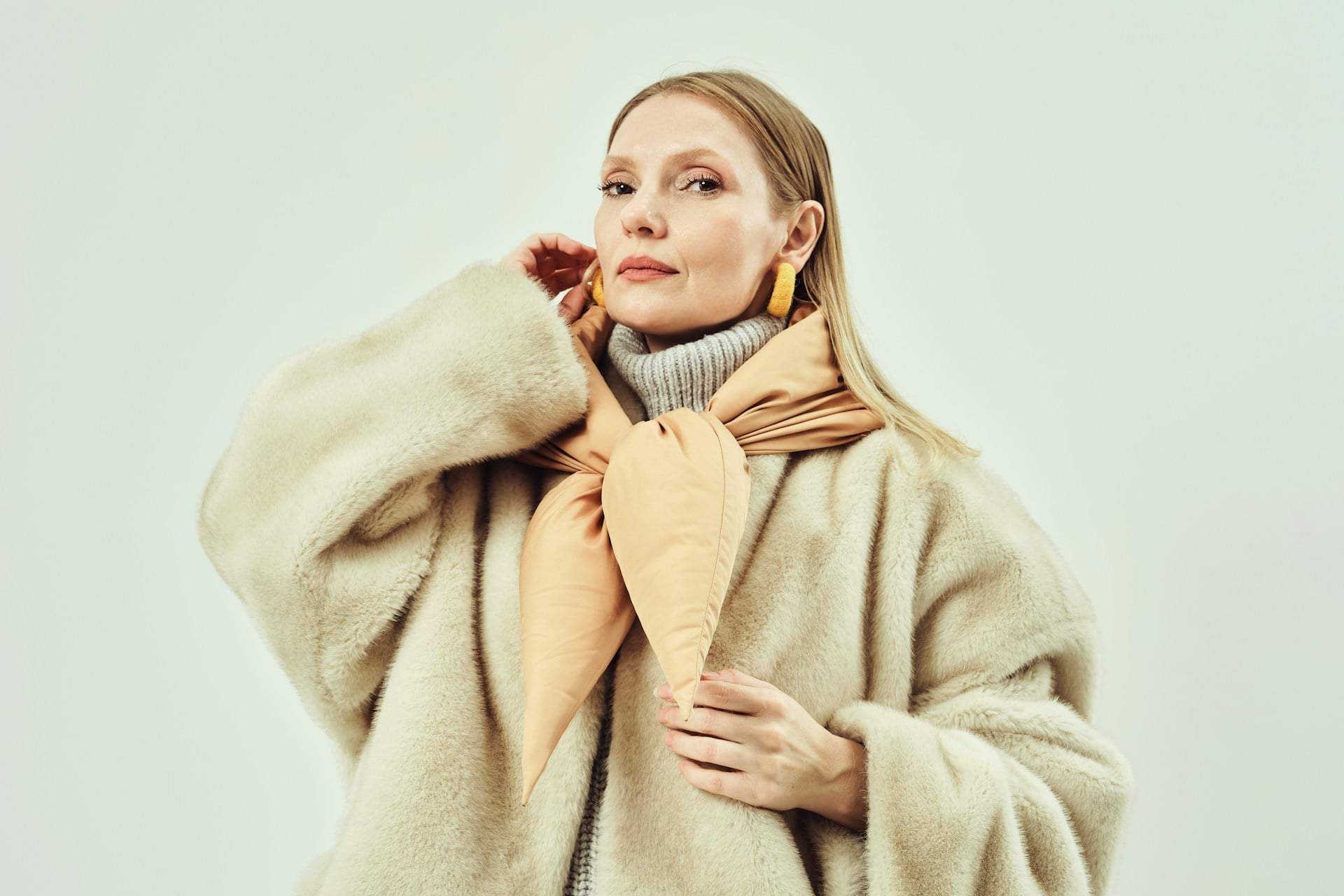
A coat is the only garment most people see you in. You can be wearing an exquisite outfit underneath and it is irrelevant from October to March — the coat does the talking at the school gate, on the platform, in the queue outside the restaurant. Which is why it is worth more thought than almost anything else you will buy this season, and why the current rush of soft teddy shapes and vintage-feeling tailoring deserves a slightly cooler eye than the shop lighting encourages.
I am not anti-trend. I am pro-knowing which coat you are buying: the one that will quietly do ten years of service, or the one that is a mood you want to live in for a winter. Both are fine. Confusing them is what leaves you with four coats and nothing to wear.
Shapes that age well, and shapes that date fast
The coats that survive are the ones with a clear, simple line: a straight or very slightly tapered single-breasted wool coat, a well-cut double-breasted one, a proper trench, a car coat that stops at the hip. They work because the silhouette is defined by cut rather than by detail, and cut does not go out of fashion in the way that a specific collar or an exaggerated shoulder does.
What dates quickly is anything where the novelty is the whole point: a dramatically oversized shoulder, a very short cropped boxy shape, hardware that is clearly of a moment, an unusual colourblock. Again, not a reason to avoid them — just a reason to spend less, because you are buying a season, not a decade.
Teddy and faux shearling sits somewhere in between. The texture is genuinely useful: it is warm, forgiving, and it makes jeans and a jumper look deliberate. But the shorter and fluffier it is, the more it reads as a particular year. A longer, slimmer, more muted version in a sand or chocolate tone will carry on quietly for ages.
Check the fabric before you check the label
Turn the coat inside out at the shoulder and look at the composition. A high wool content will hold its shape and shed light rain; heavy polyester content tends to go flat and slightly shiny at the friction points — elbows, bag strap, seat — within a couple of winters. That doesn't mean synthetic coats are worthless, but a cheaper fabric should come at a cheaper price and lower expectations.
Then do the squash test: grab a handful of the fabric, hold for five seconds, release. If it springs back, it will survive being crushed into a car seat and a cloakroom. If the creases sit there, so will they, every day, on you.
Look at the lining too. A full lining makes a coat slide on over a jumper instead of dragging; a half-lined coat with a raw seam inside the sleeve will fight you every morning.
Fit it over what you actually wear
Try coats on over a jumper, not over a T-shirt in a warm shop. The three things to check: can you cross your arms in front of you without the back seam straining, do the shoulder seams sit roughly where your shoulders end, and does the sleeve reach the base of your thumb so your wrists aren't exposed on a cold platform.
Length is a proportion decision, not a rule. A coat that ends at the widest part of your calf will shorten most people; mid-thigh, just above the knee, or well below the calf tend to be easier. The quickest way to judge is to look in the mirror with the shoes you'll actually wear — flat boots change everything about where a hem lands.
Two small changes that transform a mid-price coat
Replace the buttons. It is the cheapest upgrade in fashion and it instantly removes the slightly plastic look that gives away a high-street coat. Horn, corozo or a good matte metal, sewn on properly with a shank so the coat still closes cleanly.
And get the sleeves shortened if they swallow your hands. Most people walk around in coats that are an inch too long in the arm because they assume it can't be altered. It usually can, and it is the difference between looking like you bought the coat and looking like the coat was made for you.
What coat length is most flattering?
The most reliable answer is: a length that ends at a narrow part of you rather than a wide one, which for most people means just above the knee or well past the calf. But flattery is only half of it — a coat you have to hold closed on a windy day, or that leaves your thighs freezing on the walk home, will stay on its hook no matter how good it looks in the mirror.
Is a teddy coat worth it if I only wear it for one winter?
If you buy it at a price that doesn't make you flinch, yes — comfort and warmth are not frivolous. To stretch its life, choose a calmer colour and a slightly longer cut, keep it away from rough bag straps that flatten the pile, and brush it gently with a soft clothes brush to lift the texture back up when it starts to look matted.