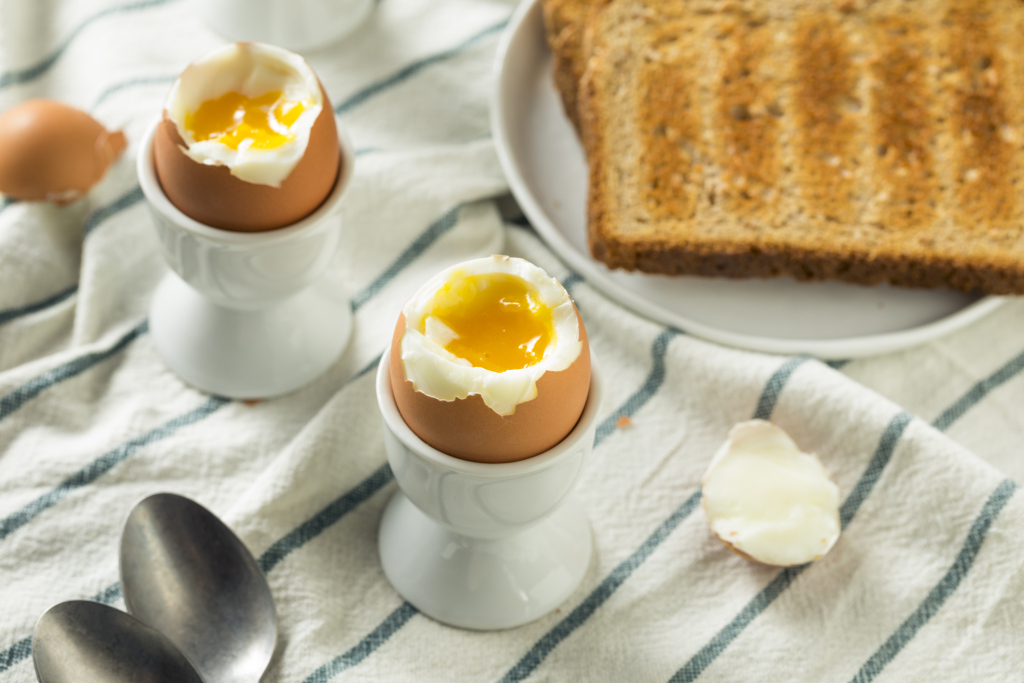
Boiled eggs benefit our health most when the white is firm, and the yolk is soft but not runny, slightly creamy. This perfect texture cooks in five minutes. Since the outside is fully cooked, there’s no need to worry about salmonella infection, while the soft yolk still holds valuable vitamins, minerals, and healthy fats. Smaller eggs need less than five minutes, larger ones a bit longer.
Three minutes makes a soft egg, six minutes a hard one, but these aren’t as beneficial as the five-minute boiled egg. Before cooking, rinse the egg under lukewarm running water to remove any dirt.
Check freshness by the expiration date on the carton or by placing the egg in a bowl of cold water: if it floats, it’s best not to eat it.
How to Prevent Eggs from Cracking in Hot Water?
1. Don’t drop eggs straight from the fridge into boiling water. Instead, gently place them into warming water and start timing the 5 minutes when the water is just simmering, not boiling vigorously. This means the egg stays in water for 8-9 minutes total. If you prefer to add eggs to boiling water, take them out of the fridge about 30 minutes earlier to warm up or rinse them in warm water first.
2. Make sure the water fully covers the eggs so they cook evenly.
3. Add salt to the water to reduce shell cracking and make peeling easier, as the shell pieces won’t stick to the white.
4. When cooking is done, transfer eggs to a bowl of cold water. This helps the shell peel off smoothly. If the peeled egg surface looks uneven, it means the egg is very fresh. Eggs 1-2 weeks old peel perfectly because carbon dioxide forms inside, creating bubbles under the shell that make peeling a breeze.
How to Store Eggs?
Keep eggs in their original carton in the fridge. Discard any eggs older than two weeks.