Puffer jackets have become a staple not just in the mountains but also in the city. For the 2025 season, practical technical outerwear meets sleek, feminine silhouettes: down and synthetic-filled jackets come in various lengths, soft pastels, and both shiny and matte finishes dominate the collections. With careful washing and drying, they really can look like new—but if handled incorrectly, they become flat, patchy, and clumpy pieces you won’t want to wear.
Many shy away from washing puffer jackets, but they can be safely cleaned at home if you tailor the process to the filling and outer fabric. The key is proper prep, a gentle cycle, targeted detergent, and patient, thorough drying. Here’s what to watch for so your jacket stays full, light, and neat.
Conscious garment care is also trendy now. A well-maintained puffer jacket can last for years, reducing the need for new purchases and shrinking your ecological footprint—perfectly aligned with building a smarter, more durable wardrobe.
What Makes Puffer Jackets Delicate?
The heart of a puffer jacket is its filling: natural down/feathers or synthetic fibers. Down is an exceptional insulator but sensitive to moisture and rough handling, easily clumping together. Synthetic filling is more flexible and retains warmth even when damp but can lose its puffiness at high temperatures.
The outer layer matters too. Many puffer jackets have a water-repellent (DWR) finish, sometimes with a membrane. Harsh detergents and fabric softeners can damage these, so gentle washing is essential.
The stitched chambers hold the filling in place—if washing bunches it up or fibers escape, the jacket loses its shape.
Always start by reading the care label. Manufacturers usually recommend a gentle 30 °C (86 °F) wash, with down detergents for natural fill and liquid detergents designed for technical fabrics for synthetics. Powder detergents tend to leave residues that reduce water repellency.
Preparation: Small Steps That Make a Big Difference
Proper prep determines how well the filling and outer fabric hold up. Don’t rush—these few minutes will save you a lot of hassle later.
- Check pockets, zip up zippers, and fasten snaps and Velcro to prevent snagging or fabric damage.
- Remove any detachable faux fur collars or hood trims—they may need special care.
- Fix small tears immediately with fabric repair patches to keep filling from escaping during washing.
- Pre-treat stains gently with mild stain remover and lukewarm water, avoiding chlorine and strong solvents.
- Use a large laundry bag or wash the jacket alone to give it room to move freely and avoid excessive wrinkling.
Wash with similar colors, though most puffers hold their dye well. Capacity matters too: a medium jacket fits comfortably in a 7–8 kg (15–18 lbs) drum; overcrowding blocks water and detergent from penetrating layers.
Machine or Hand Wash? How to Safely Clean Your Puffer Jackets
Hand washing is especially gentle for down, but modern machines’ gentle cycles are safe if settings match the jacket’s needs. The safest bet: gentle or hand wash cycle, 30 °C (86 °F), low spin speed.
Choose detergents made for down or technical fabrics. Skip fabric softeners as they compress the down and damage the DWR layer. Some natural soaps leave greasy residues, so use a small amount of well-dissolving, targeted detergent.
Add extra water if possible—an “extra rinse” helps flush residues from the filling layers. Low spin speeds (400–600 rpm) suffice for down; synthetics can handle up to 800 rpm but avoid higher to prevent flattening and stitching damage.
Top-loading machines with agitators can be tougher on fabrics; if you have one, use a large laundry bag and the gentlest cycle. Pre-soaking is rarely needed; if you do, 15–20 minutes in lukewarm water with detergent is enough. Don’t leave the jacket soaking for hours.
For hand washing, fill a tub or large basin with 30 °C (86 °F) water, dissolve detergent, gently press the jacket through the water, then rinse multiple times until water runs clear. Remove water by gentle pressing, not wringing, to protect the chambers.
Drying and Fluffing: The Key to Restoring Puffiness
Most puffers fail here: superficial drying causes clumping and musty odors. The good news? A few simple tricks will leave your jacket soft, neat, and looking fresh.
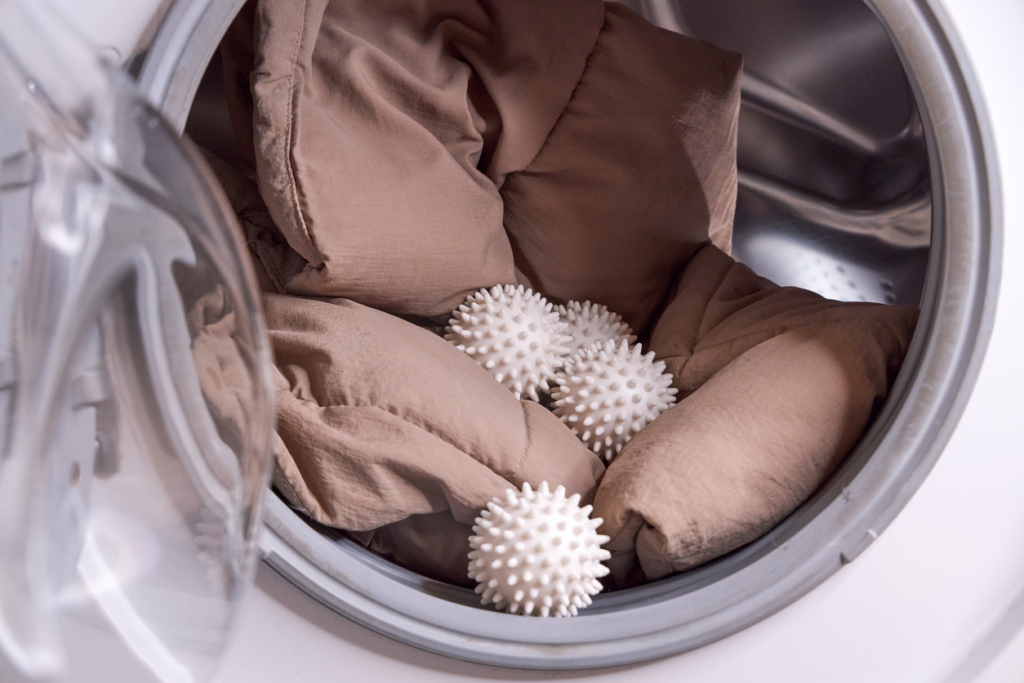
If you have a dryer, pick a low-heat, gentle cycle. Toss in dryer balls or 2–3 clean tennis balls to loosen the filling inside the drum. This is especially important for down. Pause the cycle occasionally to shake the jacket and manually break up clumps for even distribution.
No dryer? No problem—just be patient. Lay the jacket flat on a drying rack in a well-ventilated, warm but not hot spot. Turn, gently shake, and “pat” it every half hour, massaging clumps between the chambers. Avoid radiators—they can scorch the outer fabric and ruin the treated surface.
Expect full drying for down to take several hours up to a full day. Patience pays off: stop only when the filling feels completely dry and the jacket looks uniformly puffy. If you still feel dampness around the collar or seams, keep drying and fluffing.
Water-Repellent Layer and Refreshing: Smart Waterproofing
Over time and washes, the water-repellent finish can wear off: water stops beading and soaks into the fabric. That’s when reproofing comes in. Two main options: additives for the wash or spray-on treatments. Follow instructions carefully and opt for PFC-free products when possible.
Spray treatments target high-wear areas like shoulders, hoods, and sleeves. Wash-in products refresh the entire garment inside and out but also need gentle drying. Some finishes are activated by heat—short, low-heat dryer cycles or warm ironing (through fabric) can help.
No need to reproof after every wash. Watch how water behaves: if raindrops soak in immediately and the jacket looks soaked, it’s time. Regular gentle cleaning and proper drying also extend the life of the waterproofing.
Common Mistakes and Current Trends Worth Knowing
Puffer jackets have made a big comeback recently: “gorpcore” and comfort-first trends have brought them into everyday wear. Alongside this, more people focus on maintenance and repairs to keep their favorites in use longer. Here are some tips and pitfalls to keep in mind:
Don’t use fabric softener—it clogs fibers, weighs down the filling, and reduces water repellency. Avoid greasy, hard-to-rinse cleaners for the same reason.
Don’t skimp on rinsing—extra rinses and slow, thorough spinning are your friends. Detergent residues are one of puffer jackets’ biggest enemies.
Don’t dry on high heat—excessive heat can damage synthetic fibers and the outer fabric. Stick to gentle, low temperatures.
Don’t store compressed—after the season, hang your jacket clean and fully dry or store loosely in a breathable garment bag. Vacuum bags flatten the filling over time.
Don’t wash too often—airing out is enough most days. Spot clean mud stains and wash only when visibly dirty or smelly.
In 2025, more households will focus on reducing microplastic pollution. For synthetic-filled and outer-layer jackets, microfiber-catching laundry bags and washing machine filters can trap some fibers. Some countries already require manufacturers to include filters on new machines, making everyday washing more eco-conscious.
Repairs are trendy too: small tears can be fixed in minutes with iron-on or adhesive fabric patches. These not only stop filling loss but also extend the jacket’s life. Bold patches can add unique character, though most options are discreet and barely noticeable.
If you bought a used puffer jacket—secondhand shopping is a strong trend in 2025—do a full clean, dry, and reproof routine before wearing. This refreshes the jacket and improves performance in wet weather.
Finally, a couple of myths spreading on social media: dish soap doesn’t replace down detergent, and vinegar isn’t a solution for restoring water repellency. What seems clean short-term can damage layers long-term. Stick to proven, targeted methods for lasting results.
Quick Checklist: How to Make Your Puffer Jacket Truly Like New
After following the steps above, keep these in mind for flawless results:
- Care label: 30 °C (86 °F), gentle cycle; down detergent for down, technical detergent for synthetics.
- Preparation: empty pockets, zip up, pre-treat stains, use laundry bag.
- Extra rinse and low spin (400–600 rpm, max 800 for synthetics).
- Drying: gentle heat, dryer balls/tennis balls; without dryer, flat drying and regular fluffing.
- Reproofing as needed, preferably PFC-free, followed by gentle heat activation.
Following these basics, your puffer jacket will regain its light, airy structure, and its outer surface will stay clean and neat. A carefully cleaned and properly stored piece not only looks better but performs stronger against wind and wet weather, becoming a reliable wardrobe foundation for years.
Taking care of your jacket isn’t a time-consuming luxury—it’s a mindful choice. When you wash and dry your puffers this way, every wear will remind you why you love them: warmth, comfort, and confident style. All for the long haul.