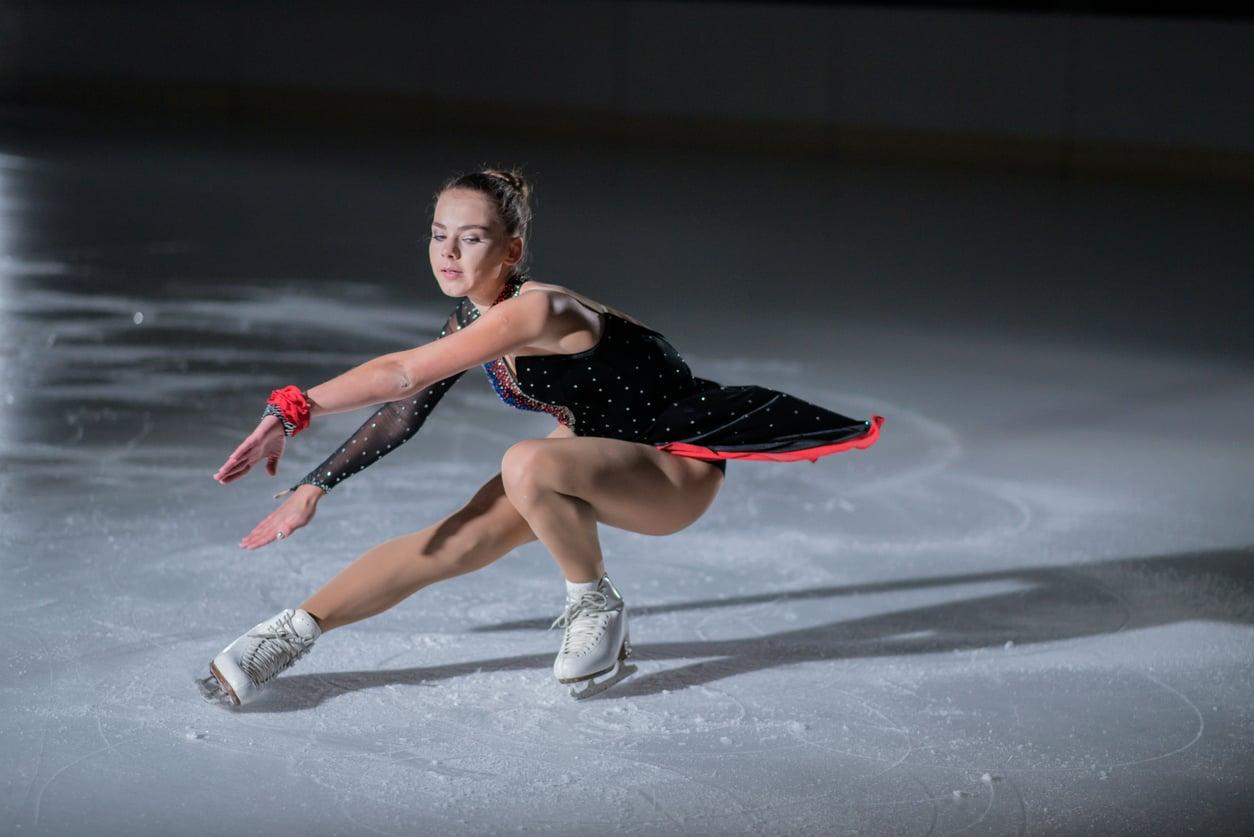
Figure skating is one of the most enchanting Winter Olympic sports: a stunning blend of athletic skill and graceful elegance. And yes, those crystal-studded costumes add to the magic.
But these costumes aren’t just for show—they follow strict rules. Breaking them risks serious point deductions. With the 2026 Winter Games approaching, we’ve gathered four lesser-known costume rules all competitors must respect.
They Can’t Appear Overly Revealing
The costume “must not create an overly revealing effect that’s inappropriate for the sport”—a rule set by the International Skating Union (ISU) and enforced at the 2026 Olympics. What counts as “overly revealing” is partly subjective. Los Angeles-based designer Lisa McKinnon avoids sheer fabrics and makes sure costumes fit perfectly to prevent accidental exposure.
Her one ironclad rule: nipples must not be visible.
That doesn’t mean skaters compete head-to-toe covered or that sexier styles are banned. For example, McKinnon designed a lace-trimmed, deep red, off-shoulder dress for Amber Glenn’s short program—set to Madonna’s "Like a Prayer." It’s a mature, feminine look that just barely pushes the line.
McKinnon actually created 15 costumes for the 2026 Games, including for Alysa Liu, Isabeau Levito, and ice dance duo Christina Carreira and Anthony Ponomarenko.
They Can’t Be Flashy or Theatrical
ISU rules say costumes must be “restrained, dignified, and appropriate for competition”—no flashy or overly theatrical looks. This rule is flexible, but designers avoid “trick” elements like costume changes mid-performance. Such flashy moves are better suited to shows, not sport.
Still, the rules allow the costume to reflect the character of the chosen music. This is a key part of the design process.
The goal is for the costume to match the feeling the music and choreography convey.
Many designers listen to the music repeatedly while sketching, ensuring the costume truly “breathes” with the program.
Nothing Can Fall Onto the Ice
This is a clear safety rule. The ISU requires all decorations to be securely attached—nothing can come loose. A falling crystal or bead could cause serious injury. That’s why costume making is meticulous: double knots, fasteners from multiple angles, strong adhesives. It’s no surprise that crafting one costume can take 50–100 hours. Though rare, the risk is always there, especially with fringes, crystals, or dangling parts.
Breaking Rules Means Point Deductions
If a skater breaks costume rules, they can lose one point per program.
This penalty is as severe as a fall on the ice. It may seem strict, but the no-loose-decoration rule protects safety, while the others keep the focus on performance—not flashy costumes.
A great costume ultimately enhances the program. It blends seamlessly with the music, choreography, and the skater’s personality. When that happens? Magic truly unfolds on the ice.