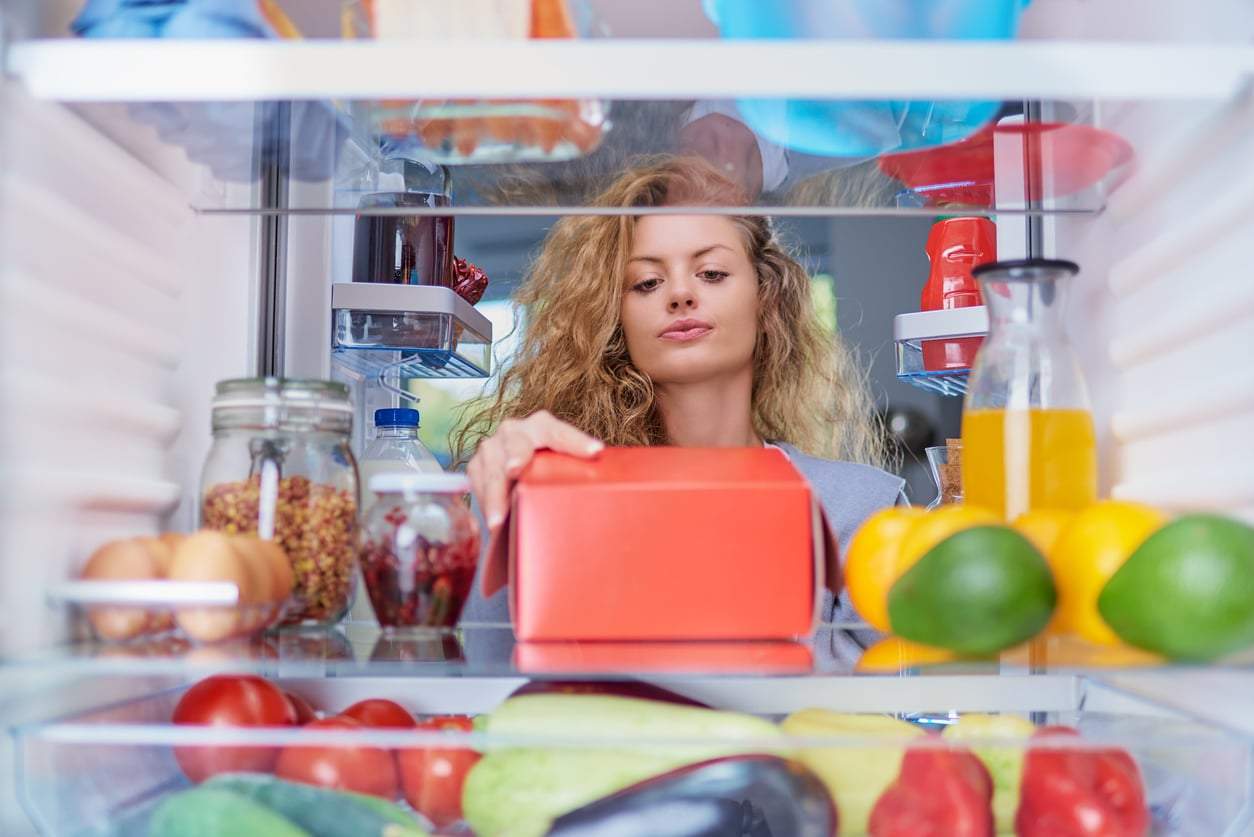
Every few months I open the fridge and find the same small tragedy: half a bag of spinach turned to soup, a jar of something excellent hiding behind a jar of something forgotten, and three separate opened packets of the same cheese. It is never a moral failure. It is a design problem. The fridge is the only cupboard in the house whose contents expire, and most of us store things in it the way we unpack a shopping bag — whatever fits, wherever there is room. A fridge that works has to be built around how your week actually behaves, including the evenings when nobody cooks at all.
Your fridge has climate zones — use them
The inside of a fridge is not one temperature. Cold air sinks, so the lowest shelf is the coldest part of the main cabinet and the door is the warmest, swinging in temperature every time someone goes hunting for the milk. That single fact should decide your layout. Raw meat and fish belong on the bottom shelf, in a container or on a plate, where nothing can drip onto anything below and where the cold is most reliable. Milk, despite generations of habit, does better on a shelf than in the door.
Save the door for the things that genuinely tolerate warmth and movement: condiments, jams, pickles, bottled sauces. Middle shelves take dairy, cooked food and anything opened. The top shelf, which is generally the most stable and most visible, should hold whatever needs eating soonest. Put the boring, sturdy things — big juice cartons, unopened yoghurt multipacks — in the awkward corners you cannot see.
The eat-me-first box changes everything
If you do only one thing, do this. Take a shallow open container, a plastic tray, a box lid, anything, and put it on the top shelf. Everything that is nearly gone or nearly over goes in it: the last two eggs, half a lemon, opened houmous, a lonely piece of cooked chicken, the herbs going limp. Nobody has to remember what is expiring, because expiring things live in one place at eye level.
In our house it doubles as a lunch station. On a chaotic morning I can build something from that box in four minutes without opening a single other shelf. It also quietly retrains everyone else, because the first place a teenager looks when they are grazing is now the place where food actually needs eating.
Ten minutes before the shop, not a whole Sunday
Deep-cleaning the fridge as a project happens roughly never. A ten-minute pass before the weekly shop happens most weeks, because it has an obvious payoff: you find out what you already own. Pull anything questionable to the front, tip the sad half-vegetables into a bag for stock or soup, wipe the one shelf that needs it, and write your list from what is left. That is the whole ritual. It stops you buying a third jar of mustard and turns the list into something honest.
Two small habits make it stick. Decant nothing that does not need it, but do label leftovers with the date on a strip of masking tape — memory is not a storage system. And keep containers you can see through, because opaque tubs are where food goes to be forgotten.
What does not belong in there at all
Cold flattens some flavours and ruins some textures. Tomatoes lose their perfume and go mealy; basil blackens; whole potatoes, onions and garlic prefer a dark, dry, airy cupboard, and onions in particular do not want to sit next to potatoes. Unripe stone fruit, avocados and bananas should stay on the counter until they are ready, at which point the fridge becomes a useful pause button. Bread goes stale faster in the cold than at room temperature, so keep it in a bin or freeze what you will not eat in two days. Freeing up that space alone often solves the overcrowding that made the fridge unmanageable in the first place.
How often should I actually deep clean the fridge?
A proper empty-and-wash every couple of months is plenty for most households, ideally timed for the day before a big shop when the shelves are already half bare. Between those, wipe spills as they happen and give one shelf a quick clean during your weekly ten-minute pass, rotating which shelf gets the attention. Warm water with a little washing-up liquid or a splash of white vinegar is enough; strongly perfumed cleaners can leave a smell that transfers to butter and milk.
What are the crisper drawers really for?
They exist to control humidity, not just to hold vegetables. Most have a slider: closed traps moisture, which suits leafy greens, herbs, carrots and broccoli, while open lets it escape, which suits fruit that gives off ripening gases, such as apples and pears. Keeping those two groups in separate drawers genuinely slows spoilage, because fruit gases make greens wilt faster. If your drawers have no slider, simply use one for leaves and one for fruit and line the leaf drawer with a clean tea towel to absorb condensation.