Almost everyone who has ever glanced at palmistry goes straight for the lines. The long one, the broken one, the one somebody once told you meant something alarming. But traditional readers rarely started there. They started with the hand itself — held it, turned it, weighed its proportions — and only afterwards looked at what was written across the palm. The shape was considered the temperament; the lines were considered the weather passing over it.
It is a useful order of operations, and not only for the superstitious. Shape is the part of your hand that does not change much. If you want to treat palmistry as a mirror rather than a prophecy — which is the only way I have ever found it interesting — the mirror is more honest when it reflects something steady.
The four classic types, and how to find yours
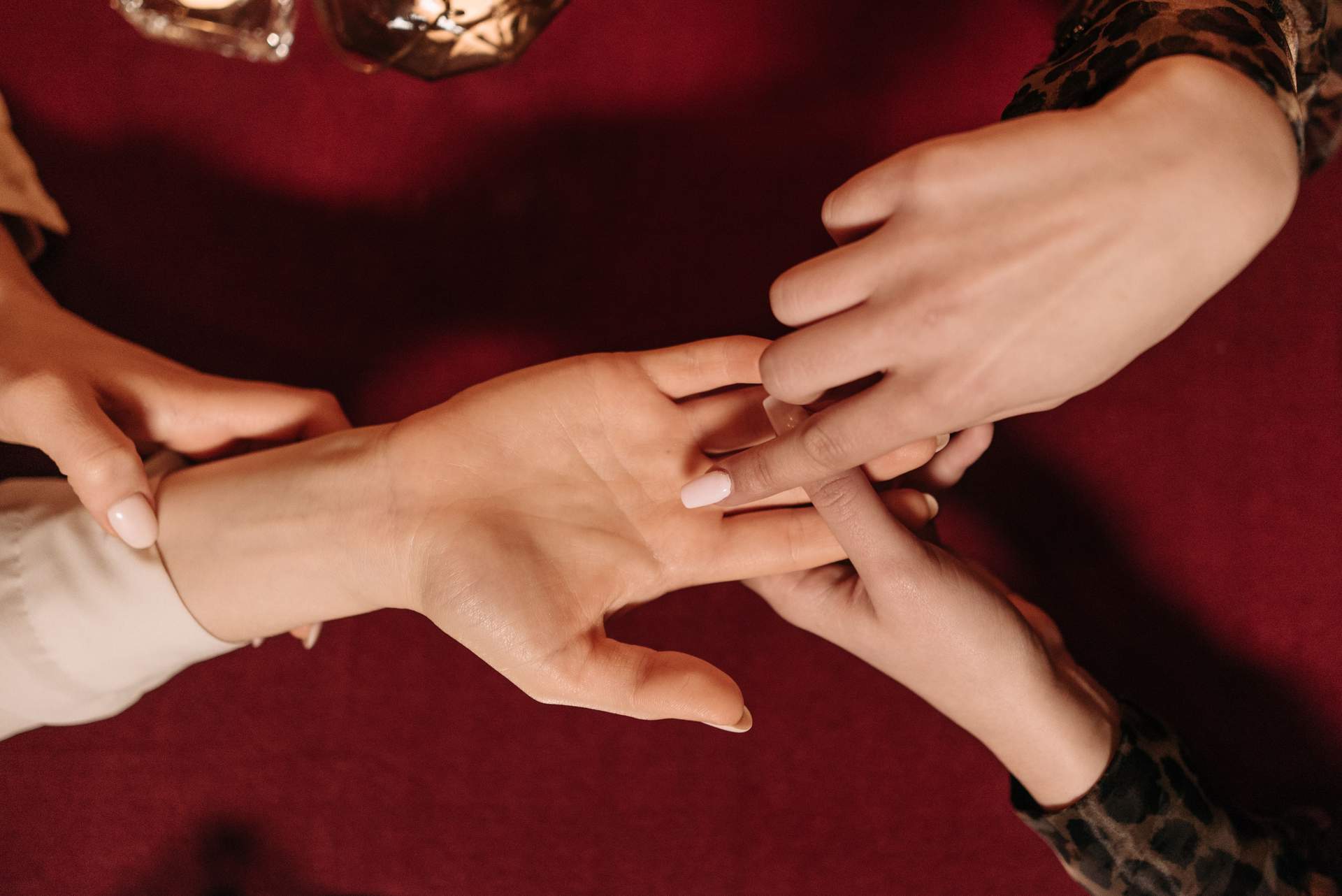
The old system sorted hands by two measurements, both of which you can do at the kitchen table. First, the palm: is it roughly square, as wide as it is long from wrist crease to the base of the fingers, or is it noticeably longer than it is wide? Second, the fingers: are they shorter than the palm's length, or as long or longer?
Square palm with short fingers was called the earth hand. Square palm with long fingers, the air hand. Long palm with long fingers, water. Long palm with short fingers, fire. Four combinations, and most people land clearly in one, though plenty of us hover between two — which readers took as its own kind of information rather than a failure of the system.
What each one was said to carry
The earth hand, typically broad and solid with firm skin and few lines, was read as practical, physical, steady — someone who trusts what she can touch, prefers doing to theorising, and is slow to change her mind but almost impossible to panic. The old texts tied it to craft, land and endurance.
The air hand — square palm, long slim fingers, often finely etched with many small lines — was the thinker, the talker, the one who processes everything through language. Curious, restless, prone to living a few inches above her own life in a cloud of ideas. Traditionally associated with writing, teaching, negotiation and the kind of insomnia that comes from having too many open tabs.
The water hand, long and narrow with long fingers and soft skin, was read as sensitive and receptive: someone who picks up the mood of a room before anyone speaks, feels things at full volume and needs more recovery time than she admits. The fire hand — long palm, shorter fingers, often with strong pronounced lines and a slightly rough texture — was the doer: impulsive, warm, magnetic, excellent in a crisis, less excellent at waiting.
Why the framework survives, even if you don't believe a word of it
Nothing in this is testable, and I would not want it to be. What it does well is give you a vocabulary for something you already half know about yourself, delivered from an angle that bypasses your usual defences. Reading that the water hand needs recovery time lands differently from a friend telling you to rest, because it arrives as description rather than instruction.
The best use of it is as a prompt. If you read your type and feel a small flare of irritation — no, I'm not like that — that reaction is worth sitting with. So is the opposite, the uncomfortable recognition. Both are your own material; the hand is only the excuse to look.
Which hand should I look at?
The traditional convention holds that the non-dominant hand shows what you arrived with and the dominant hand shows what you have made of it — inheritance versus biography, roughly. For shape in particular, the two hands are usually near-identical, so start with whichever you can see more easily and only compare if you are curious about the lines. Where people find genuine interest is in the differences: hands that diverge noticeably were said to belong to someone who has lived quite differently from how she was raised.
Can your hand shape change over time?
The underlying proportions — palm length against width, finger length against palm — are skeletal, so they stay essentially fixed from adulthood onwards. What does change is the surface: skin texture, flexibility, the fine network of smaller lines, the calluses that come from a job or an instrument, the way the hand softens or hardens with the years. Old readers paid real attention to all of that, which is perhaps the most grounded idea in the whole tradition: that a hand quietly records what you have spent your life doing with it.