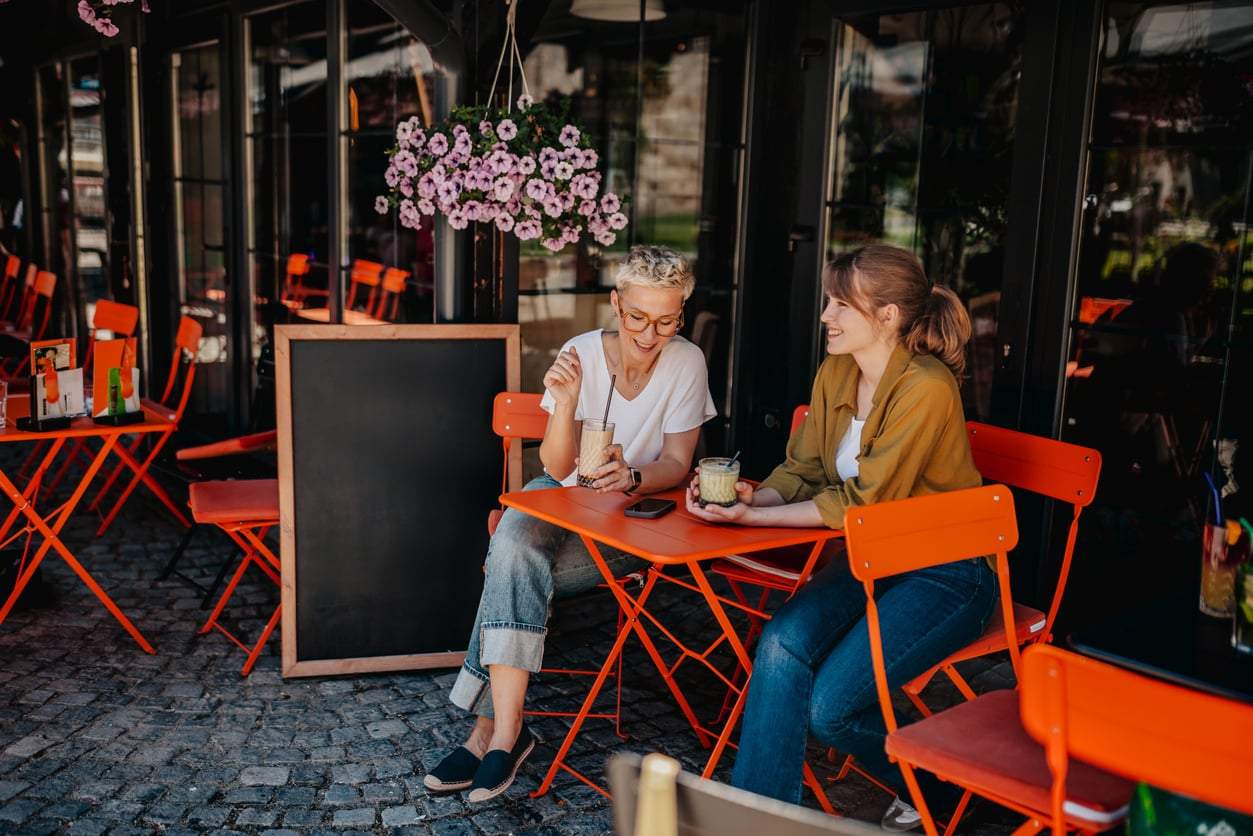
Ask a woman what she does for herself and you will usually get a list of maintenance: the dentist, the gym, the ten minutes in the car before going into the house. All of it necessary, none of it nourishing. There is a difference between recovering from your life and having one, and the gap between those two things is where a lot of low-grade restlessness lives — the feeling of being perfectly fine and quietly flat at the same time.
The idea of a weekly solo date is having a moment in conversation right now, and I understand the scepticism. It sounds like another thing to schedule, another chore dressed up as self-care. But done properly it is the opposite of a chore, because the only rule is that it has no outcome. Nothing is being fixed, bought, tidied or improved. That is the entire point.
What it is — and what it definitely isn't
A solo date is not the supermarket shop done alone. It is not a haircut, a doctor's appointment, or lying on the sofa scrolling once the house is quiet. Those things are either admin or collapse, and collapse is what happens when you have run out of fuel, not what refills you.
A solo date has three qualities: it is chosen by you, it is time-bound, and it is something you would be mildly pleased to tell a friend about. A film at four in the afternoon. A long walk on a route you've never taken with the phone in your bag. A whole hour in a bookshop. Coffee somewhere you've been curious about, with a notebook. Draw something badly. Sit in a gallery and leave after twenty minutes if you like. The scale matters much less than the choosing.
Why it makes you better company
Most of us spend our days in a state of low-level attunement to other people — anticipating what they need, monitoring moods, adjusting. It's a genuine skill, and it is exhausting precisely because it never announces itself as work. Time alone, by choice, is the only reliable way to switch that channel off. You stop asking "is everyone all right?" and start noticing what you think about things.
What people find surprising is the effect on the relationship at home. Coming back with something of your own to talk about is enormously more interesting than coming back with a list of what's left to do. Partners who initially bristle at the idea tend to come round quickly, and often start taking their own evening. A household in which two people occasionally leave and return with news is a livelier household than one in which nobody ever goes anywhere.
How to make it actually happen
Put it in the calendar like a dentist appointment, same slot every week, because floating intentions get eaten by everyone else's needs. Two hours is plenty. Tell the household in advance, plainly and without apology or justification: "Thursday evening I'm out." Explanations invite negotiation; statements don't.
Expect the first two to feel slightly awkward. You may spend the first solo date thinking about what everyone at home is doing, and the second one running through the to-do list. By the third or fourth, something loosens. If you're finding it genuinely difficult to be alone with your own thoughts — restlessness that tips into real anxiety, or a sadness you can't place — that's worth mentioning to your GP or a therapist rather than pushing through.
Isn't this just being antisocial?
Not if the rest of your week involves other people, which for most women it overwhelmingly does. Antisocial is withdrawal from connection; this is a couple of hours that you return from with more attention to give, not less. The test is simple: if you come home slightly more curious and slightly less clipped, it's working.
What if I feel self-conscious eating or sitting alone in public?
Almost everyone does at first, and almost nobody is looking. Start with settings where solitude is normal — a cinema, a gallery, a bookshop, a long walk — and work up to a table for one if you want to. Bring a book or a notebook as a prop for the first few times, sit somewhere with a view rather than in the middle of the room, and notice that the discomfort usually fades by the second visit.