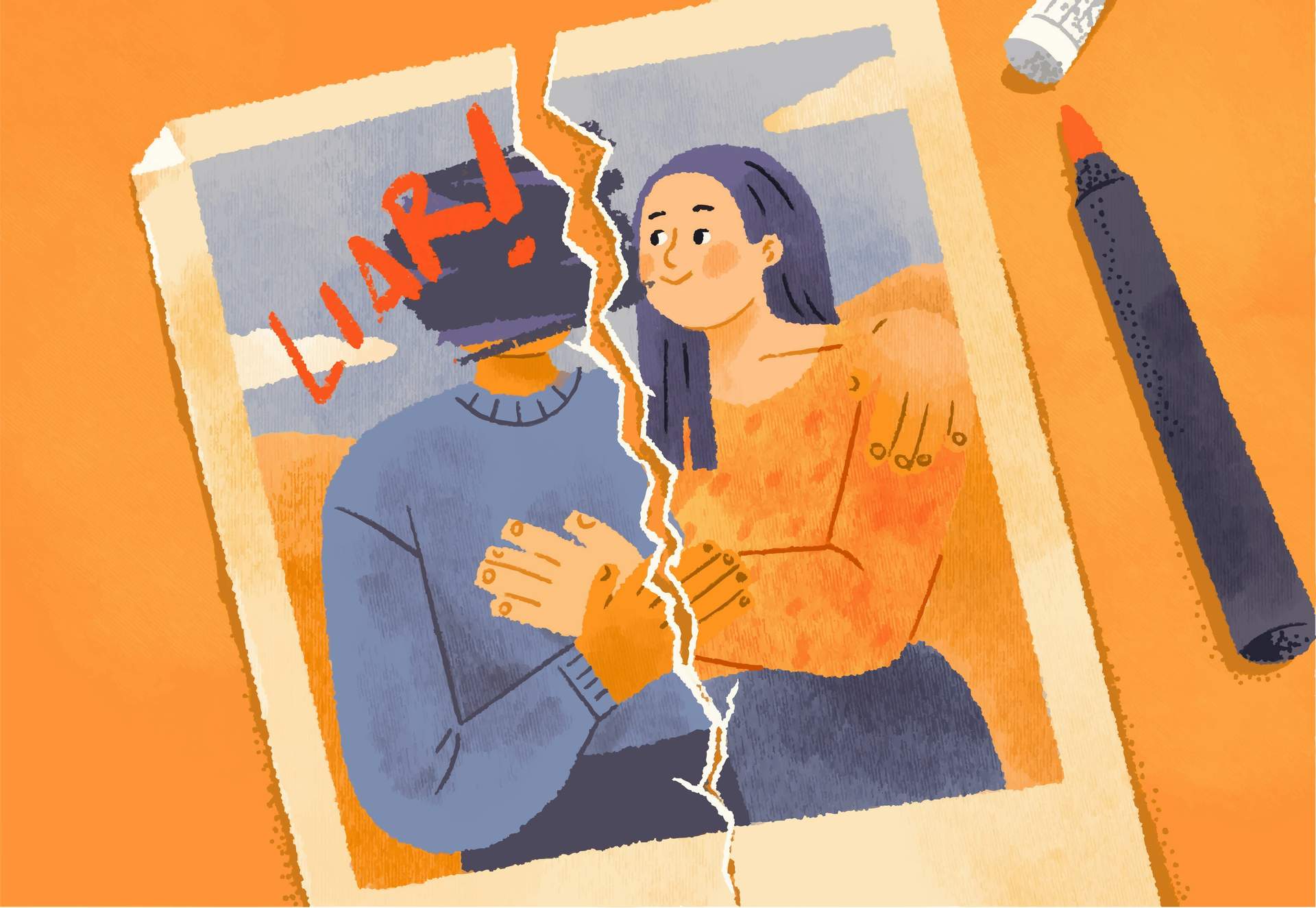
Most friendships don't end. They thin. The messages get slower, the coffee gets rescheduled twice and then not rescheduled, and one day you realise you learn her news the same way everyone else does. There's no ending to point to, which is why it can take a year to notice you're grieving.
But some friendships do end with words, and those words have extraordinary staying power. Women tell me they remember a single sentence from a friend twenty years on, verbatim, in the exact tone it was said. Partners who left get a fuzzier edit. A friend's parting line stays sharp.
Why the sentence sticks
Partly because it's unexpected. We rehearse romantic endings constantly — songs, films, every novel on the shelf — so there's a script waiting. Nobody hands you a script for a friend saying "honestly, I find you exhausting." It arrives with no cushioning.
Partly because friends have privileged information. A friend has heard the insecurity you've never said out loud to anyone else. When a parting line uses that material — "you've always been like this", "I'm not surprised he left" — it isn't just an insult, it's a confirmation. It feels like someone with access to the full file has read it and delivered a verdict.
And partly because there's no formal process afterwards. A break-up has rituals: people ask how you are, there's a logistical aftermath to occupy you. A friendship ending has none of that. You're left alone with a sentence and no structure around it.
The things that get said, and what they usually mean
In my experience the harshest exit lines are almost never the real reason. They're the thing a person reaches for when they've been unhappy for a long time without saying so, and the resentment finally comes out in one shape that is far cruder than the truth.
"I've just outgrown this" often means: our lives diverged and I didn't know how to renegotiate the friendship, so I ended it instead. "You only call when you need something" often means: I've been keeping an unspoken tally for two years and never once told you the score. "You've changed" often means: you changed in a direction that no longer flatters me, or that reminds me of what I haven't done.
None of this makes the words untrue, necessarily. Sometimes a leaving friend says something accurate that nobody else was brave enough to say, and if three people have now said a version of the same thing, it deserves a serious look. But the harsh phrasing is rarely a fair summary of you. It's a summary of her patience running out.
What to do with a sentence you can't unhear
Write it down exactly as it was said. On paper it tends to shrink — out of her voice and your memory, it's revealed as one line from one person on one bad afternoon. Then split it in two: the part that's information about your behaviour, and the part that's about her. The information part you can work with. The rest you can set down.
Resist the urge to litigate it with mutual friends. It's enormously tempting to collect verdicts, and it almost always leaves you feeling worse and the friendship group smaller. If you genuinely want to understand, there's one worthwhile message: short, unarmed, no case-building. "I've been thinking about what you said. I'd like to understand it properly if you're ever willing." She may not answer. You'll still have behaved like someone you respect.
And let yourself mourn it properly. The loss of a long friendship is a real bereavement — shared history, in-jokes, the person who remembers your twenties. Treating it as trivial because it wasn't romantic is how it stays stuck for years.
How do I end a friendship without saying something cruel?
Say it early, before the resentment has had years to ferment, and keep the focus on your capacity rather than her character. "I don't have the room for this the way I used to, and I'd rather be honest than keep letting you down" is clean and survivable; a list of everything she's done wrong is not. If you can't face a conversation, a gentle, deliberate slowing with no false promises is kinder than one explosive goodbye.
Is it normal to be more upset about a friend than an ex?
Completely normal, and far more common than people admit. Friendships often carry more of your actual daily life — your history, your identity, your sense of being known — and they end without any of the recognised rituals that help us process a romantic split. If the grief is still sitting heavily on you months later, or it's feeding a wider belief that you're hard to like, that's a good reason to talk it through with a counsellor rather than carrying it alone.