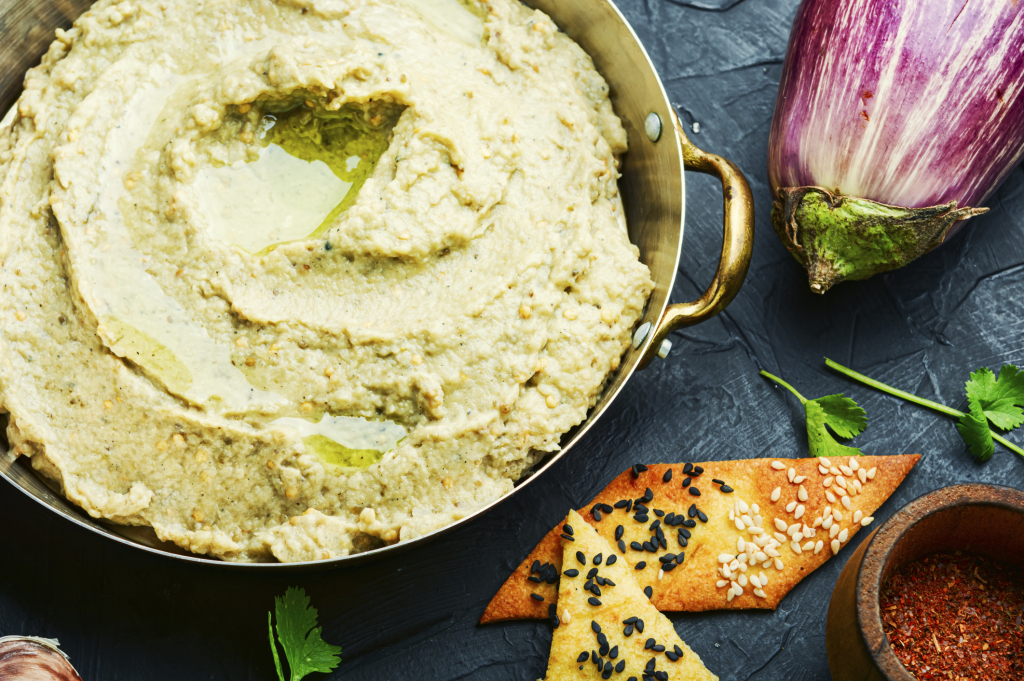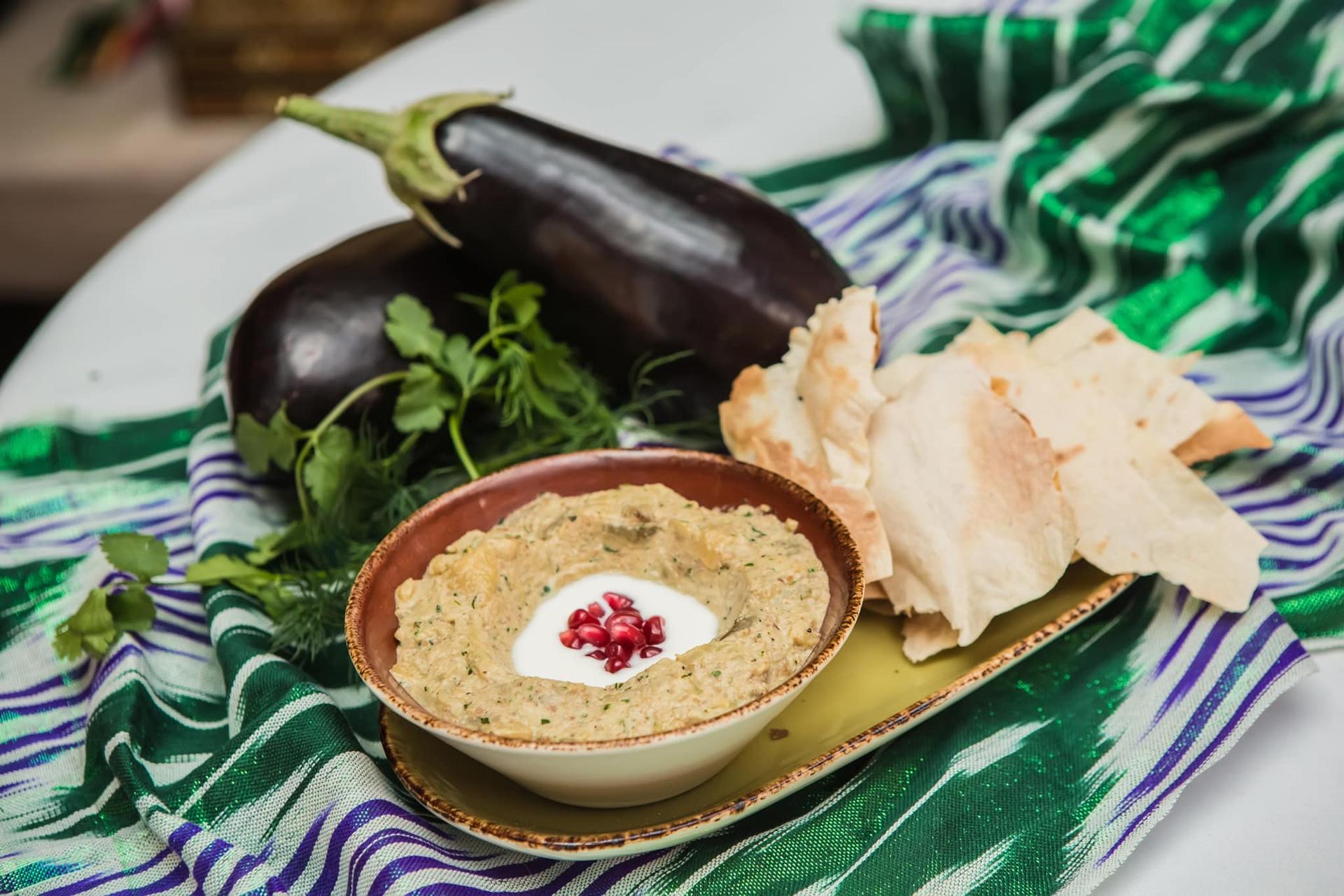
Depending on where it’s made, eggplant spread comes in several varieties. Beyond personal taste differences, we can group them by style and cultural traditions:
Baba ganoush – probably the most famous version. It includes eggplant, onion, tomato, garlic, lemon juice, olive oil, and parsley, but usually no tahini.
Melitzanosalata – the Greek-style eggplant spread, which uses red onion instead of garlic.
Moutabal – a Middle Eastern dish made from eggplant, garlic, lemon juice, olive oil, and tahini or sometimes yogurt.
Transylvanian vineta – literally eggplant salad, but like its counterparts, it has a creamy texture.
Eggplant is a versatile vegetable with many varieties. These differ not only in appearance but also in how they’re used.
Globe Eggplant
The Globe eggplant is the most common worldwide and very versatile in the kitchen.
Italian Eggplant
The Italian eggplant is large and dark purple but smaller than the Globe variety.
Japanese Eggplant
Long, slender, and light purple, the Japanese eggplant is found mostly in Asian markets but grows beyond Asia as well.
Rosa Bianca Eggplant
The Rosa Bianca variety delights both the eyes and the palate with its pleasant, sweet flavor.
Thai Eggplant
Small and round, resembling miniature watermelons, Thai eggplants are slightly bitter without seeds but perfect for curries.
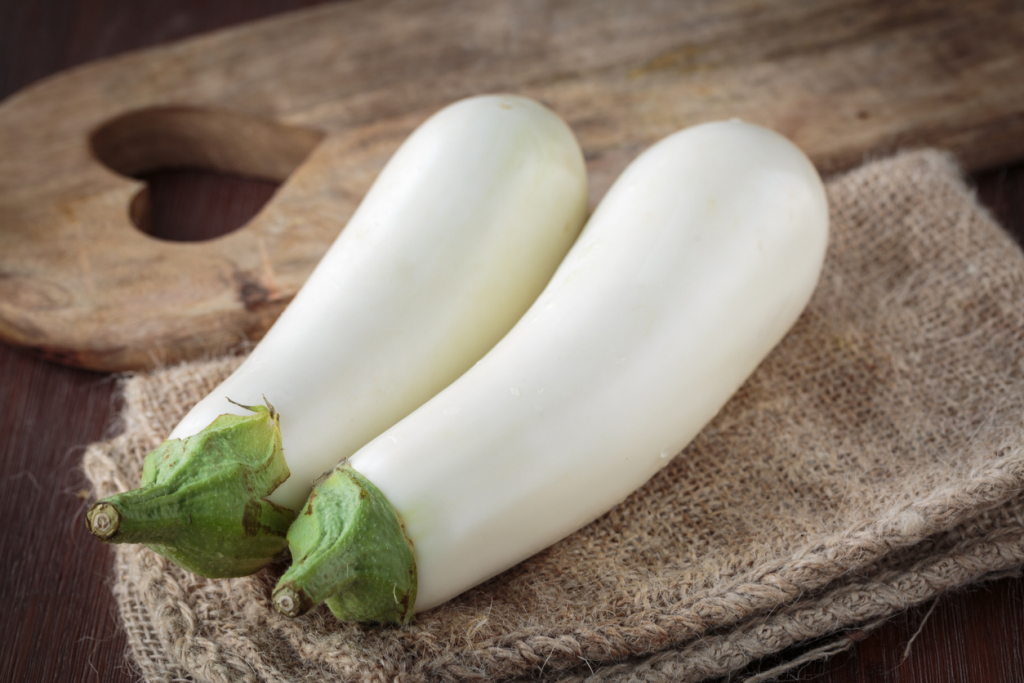
White Eggplant
White eggplants look elegant and work well in almost any eggplant dish.
Of course, the best variety depends on your taste. For a truly creamy eggplant spread, Japanese or white eggplants are your best bet.
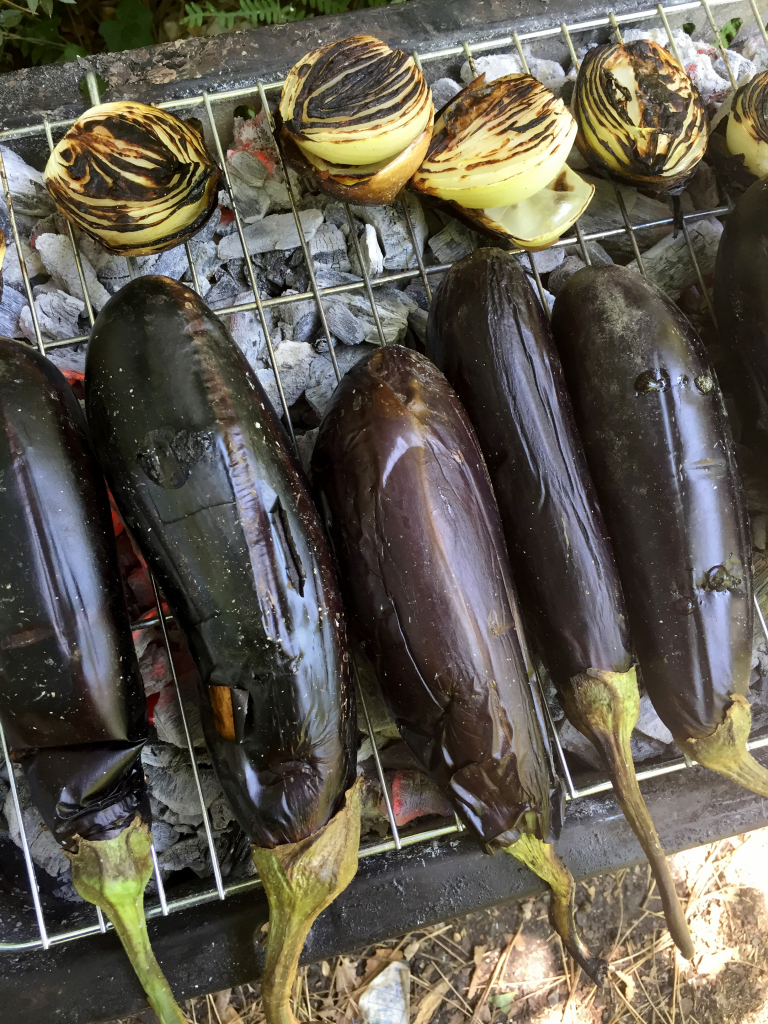
How to Roast Eggplant for Dips
For the best smoky flavor, grill your eggplant. If grilling isn’t an option, roast it in a preheated oven at 210°C (410°F) for about 25-30 minutes. When the skin blackens, it’s ready.
Helpful tips
- Cook the eggplant quickly over high heat—ideally directly over the flame—to keep the flesh light and tender.
- Slow cooking turns the flesh dark purple-green, which affects both taste and appearance negatively.
- Place the eggplant immediately on a cutting board and slice lengthwise. Scoop out the flesh right away and drain it on a sieve or clean wooden board to remove excess liquid. This keeps the flesh sweet and perfect for dips or spreads.
You Can Make It Without Tahini
As mentioned earlier, eggplant spread can include tahini or a thick, creamy yogurt. But it’s just as delicious without them and fits perfectly into a vegan diet. Whichever way you choose, it’s easy to make. Here’s the traditional Transylvanian recipe.
What you’ll need:
- Eggplant
- Finely chopped red onion
- Good quality sunflower oil
- 1 egg yolk
- A little grated garlic (not too much, so it doesn’t overpower the eggplant)
- Salt to taste
- A splash of fresh lemon juice (optional)
How to make it:
After roasting the eggplant (no need to scoop out the flesh), chop it into creamy chunks with a large knife. Just tap the knife edge on the cutting board from both sides—the roasted eggplant is so soft you’ll finish in no time. Avoid blending it, as that dulls the flavor. Whisk the egg yolk with oil to make a mayonnaise. If you’re short on time, good-quality store-bought mayo works too. Then mix in the other ingredients to taste.
You can enjoy it right away, but it’s best chilled. Spread it on thick slices of sourdough bread for a main dish or appetizer. It also pairs wonderfully with tortilla chips, crackers, or fresh homemade bread for a snack.
If you know it won’t be eaten for a few days, add the garlic, onion, and mayonnaise just before serving to avoid any off flavors. Stored properly in the fridge, it keeps for 3-4 days, and in the freezer up to a month—ready to turn into a delicious treat whenever you want.