You probably don't think much about it, but almost everyone has a default sleep position they instinctively return to each night. According to body language experts and spiritual interpretations, the way you position yourself in sleep isn't just about comfort — it can reflect your inner emotional world in surprisingly honest ways. Here's what your sleep position might be quietly saying about you.
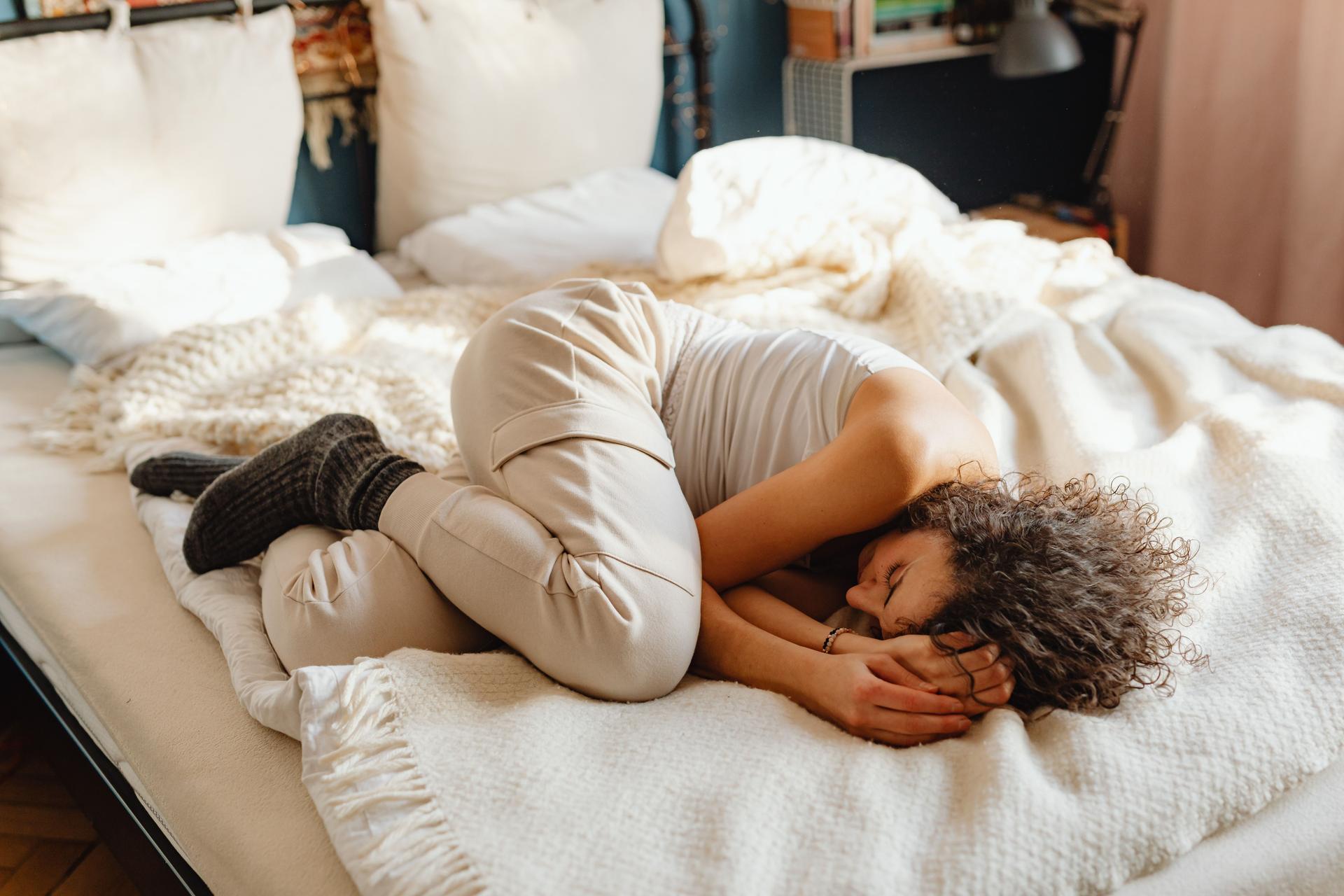
The tight fetal curl: when part of you needs to shut the door
If your knees pull close to your chest and your arms fold tightly in front of you, this position often signals a need for protection. Not necessarily because something painful is actively happening — but because your body has learned to create a small, safe boundary around you when the world goes quiet at night.
Many people sleep in this position during periods when they're putting off a difficult decision or when they're more guarded than usual in a relationship. The tight curl is the body's way of holding something close — even if you can't name exactly what that something is.
The loose, half-open curl: trust with a little reservation
If your knees are gently bent but your arms rest freely at your sides, your body is hovering somewhere between openness and self-protection. This is one of the most common sleep positions, and it tends to show up in people who are generally open and expressive during the day — but who quietly pull back a little once they're alone with their thoughts at night.
It's not guardedness exactly. It's more like a subtle, self-built shield that the soul puts up when it hasn't fully decided how much to share. A kind of gentle self-care you don't even realize you're practicing.
Hugging a pillow or blanket while you sleep
Some people don't just curl up — they pull something close: a pillow, the corner of a blanket, or even their own arm wrapped around themselves. This small but meaningful gesture often surfaces when someone is missing another person, whether they're consciously thinking about them during the day or not.
The body reaches for something to press against, because the soul is quietly craving the feeling of another presence — even if that presence can only take the shape of a blanket.
If this sounds familiar, it might be worth paying attention to who — or what — has been on your mind lately.
Sleeping on your side with your lower back arched back
If you lie on your side but your back curves slightly away rather than curling fully in, this often reflects someone who holds a lot of control during the day but is longing to release it by night — yet can't quite let go completely. The body half-opens, half-closes, much like the mind: you're ready to rest, but something keeps quietly turning in the background.
This position frequently appears during transitional life phases — when something old is ending but the new thing hasn't fully arrived yet. It's the sleep of someone between chapters.
If you sleep on your stomach
Stomach sleeping is often associated with people who like to feel in control of their surroundings and find it genuinely difficult to let their guard down. In spiritual terms, this position can suggest that you've built a strong protective layer around yourself and don't easily let just anyone get close.
Security matters to you. So does processing your emotions at your own pace, on your own terms. That said, no sleep position is a definitive personality verdict — it's simply one honest signal among many.
If you sleep on your back
Back sleeping is frequently linked to openness, self-confidence, and inner stability. Spiritually speaking, people who naturally gravitate to this position tend to feel less need to hide their emotions and are generally more comfortable showing up as themselves in front of others.
Lying flat and open is also a symbol of feeling safe — there's no instinct to curl up, cover yourself, or guard anything. If you normally sleep this way but notice your position shifting during a stressful period, that change itself can be worth paying attention to as a signal of your current emotional state.
When you switch sides every night
If you notice you curl toward one side some nights and the opposite side on others, that's not a sign of instability. It's more likely a sign that your inner world is in motion — not stuck in a fixed emotional place.
That can actually be a good thing. It suggests you're still searching, still open to different directions, and not afraid to explore before settling. You haven't found your answer yet — but you're not afraid to keep looking.
There's something quietly remarkable about the fact that while we sleep — making no conscious decisions at all — our bodies know exactly where they need to go. Maybe you don't need to analyze it every morning. But every now and then, before you reach for your phone, it might be worth pausing and asking yourself: what was I curling away from last night — and what do I actually want to open up to?
Does your sleep position really reveal your personality?
Sleep positions can offer interesting clues about your emotional state and habitual ways of self-protecting, but they are not a definitive personality test. Think of them as one honest, unguarded signal rather than a fixed label.
Why do people hug pillows in their sleep?
Hugging a pillow or blanket while sleeping often reflects a subconscious longing for closeness or the presence of another person. The body seeks physical comfort that mirrors the emotional comfort the soul is looking for.
Can your sleep position change over time?
Yes — and it often does. Shifting between positions, or noticing a change during stressful or transitional periods, can reflect changes in your emotional state rather than a fixed personality trait.
What does it mean if you switch sides every night?
Switching sides regularly suggests your inner world is actively shifting rather than being stuck in one emotional pattern. According to the spiritual interpretation in this article, it can actually be a positive sign of openness and ongoing self-discovery.