There is a point every autumn when my tailoring starts to look like a uniform. The grey trousers are still good, the navy blazer still fits, the black coat still does its job — and yet put together they read as competent rather than considered. For a long time I thought the fix was buying a new jacket. It isn't. It's one accessory in a deep wine red, and it takes about four seconds to put on.
Burgundy has crept quietly across the high street this season, turning up on suede, knitwear, satin and boots. But its real talent isn't as a statement — it's as a near-neutral that makes everything around it look chosen.
Why this particular red works where others don't
Bright red is a declaration. It pulls every eye to itself and demands the rest of the outfit stay out of the way. Burgundy, oxblood, claret, that bruised plummy red that sits between brown and purple — these behave much more like neutrals. They're dark enough to sit beside black without fighting it, warm enough to flatter against skin, and deep enough that they don't scream in daylight.
That's why a burgundy accessory lifts tailoring rather than hijacking it. Grey flannel trousers with black loafers are serviceable. The same trousers with a dark wine loafer suddenly look like a decision someone made. Nothing else in the outfit has changed.
Choose one, and let it be the loudest thing
The temptation, once you discover this, is to do it everywhere: burgundy bag, burgundy boots, burgundy scarf, burgundy nails. Don't. The effect depends on scarcity. Pick a single point of colour and keep everything else quiet.
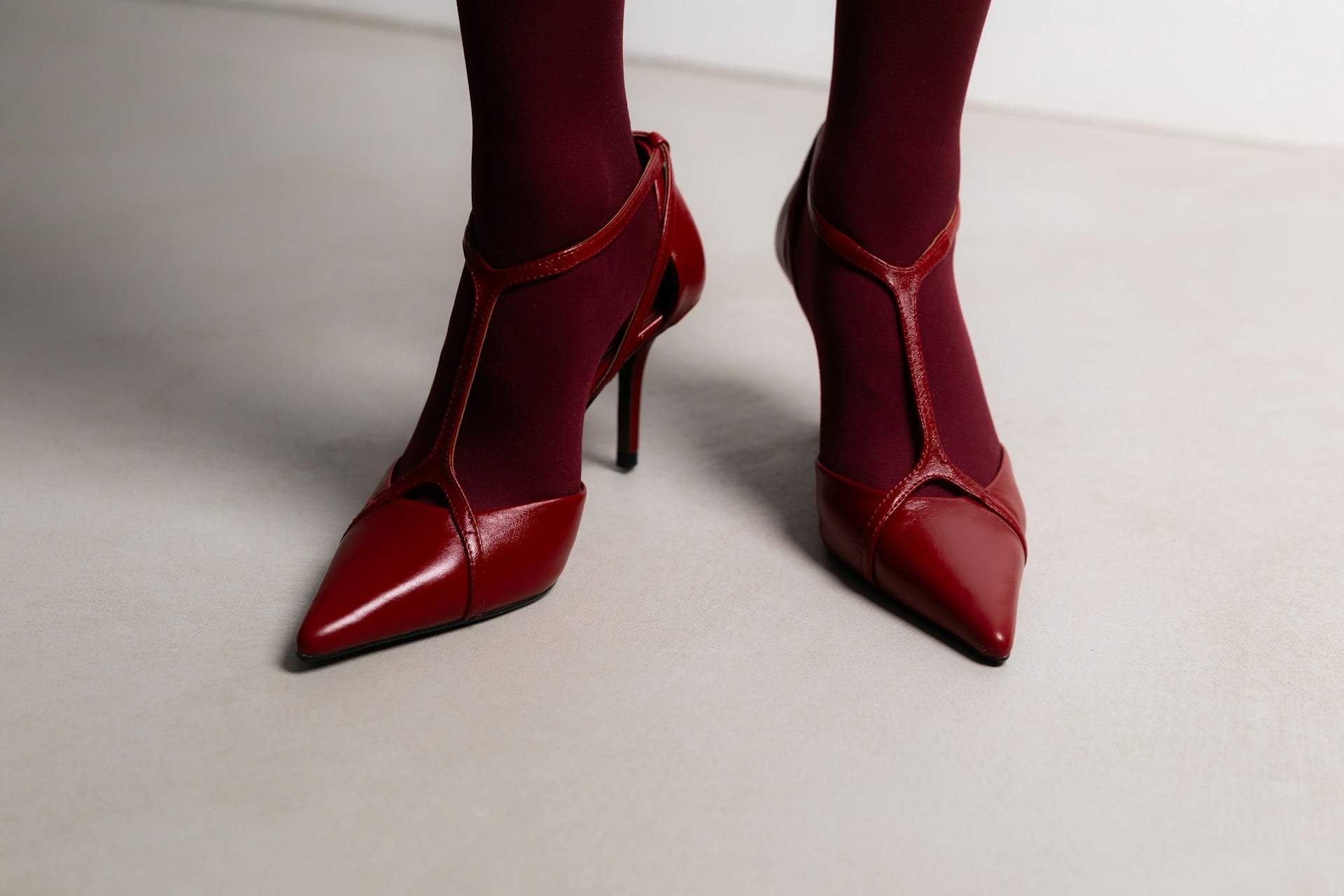
If you want the easiest entry point, go for shoes. A burgundy ankle boot or loafer under navy, grey or camel does more work per pound than almost anything else in a wardrobe, because it's visible in every outfit and nobody expects it. A bag is the second-best option, especially if your coats are dark — a wine-coloured bag against a black coat is one of those combinations that looks expensive regardless of what you paid.
A fine wool scarf is the cheapest version and the most forgiving, because it sits near your face where the colour flatters most. A belt, if your trousers have loops and your jacket is open, is the subtlest. Gloves are the sleeper hit: you see them constantly, and almost nobody thinks about them.
What to put it against
Grey is the classic partner, and the greyer and colder the better — the warmth of the red stops flannel looking severe. Navy is almost as good and feels slightly more formal. Camel and burgundy together is rich, autumnal and very easy, though it reads warmer and softer, so it suits a looser outfit better than a sharp suit.
Black and burgundy is often avoided and shouldn't be. The pairing only goes wrong when the red is too bright or too thin; in a deep, matte or suede finish it looks like a more interesting version of all-black. The combination to handle carefully is burgundy with other warm reds and oranges — rust, terracotta, tomato. They're all competing in the same register and it can look accidental rather than intentional.
Getting the finish right matters as much as the shade
Texture changes everything. Suede absorbs light and makes burgundy look soft and expensive; patent makes it look sharp and slightly dressy; satin pushes it towards evening. Matte leather is the most versatile and the easiest to wear with tailoring during the day.
If you're buying, check the colour in daylight rather than under shop lighting, which flatters reds enormously. And give any burgundy suede a protector spray before it ever leaves the house — the shade shows water marks more readily than brown, and a single rainy bus stop can leave a patchy bloom that takes real effort to lift.
Does burgundy actually go with black?
Yes, as long as the burgundy is deep rather than bright and the texture differs from the black around it. A wine suede boot under black trousers or a claret bag against a black coat reads as considered; a shiny crimson accessory against matte black is where it starts to look mismatched rather than intentional.
Which shade of burgundy will suit me best?
Hold two or three versions near your face in daylight and look at what happens to your skin rather than at the colour itself. If cooler, more purple-leaning plums make you look brighter, go that way; if the browner, rustier clarets do, choose those. For accessories worn below the waist — shoes, bags, belts — this matters far less, so start there if you're unsure.