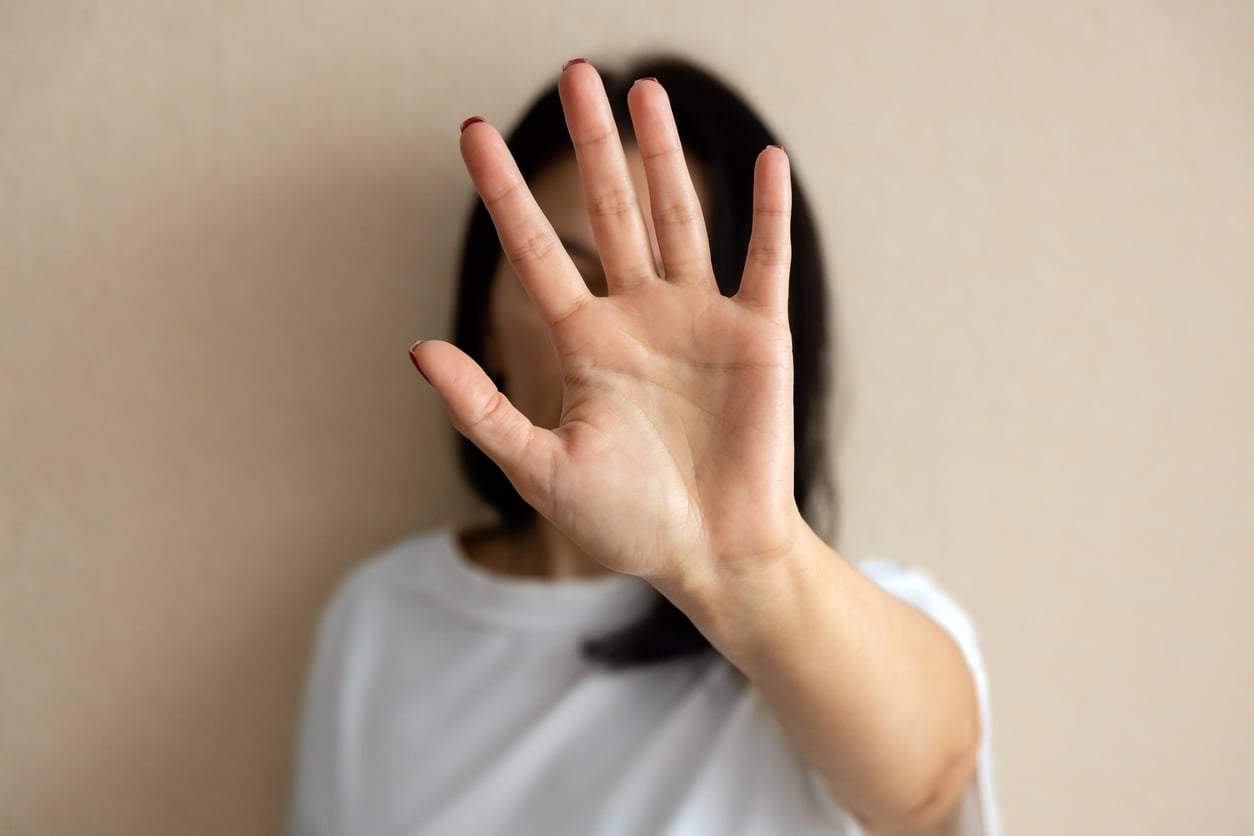
When someone is lying, their face is rarely where the truth slips out. Body language researchers have long pointed to the hands as the real tell — because hand movements are far harder to consciously control than facial expressions. If someone's words and behavior don't quite add up, their hands are often the first place to look.
1. The hand drifts toward the mouth or face
One of the most studied signals in nonverbal communication is when someone involuntarily raises a hand toward their mouth while speaking — as if trying to hold the words back. It might be as subtle as lightly touching the lips with one or two fingers, or as obvious as pressing the whole palm to the face mid-sentence. A quick, almost imperceptible rub of the nose during a particularly loaded statement is another common variation.
The psychology behind it is well established: it echoes the childhood reflex of covering your mouth so the "wrong thing" doesn't come out. In adults, the impulse survives — just in a quieter, more refined form.
2. Self-soothing touches and fidgeting
Under stress, the hands often turn inward for comfort. Watch for someone rubbing the back of their neck, repeatedly adjusting a watch or ring, or slowly running a palm along their thigh. These are known as self-touch gestures — the body's way of quietly managing internal tension while the voice keeps a calm, even tone.
The key isn't the gesture itself — it's the frequency. If someone suddenly reaches for their neck or ear several times in quick succession right after a pointed question, that's worth noting, especially if it's out of character for them.
A single isolated fidget means very little. A cluster of them, appearing suddenly in response to a specific moment in the conversation, is a different story.
3. Hiding the hands — pockets, laps, and backs
Some people take the opposite approach: rather than touching their face, they try to show as little of their hands as possible. Both hands disappear into pockets, or get clasped tightly in the lap, or are tucked behind the back while standing and explaining something.
Body language analysts describe this as an unconscious defensive move. If the hands aren't visible, they can't be read — so the brain essentially "hides" the part of the body most likely to betray emotional tension. This often comes paired with shoulders turning slightly inward, as if the whole body is trying to make itself smaller.
4. Exaggerated or jerky gesturing
The fourth signal is the flip side of hiding: overcompensation. The hands suddenly move too much — chopping the air with sharp, erratic motions, or repeating the same gesture over and over as if emphasis can substitute for credibility.
What makes this particularly telling is a loss of sync between speech and gesture. Normally, hand movements align naturally with words. When someone is fabricating, the hands may shoot out before the words arrive, or lag noticeably behind — a sign that the brain is juggling the cognitive load of constructing a false story. Experts in nonverbal communication frequently link this kind of restless, disjointed gesturing to the extra mental effort deception requires. The stress has to go somewhere, and it usually ends up in the hands.
None of these signals is conclusive on its own. Stress, exhaustion, or even an awkward topic can trigger the exact same movements in a completely honest person. What actually matters is the pattern: if someone who doesn't normally do these things suddenly displays several of them at once — especially in response to a specific question — that's far more revealing than any single gesture in isolation.
Can you spot a liar just by watching their hands?
Not with certainty. Hand gestures can indicate stress, discomfort, or deception, but no single signal is proof of lying. Look for clusters of unusual behavior that deviate from a person's normal baseline.
Why are hands harder to control than facial expressions?
Because most people focus their "performance" on their face when they're being deceptive. The hands receive far less conscious attention, so telltale movements tend to slip through unnoticed by the person making them.
What's the most reliable sign to watch for?
Frequency and context matter more than the gesture itself. A sudden cluster of self-soothing or concealment behaviors immediately following a specific question — especially if out of character — is the most meaningful signal according to body language researchers.
Does nervousness look the same as lying in body language?
Often, yes. Stress and deception can produce nearly identical hand signals. That's why it's essential to observe someone's baseline behavior first — their normal gestures when relaxed — before drawing any conclusions from a single conversation.