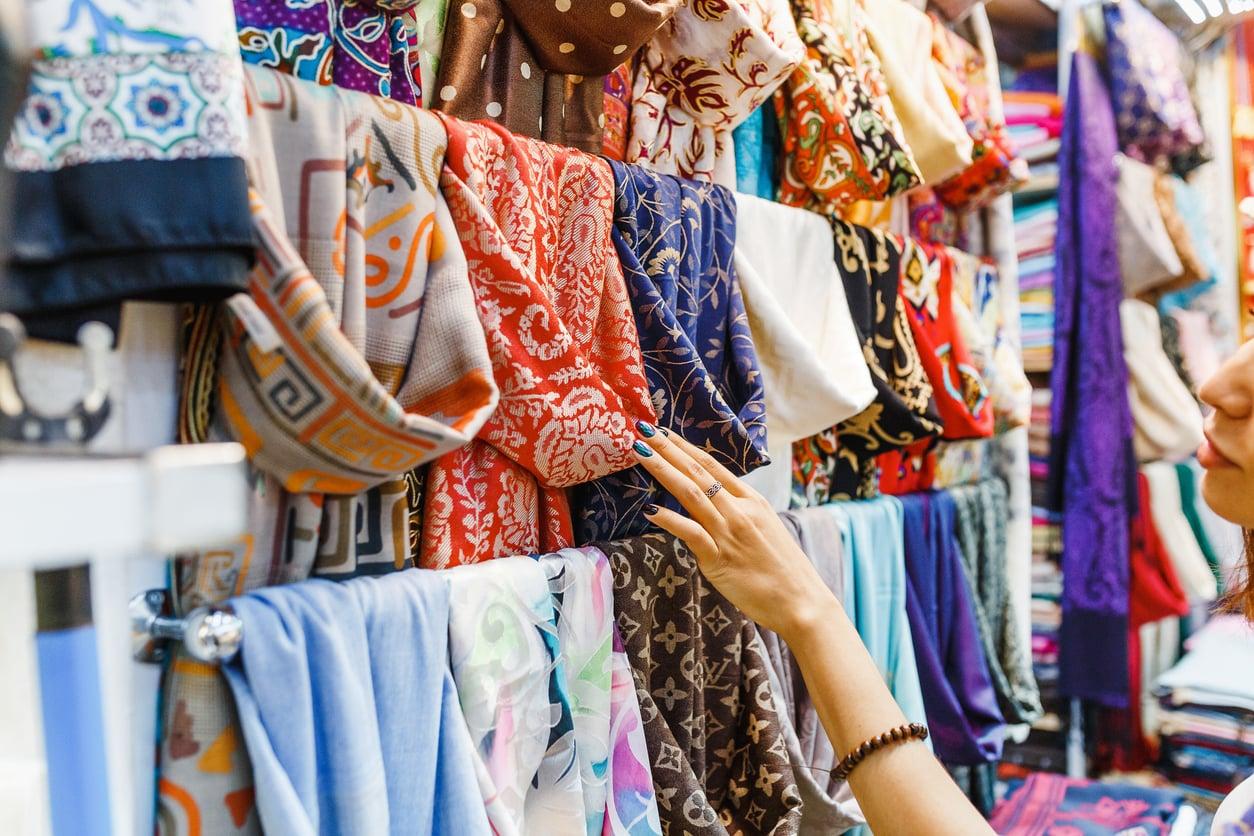
You spot it across the stall: a beautiful scarf, a hand-painted bowl, a leather bag that looks too good to be true. And sometimes, it really is.
Local markets and bazaars are magical because they promise something you can't get anywhere else — unique, handmade pieces that carry a bit of local culture with them. But behind that charm, plenty of sellers quietly slip mass-produced imports onto their tables and charge you "artisan" prices for them.
Here are four subtle signs that help you tell the real thing from a clever fake.
1. Look closely at the labels and tags
Details tell the truth. One of the fastest ways to check whether something is genuinely handmade is to inspect its label or any attached information.
If you see a "Made in China" tag (or any factory country far from where you're standing), that's a clear sign you're not holding a local, handmade piece.
These labels are often tucked away — hidden in an inner seam or somewhere easy to miss — so it pays to look carefully. Check the material composition too. If it points to synthetic or clearly mass-produced fabrics, treat it as another red flag.
2. The price often gives it away
Plenty of people happily pay a little extra for a genuine handmade item, and for good reason: real craftsmanship takes hours of careful work and higher-quality materials.
So if something is being sold as artisanal yet costs surprisingly little, that's worth a second thought.
Genuine handcrafted goods tend to be priced fairly for the effort behind them, because there's real time and skill baked into every piece. A suspiciously low price usually points back to a distant factory churning out identical items with cheaper materials.
3. The craftsmanship and the quality of the materials
Another telltale sign is the finish of the piece and the materials it's made from.
Handmade goods are defined by their careful attention to detail and the use of materials chosen and worked with real skill.
When an item shows obvious signs of mass production — sloppy seams, misaligned joints, or inconsistent material quality — you're most likely looking at something factory-made. Take a close look at how the decorations are done, how the stitching runs, and where different fabrics meet.
4. The seller's behavior and the atmosphere of the stall
Last but not least, pay attention to the market's atmosphere and how the seller behaves. At a true artisan market, the makers usually talk about their work with genuine passion, love sharing the story behind each piece, and often stand right there behind their own stall.
If a seller can't give you real details about a product — doesn't know who made it or how it came together — the odds are much higher that what you're holding is mass-produced.
How can I tell if a market product is really handmade?
Check the label for a factory country tag, inspect the finish and materials for signs of mass production, and see whether the price reflects real craftsmanship. Talking to the seller helps too.
Does a low price always mean an item is fake?
Not always, but a surprisingly low price on something sold as handmade is a red flag. Genuine handcrafted goods are usually priced fairly to reflect the time and skill involved.
What should I ask the seller?
Ask who made the item and how it was made. A genuine artisan can usually share the story behind their work with enthusiasm, while a reseller of mass-produced goods often can't.