You're eating well, making smart choices, and yet — an hour later, your stomach is growling again. Sound familiar? The problem might not be your willpower. It might be the foods you think are good for you.
Some of the most popular "healthy" options are surprisingly bad at keeping you full. Here are five foods that are quietly working against you.
Rice paper rolls
Rice paper rolls look like the perfect light meal — low in fat, low in calories, and packed with fresh vegetables. But that lightness is exactly the problem. Rice paper is almost entirely made of simple carbohydrates, with very little protein or fiber to slow digestion down.
Without those key nutrients, your body burns through the meal quickly, and hunger creeps back in far sooner than you'd expect. If you love rice paper rolls, try loading them with more protein — think shrimp, tofu, or a generous handful of edamame — to make them actually satisfying.
Fruit smoothies
A cold, fruity smoothie feels like a nutritious choice, especially on a warm morning. And fruit is genuinely healthy — but when you blend it and drink it fast, the natural sugars (fructose) hit your bloodstream quickly, giving you a short burst of energy followed by an equally fast crash.
Without protein or fiber to slow things down, liquid fruit is basically a fast lane to hunger. The fix is simple: add a scoop of protein powder, a spoonful of nut butter, or some chia seeds to your next smoothie. It makes a bigger difference than you'd think.
Store-bought granola
Granola has a wholesome, outdoorsy image — and it can be a genuinely great breakfast. The catch? Most store-bought granolas are loaded with sugar syrups, honey, and refined carbohydrates that send your blood sugar spiking and then crashing, leaving you reaching for a snack well before lunch.
Many brands dress up their products with health-sounding labels while hiding significant amounts of added sugar in the ingredient list. Your best move is to make your own granola at home, where you control exactly what goes in. It's easier than it sounds — and far more filling.
Low-fat yogurt
Low-fat yogurt seems like a no-brainer diet food. Less fat, fewer calories — simple, right? Not quite. When manufacturers remove fat, they often add sugar to compensate for the lost flavor, which means you end up with a product that triggers the same blood sugar rollercoaster as a sweetened drink.
The fat in full-fat yogurt is actually part of what makes it satisfying. It slows digestion and helps you feel full for longer. If you're choosing yogurt for its health benefits, opt for plain, full-fat Greek yogurt and add your own fruit or a drizzle of honey — you'll get more protein, more staying power, and better taste.
Diet cereals
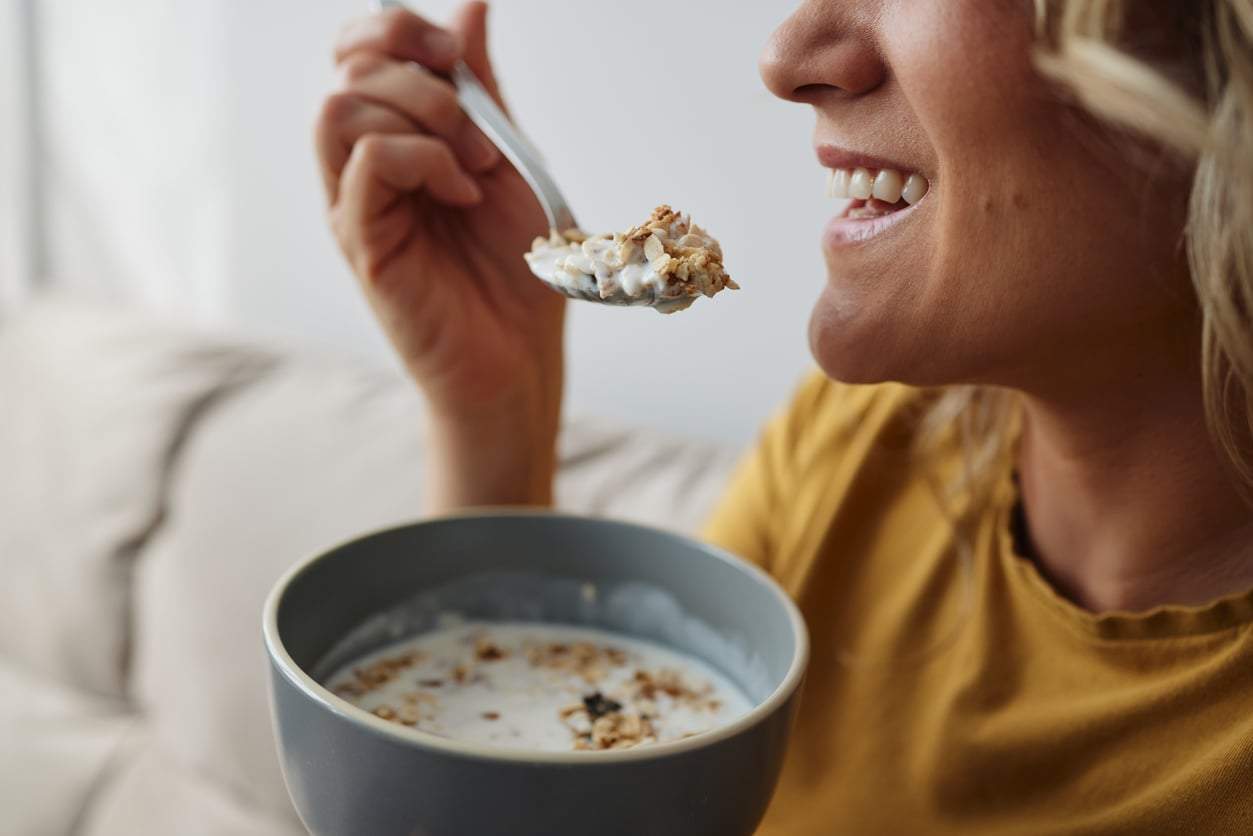
Breakfast cereals marketed as "diet" or "light" promise to help you lose weight without the sacrifice. But most of them are heavily processed, high in added sugar, and low in the protein and fiber that actually keep hunger at bay.
The result? You finish a bowl, feel fine for about forty minutes, and then the hunger hits again — often harder than before. If you want a grain-based breakfast that genuinely works, look for options with at least 5 grams of fiber and 10 grams of protein per serving, or switch to something like overnight oats with seeds and nuts built in.
The pattern behind all of them
Notice what these five foods have in common: they're all low in protein, low in fiber, or high in hidden sugars — sometimes all three at once. These are the three things your body needs most to feel full and stay full.
Eating well isn't just about choosing foods with a healthy reputation. It's about understanding what those foods actually do inside your body. Once you see the pattern, making better choices becomes a lot easier — and a lot more satisfying.