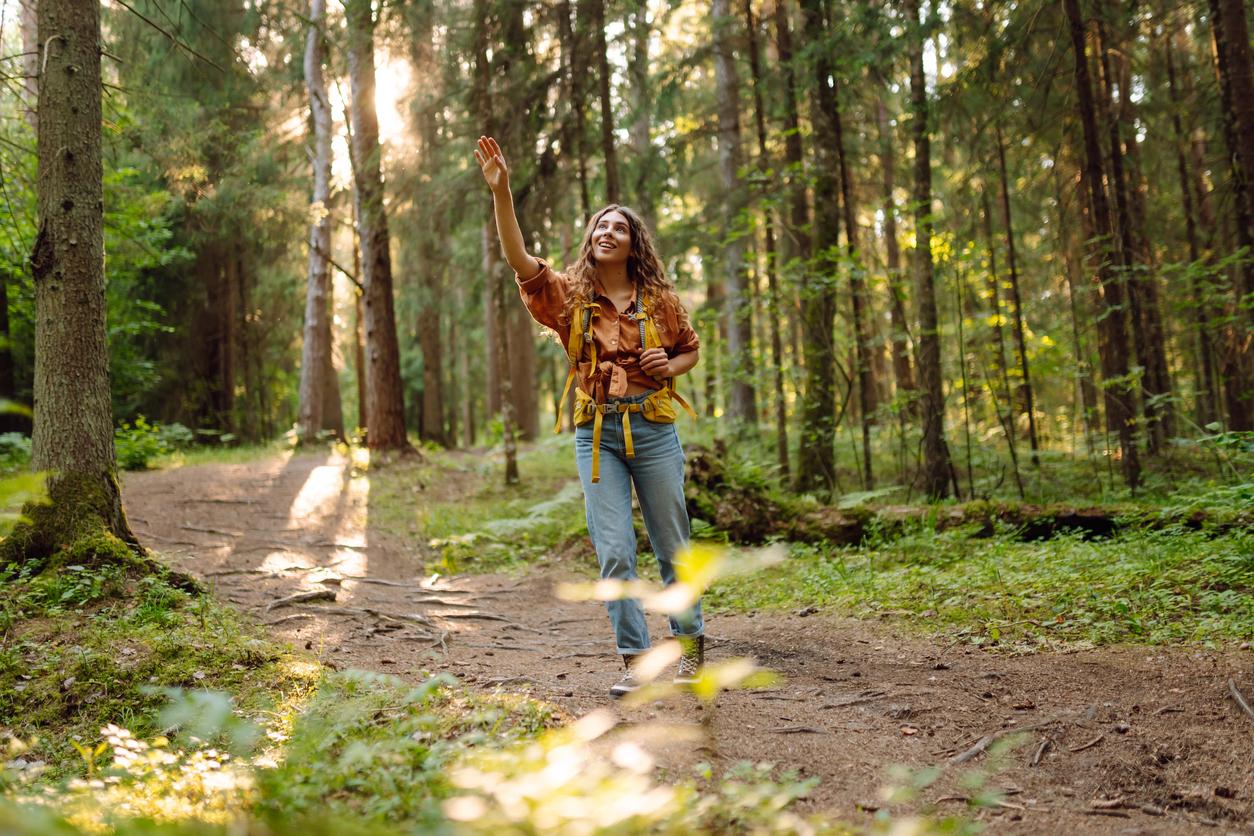
Imagine life without birdsong. Or a child who no longer recognizes the feel of moss or the scent of blooming trees. Chilling thought, right? The Guardian recently spotlighted a new study revealing that we’re moving in this exact direction. Our human connection to nature has plummeted—and if we don’t do something, we could lose this timeless bond entirely.
The Disappearance of Experience
A 2025 study published in the scientific journal Earth found that our connection to nature has dropped by more than 60% since 1800. Miles Richardson, a professor at Derby University and expert on nature connection, warns, “We face the extinction of natural experiences.” The study also shows that nature-related words—like stream, moss, and bloom—have vanished from literature at a similar rate.
What’s behind this? Urbanization, the loss of nearby wildlife, and parents introducing their kids to nature less often all play a role.
Are Future Generations Missing Out?
The research warns that without broad social and educational changes, people will connect less and less with nature. This so-called “intergenerational disconnection” means parents aren’t passing on their sensitivity to the natural world.
“Nature connection is now clearly a root cause of the ecological crisis. But it’s also vital for our mental health. It links human and environmental well-being,” Richardson said.
Is Urban Green Enough?
For many, a park, a few trees, or a flower-filled balcony feels close to nature—but is it enough? Richardson says no. Modeling shows that even increasing a city’s green spaces by 30% wouldn’t restore true nature connection. “We might need to make cities ten times greener to see real change,” he argues.
Campaigns Aren’t Enough—Childhood Holds the Key
While some initiatives can help, their long-term impact is limited. The study highlights that the most effective solution is fostering nature connection from early childhood. The forest school concept, which emphasizes learning in natural settings from preschool age, is a great example.
Another challenge: these changes need to happen within the next 25 years, or the trend may become unstoppable. The good news? Once started, this shift can sustain itself—making nature experiences a natural part of life again.
Just 4 Minutes a Day in Nature—Is That All?
A survey found that a Sheffield resident spends on average only 4 minutes and 36 seconds daily in natural surroundings. That’s alarmingly low—but also an opportunity: boosting this time tenfold—to about 40 minutes a day—could hugely improve our bond with nature.
“Working with parents and families is key. The focus isn’t just on creating connection, but on keeping it unbroken. A newborn today is just as curious about nature as in 1800—we just need to nurture that wonder through childhood and school years,” Richardson explains.
Hope in the Pages of Books
Although nature-related words usage dropped by 60.6% by 1990, the trend has started to improve—now the decline is “only” 52.4%. Does this signal growing ecological awareness? A nature-writing revival? Or just a statistical quirk? “I can’t say for sure,” Richardson admits. “But maybe people increasingly want to reconnect with nature—even on a spiritual level.”
The Start of a New Natural Life?
Maybe it’s time to see nature not just as a getaway, but as home again. Whether it’s a garden project with kids, planting a potted flower on the balcony, or a short morning walk in the nearby park—every small step counts. Because if we don’t change now, future generations might never truly experience what it means to live in harmony with nature.