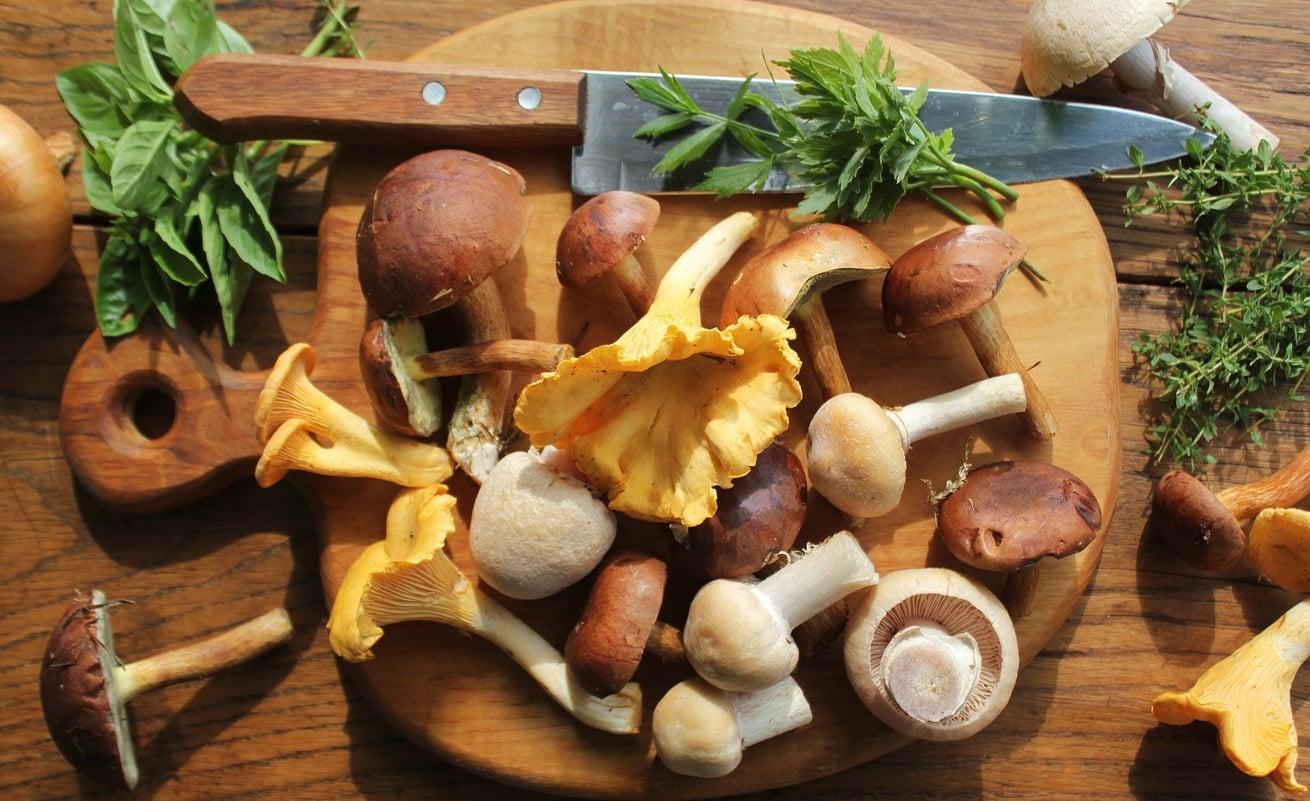
How long have you been involved with mushrooms? Where does your love for them come from?
My interest in mushrooms started in childhood; my family and I spent a lot of time outdoors, naturally collecting mushrooms too. I had a brief break during my teenage years, but soon after, I dove back into mushrooming and the fascinating world of fungi. It’s been nearly 30 years of regularly foraging mushrooms now.
Is mushrooming your full-time job now?
Not yet, though I’d love for it to be. I spend a lot of time with mushrooms even outside of work. It started with wanting to identify more mushrooms while walking in the forest, and the more I learned, the more I realized how much I didn’t know.
I eventually got so involved that I completed a certified mushroom inspector course. I still need the advanced qualification, which would allow me to learn about 800–900 mushroom species. Right now, my life circumstances don’t allow me to fit the 1.5–2 years of lectures and regular fieldwork into my schedule. I plan to complete it eventually, but for now, I keep learning and gaining experience.
What are you most proud of in your mushroom work?
That’s a tough one. If I had to pick, it would be that the first officially DNA-verified finding of the red-staining Lactarius romagnesii milkcap mushroom in the country is credited to me.
How many mushroom species live on Earth? Do we know exact numbers?
Estimates suggest there are 2.2 to 2.8 million mushroom species worldwide (including microscopic fungi), but only about 145,000 have been identified so far. The number of mushrooms that produce fruiting bodies is estimated around 35,000 species, with roughly 3,000 commonly found in Hungarian forests.
More people are interested in foraging these days. What should we know about the legal background?
Yes, the number of nature lovers has definitely increased, understandably. Last year’s virus situation encouraged even more people to get outside and explore the forest. Mushroom foraging follows roughly the same rules as collecting other forest products like fruits or wild garlic.
Each person can collect up to 2 kg of mushrooms daily, and forest managers must allow this unless the area is protected.
This amount is for personal use only and cannot be sold. Selling requires collection permits and producer licenses.
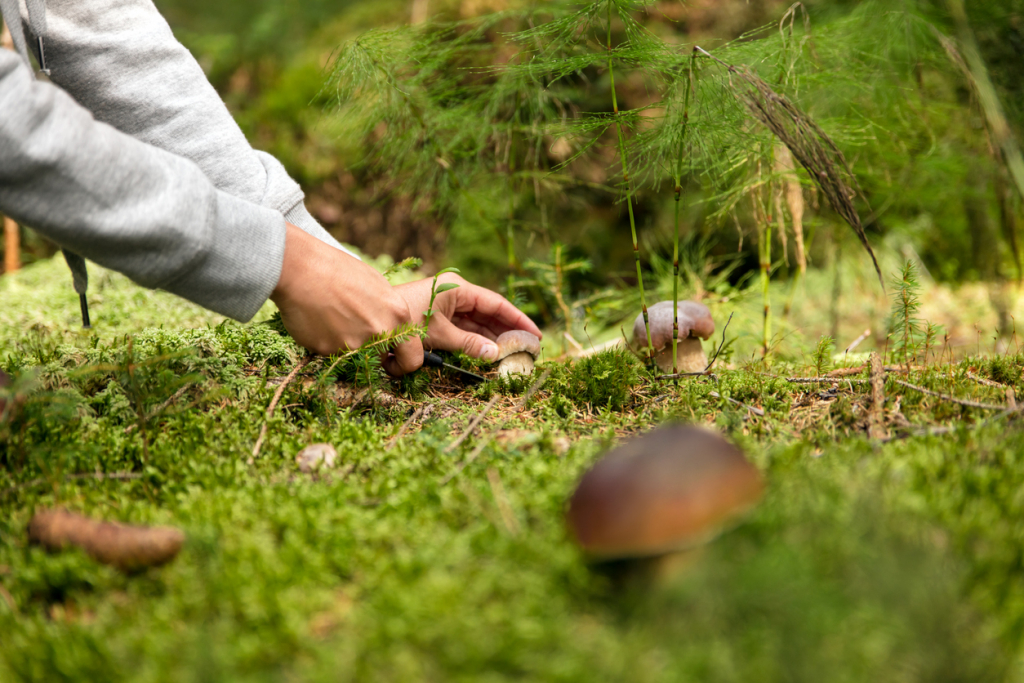
I hear you offer courses. How are you managing during the pandemic?
We had to adapt like many others and shifted towards online teaching. We’ve held several beginner courses; theory was previously in-person, but online seems to work well too.
We currently have a course running, with field practice planned for April-May if conditions allow. The pandemic’s impact is clear here too—there was huge demand, and spots filled within days, prompting us to open a second group.
What knowledge can someone gain from your course?
Anyone serious about mushrooms should consider taking at least one course. Our students gain solid knowledge, learning about 120 species—about half are edible. We also cover common poisonous and protected species. We tailor content to regional differences, so what’s taught in the Little Hungarian Plain differs from the Northern Mountains.
Graduates can confidently forage mushrooms in the forest. This knowledge doesn’t replace official inspection but greatly reduces the chance of mistakes. They learn the basics—where and when to collect, which forests to explore, what plant communities to watch for, and how to make mushroom foraging a meaningful part of life.
What do you usually prepare with mushrooms at home?
I’m the main mushroom eater in the family, so we don’t consume a lot. But I enjoy them in every form—fried, baked, boiled, grilled. The exception is porcini, which I prefer dried; it’s more flavorful as a spice.
Mushrooms can also be fermented, pickled, preserved in brine, dried, and of course frozen.
For freezing, I recommend prepping them first. This makes storage easier, saves space, and preserves flavor better.
Porcini is the most popular at home, but we also like the shaggy ink cap, known for its blood sugar-lowering effects.
Do all mushrooms have specific health benefits?
Mushrooms are rich in minerals, vitamins, and trace elements like iron, copper, zinc, and vitamins B and D. They’re definitely healthy. Some are labeled medicinal and can be used preventively or to boost the immune system. I recommend enjoying them regularly and in moderation, not just as powders or capsules, but as part of everyday eating.
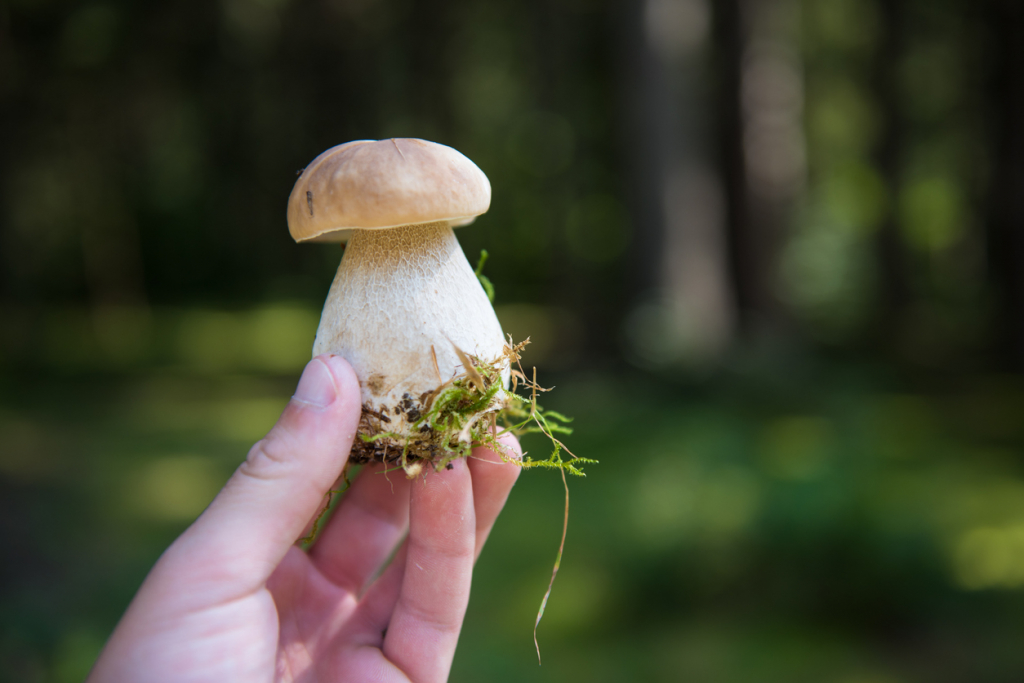
Is there a most popular mushroom species?
Porcini and chanterelles are favorites, but the honey fungus is popular too. It varies by person and weather. Some pick almost everything they find; others focus on specific species and bring unknown ones in paper bags for inspection. This way, the inspector can analyze them, and the forager learns which mushrooms are safe.
It’s not just for safety—inspectors also give tips on how to prepare mushrooms and suggest recipes.
This is important because some mushrooms need special pre-treatment before eating.
What does that mean exactly?
Some species require 20 minutes of intense heat treatment, like boiling, before they’re edible. This is because they may contain heat-sensitive toxins or be so fibrous that they’re hard to digest without cooking.
I highly recommend keeping mushrooms separate—probably the biggest mistake is mixing everything together during foraging.
Inspectors at markets are expected to separate good mushrooms from poisonous ones, except for the deadly Amanita phalloides. If they find one, they must immediately discard the entire basket without hesitation. Contrary to myths, this isn’t due to contact poisoning—touching a death cap in the forest won’t make you sick.
It’s obviously not recommended, but poisoning won’t occur from touch alone. The danger is if a small piece breaks off and gets stuck between gills or elsewhere in the basket. For children, even a tiny amount can cause serious harm.
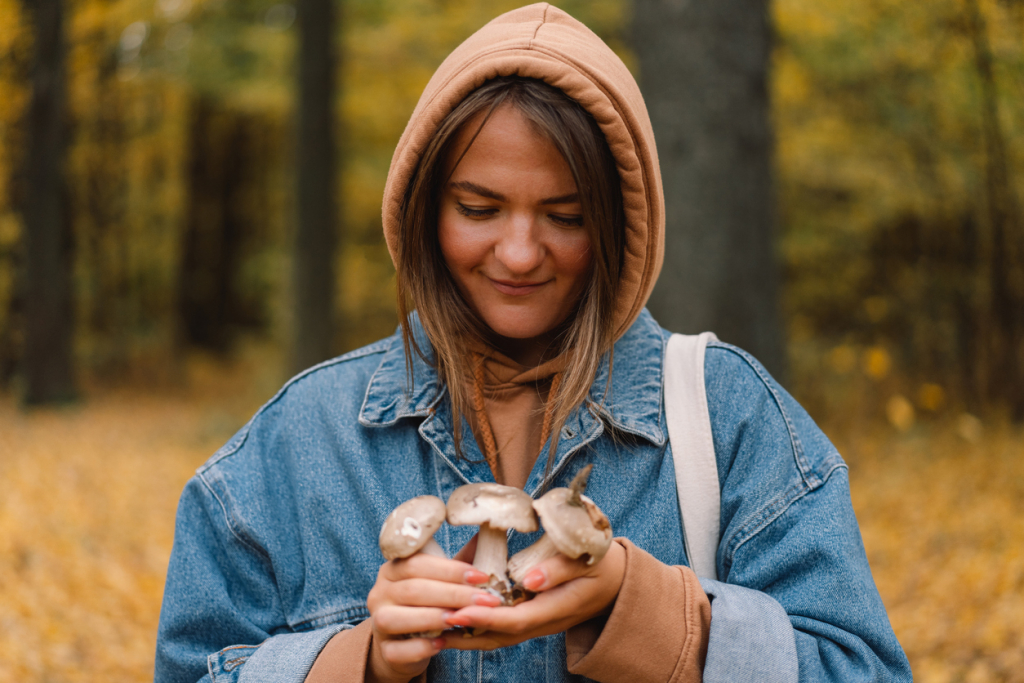
Is it more likely to pick edible mushrooms than poisonous ones? Can we estimate a ratio?
It depends on the season. Sometimes when a certain edible mushroom is abundant, people bring the same species for inspection repeatedly. When edible mushrooms thrive due to weather, the chance of safe finds increases, but the same can happen with poisonous species. For example, last year there was an influx of the carbolic-smelling Agaricus, and many baskets had to be emptied because people kept bringing them in.
On a good forest walk, there’s roughly a 50/50 chance of picking edible or poisonous mushrooms.
As a beginner, be cautious with this estimate. It’s possible a previous forager picked all the edible mushrooms and left only the poisonous ones behind. So it’s hard to judge, but there’s a good chance to find edible mushrooms.
When trying new species, always consume only a small amount initially, as individual sensitivities can develop even if all guidelines are followed.
If you had to highlight one interesting fact about mushrooms, what would it be? For me, it was new to learn from you that mushrooms absorb heavy metals from soil.
Yes, that’s a fascinating trait—they accumulate heavy metals from soil quite well. We always advise people not to collect near highways, industrial areas, old warehouses, or anywhere heavy metal contamination is possible. Mushrooms still show traces of these harmful substances.
Some species bind lead, even though leaded gasoline hasn’t been used for about 30 years. Many trees are older and may have absorbed lead. Mushrooms growing on or near these trees, like oyster or hen-of-the-woods mushrooms, can absorb heavy metals from the wood. In the forest’s heart, this risk is lower, but urban areas should be avoided.
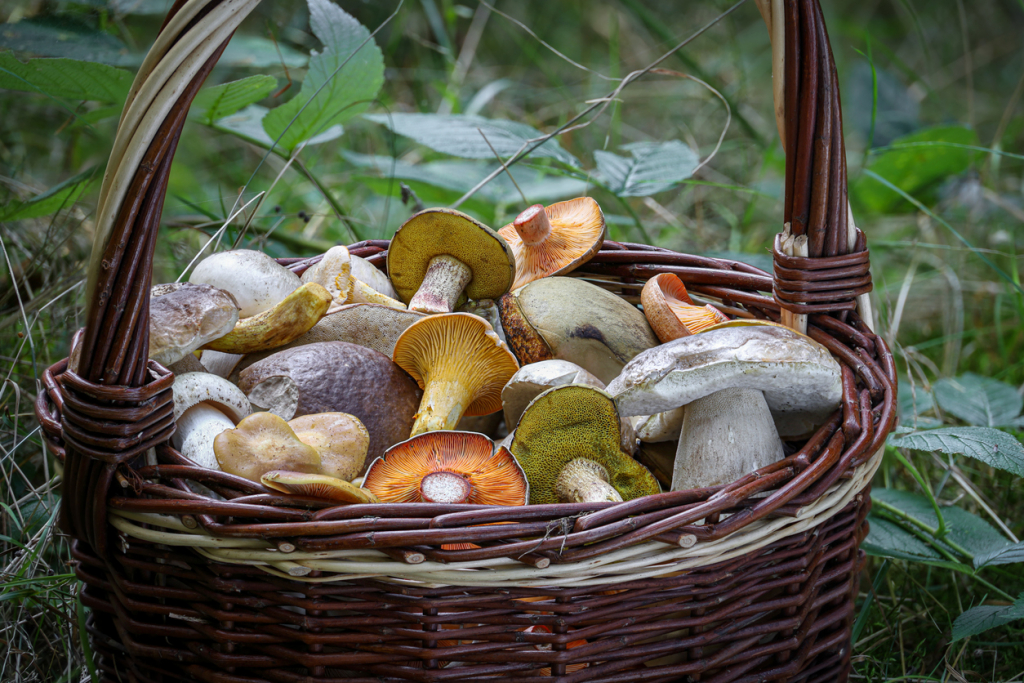
Mushrooms aren’t just for eating—they can be used for dyeing too. What should we know about this process?
Certain mushroom species have excellent pigments. When mixed with substances like iron sulfate or alum and treated with solvents, they create stunning colors. They easily dye cotton, textiles, yarns, and natural twines, producing a wide range of hues.
The color palette is broad and complex. For example, the bright red Cortinarius species dyes cotton yellow with alum but turns it dark gray or black with copper sulfate. Different chemicals cause different reactions and colors.
Can poisonous mushrooms be used for dyeing too?
Absolutely! It doesn’t matter if the mushroom is edible or toxic. For example, the cinnamon-colored polypore is a dye mushroom and the only poisonous bracket fungus in the country. Porcini mushrooms can also be used for dyeing, even though they’re tasty and edible. This isn’t my specialty, but anyone interested in natural textile dyeing should explore both herbs and mushrooms.
Have there been innovations in mushroom use recently? Yes—there’s progress in making vegan leather from mushrooms. One method uses kombucha to create thin, parchment-like leather. The roughly 1 cm thick mushroom layer is dried, shrinking to about one-tenth its size, resulting in 1–2 mm thick leather sheets ready for cutting and dyeing.
The other method grows mushroom mycelium through natural materials underground. When the desired density is reached, the process is stopped by quick heat treatment. The resulting blocks are sliced, shaped, pressed, and cut as needed. Both techniques are known and practiced in Hungary now.
These methods are fantastic because they produce materials without environmental impact. Mushrooms break down what humans and often nature consider waste.
If this article sparked your interest, László and his team have a private group where they discuss all mushroom-related questions and publications. You can find it here: https://www.facebook.com/groups/gombahatarozo/