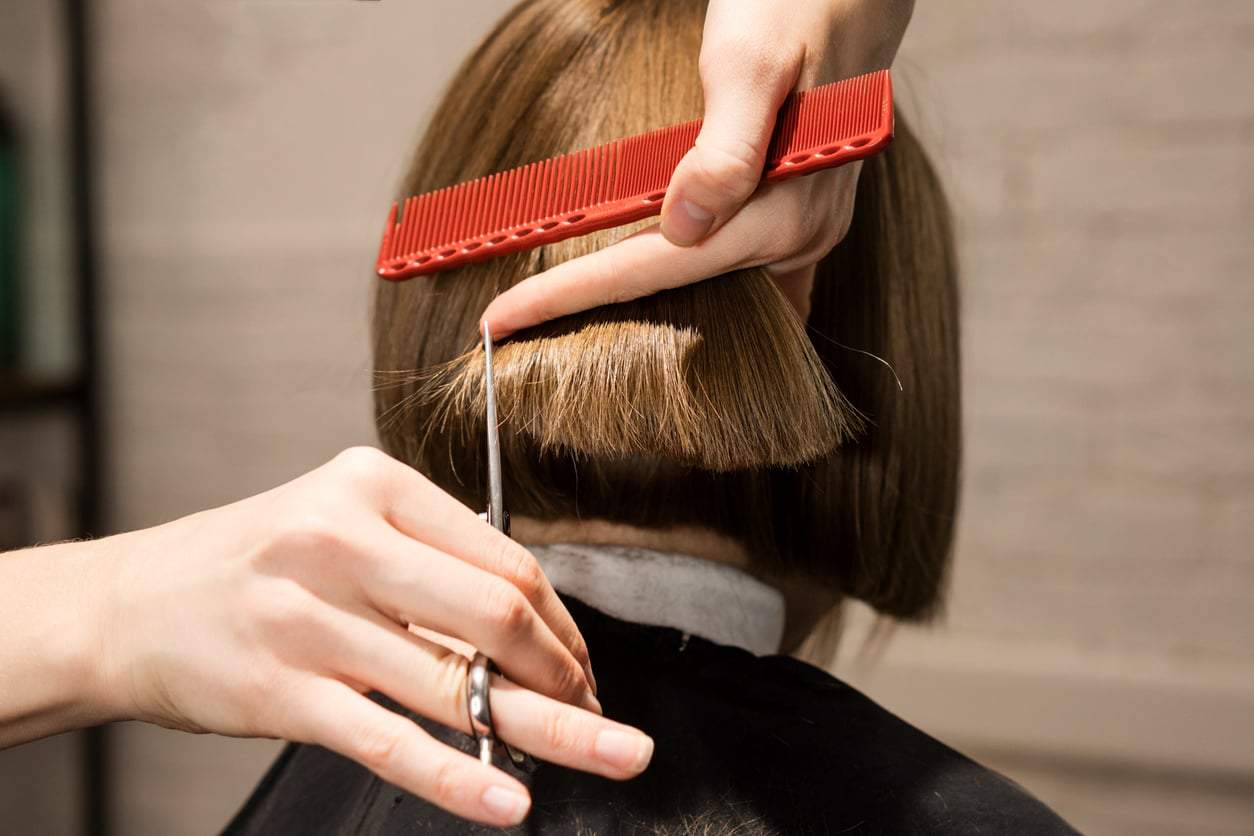
The bob is a brilliant haircut and a slightly tyrannical one. It looks intentional the moment it is cut, it holds a shape without effort, and then one morning you catch yourself in a shop window at the four-month mark and realise it has stopped being a bob and started being a shrug. That is the point at which most people either go back to the salon and cut it all off again, or resign themselves to a year of clips.
There is a third route, and it mostly comes down to accepting that growing hair out is a haircut project, not an absence of haircuts.
Know Which Stage You Are In
Growing out a bob is not one long slog; it is three distinct stages with different problems. The first is the flick: the ends hit your collar or the top of your shoulder and start kicking outwards, especially at the back. Nothing is wrong with your hair — the shoulder is simply pushing the ends up. The second is the shelf: length arrives at the sides but the perimeter stays blunt and heavy, so your hair reads as a triangle. The third is the middle length, somewhere between collarbone and bra strap, which is when it finally starts to move and, ironically, when most people stop being able to see the progress.
Knowing which stage you are in matters because each one has a different fix. The flick needs styling. The shelf needs cutting. The middle length mostly needs condition and patience.
Keep Cutting — Just Cut the Right Thing
The instruction that changes everything is this: at your appointments, ask for weight removal rather than length removal. A stylist can take bulk out of the interior, soften the perimeter and add long, invisible layering that lets the hair sit rather than shelf out, all without shortening the longest pieces you are trying to protect. Say it plainly — "I am growing this out, please keep every millimetre of length and take the weight out" — because a stylist who does not know your plan will tidy the ends into a neat shape, which is exactly the shape you are trying to escape.
A light dusting of the very ends every ten to twelve weeks is worth it too. Split ends travel upwards, and hair that is snapping mid-shaft is not gaining length no matter how fast your scalp is producing it. The goal is not zero scissors. It is scissors used strategically.
Face-framing pieces are the other quiet hero. A few softer lengths around the face give the eye somewhere to go while the back is doing nothing interesting, and they can be shaped at every visit as everything else grows past them.
Styling the Flick Stage Without Fighting It
During the collarbone months, work with the kick instead of trying to iron it flat. Blow-drying the ends under with a round brush usually lasts an hour; blow-drying them slightly outwards or bending them with a wide-barrel tong reads as deliberate all day. Alternatively, dry your roots with your head flipped forward for volume up top, so the silhouette is round rather than triangular.
This is also the stage where clips, claws and a good headband stop being a compromise and start being the outfit. A low, loose half-up with a claw hides the awkward perimeter completely and looks current. Braiding damp hair overnight gives you a soft bend that disguises unevenness in the ends.
Protect What You Have Already Grown
Length is only ever lost at the ends, so treat the last few inches as the fragile, oldest part of your hair — because that is exactly what they are. Loosen your ponytails and move the elastic's position around so you are not creating the same weak point daily. Sleep on a smooth pillowcase if you can. Use heat protection every time you take a tool near it, and drop the temperature a setting; you will be styling this same hair for the next two years.
On the scalp side, the useful habits are dull and free: wash often enough that build-up is not sitting there, massage while you shampoo, and eat properly. Growth rate is largely down to genetics and health, and no product turns that dial dramatically. If your hair is shedding noticeably more than usual, or thinning at the parting, that is a conversation for a doctor rather than a shopping list.
How long does it take to grow a bob into long hair?
Hair grows roughly half an inch a month for most people, which puts collarbone length at around six to nine months from a chin-length bob, and genuinely long hair closer to two years. Trims will cost you a little of that, but hair that is snapping off from damage costs you far more, so the trimmed timeline is usually the faster one in practice.
Should I keep cutting my hair while growing it out?
Yes, but less often and with a very specific brief. Aim for appointments every ten to twelve weeks, ask for weight and bulk to be removed rather than length, and have your face-framing pieces reshaped so the cut still looks styled while the back catches up. If a salon visit ends with your hair the same length it was when you walked in, the conversation went wrong somewhere.