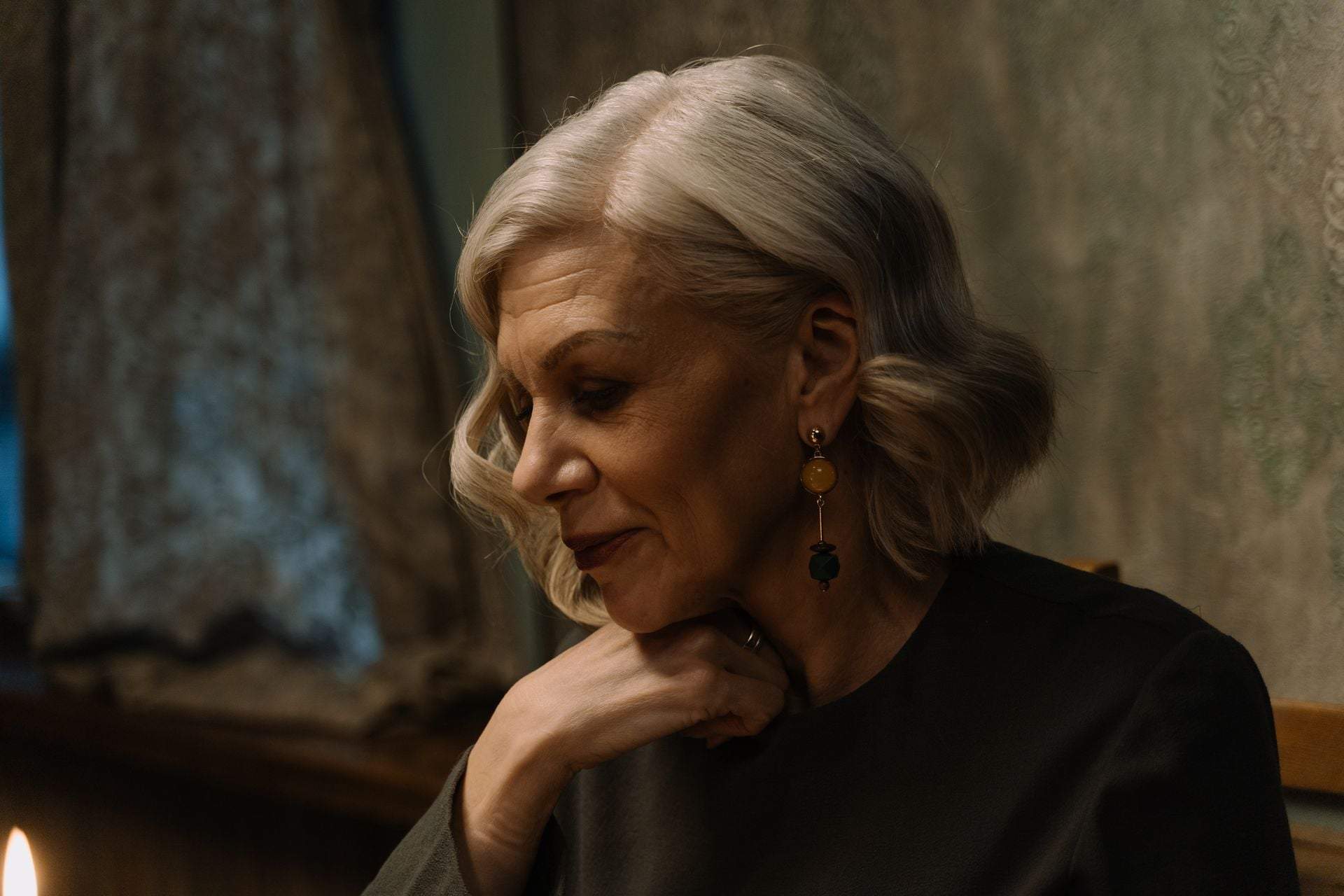
There is a particular appointment many of us have made in a mild state of panic: the root touch-up booked three days before an event, because a stripe of silver has appeared at the parting and suddenly nothing else about the outfit matters. Grey blending exists to end that cycle. Rather than painting every grey hair out of existence every few weeks, it works with what is coming through, softening the line between coloured hair and natural grey until there is no line to defend.
It is not the same as deciding to go silver overnight, and it is not giving up. Think of it as changing the brief you give your colour: instead of coverage, you are asking for camouflage.
What the technique actually does
Grey blending usually means fine highlights and lowlights woven through the regrowth area and the lengths, in shades close to your natural base, so the grey reads as a lighter ribbon rather than a demarcation. Some colourists use a semi- or demi-permanent gloss over the top, which deposits tone without a hard root line, so it fades out softly instead of growing out in a block. The effect is dimensional rather than flat, and that dimension is what makes grey look intentional.
The practical gain is time. When there is no sharp border between coloured and uncoloured hair, going eight, ten, twelve weeks between appointments stops feeling like neglect. For a lot of people that is the real motivation — not an aesthetic conversion, just the end of a standing commitment they never agreed to.