There is a moment, usually in unforgiving daylight, when you notice it is no longer one rogue strand at the temple. There is a whole section. And because beauty is a market as much as an art form, there is now a shelf of serums promising to address it, which raises the entirely reasonable question of what any topical product can realistically do.
Here is the honest framing. Hair goes grey because the pigment-producing cells in the follicle gradually stop producing melanin, and how early that happens is largely written into your genes and your family line. No cream applied to the outside of a hair fibre can put pigment back into a strand that grew out without it. What care can do — and this is not nothing — is change how your grey looks and behaves, which is usually the real complaint.
Grey hair is a different fibre, not just a different colour
Without pigment, hair often grows coarser, wirier and more transparent. It reflects light differently, so it can look frizzy at the crown when the rest of your hair looks smooth. Many women also find their scalp produces less oil as the years pass, so the lengths have less natural conditioning travelling down them.
Treat it accordingly. Move to a richer conditioner than you used at thirty, and use a mask weekly rather than when you remember. Leave-in products matter more than they used to: a light oil or cream through the mid-lengths tames the wiriness and, crucially, adds shine. Grey hair without shine reads as dull; grey hair with shine reads as silver, and that difference is almost entirely down to condition.
The yellowing problem, and what actually causes it
White and grey hair is porous and unpigmented, which means it picks up everything around it: minerals in hard water, residue from styling products, heat damage from tools, smoke, chlorine, even sunlight. The result is a brassy, yellowish cast that makes silver look grubby.
A purple or blue-toned shampoo neutralises that yellow, but it is a garnish, not a staple. Used every wash it can leave hair looking lilac-grey and feeling dry; used once every week or two, with the rest of the time spent on a gentle moisturising shampoo, it keeps the tone clean. If you live with hard water, a clarifying wash once a month removes the mineral film that toning products cannot touch. And heat protection is non-negotiable — scorched grey hair yellows fast and stays yellow.
The cut matters more than any bottle
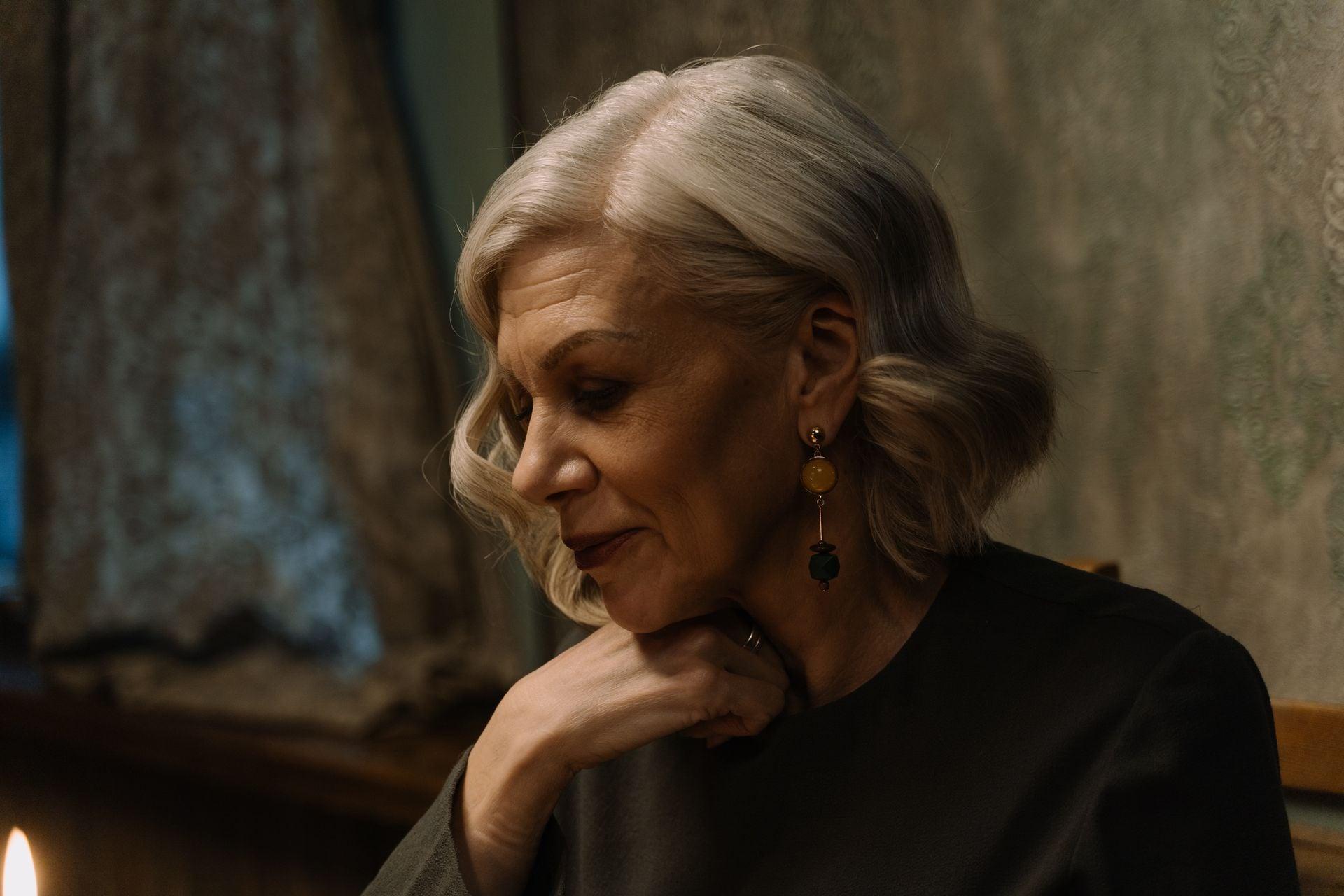
The single biggest upgrade for greying hair is usually a haircut that accounts for its new texture. Coarser, drier hair holds shape well, which is good news: blunter lines, a defined jaw-length bob, a strong fringe, layers that actually move. Very long, very thin, very layered ends tend to emphasise sparseness at the front, where greys often cluster.
If you are growing out colour, ask your stylist about a transition rather than a single dramatic chop. Blended lowlights, a gloss to soften the demarcation line, or simply a shorter cut that shortens the grow-out — there are several routes, and the right one depends on how much pigmented hair you still have and how patient you feel.
What you wear next to your face changes everything
Once your hair cools down in tone, colours that once flattered you can start to drain you. Muted beige, mustard and brownish neutrals are the usual offenders near the face. Clear, cool-leaning shades — true navy, crisp white, charcoal, deep burgundy, emerald, blush pink — tend to make silver look intentional.
The same applies to makeup. A slightly warmer blush and a defined brow do more for a grey-haired face than any change of foundation, because the hair has removed contrast and the brow puts it back. If your brows have faded too, a soft pencil in a shade lighter than your old colour is the least ageing option.
Can anything actually reverse grey hair?
Nothing available on a beauty counter reliably restores pigment to hair that has already grown out grey, and any product implying otherwise deserves scepticism. What products can genuinely deliver is better condition, better shine, less yellowing and a scalp that feels comfortable — worthwhile results, just not the one the packaging hints at.
Why has my hair suddenly changed so much in a year?
Gradual greying is normal, but a sudden, marked change in texture, density or shedding alongside it is worth mentioning to your doctor, since thyroid issues, iron levels and certain deficiencies can all show up first in your hair. It is not a reason to panic — it is simply a case where a short conversation with a professional is more useful than another shopping trip.