The yellowing problem, and what actually causes it
White and grey hair is porous and unpigmented, which means it picks up everything around it: minerals in hard water, residue from styling products, heat damage from tools, smoke, chlorine, even sunlight. The result is a brassy, yellowish cast that makes silver look grubby.
A purple or blue-toned shampoo neutralises that yellow, but it is a garnish, not a staple. Used every wash it can leave hair looking lilac-grey and feeling dry; used once every week or two, with the rest of the time spent on a gentle moisturising shampoo, it keeps the tone clean. If you live with hard water, a clarifying wash once a month removes the mineral film that toning products cannot touch. And heat protection is non-negotiable — scorched grey hair yellows fast and stays yellow.
The cut matters more than any bottle
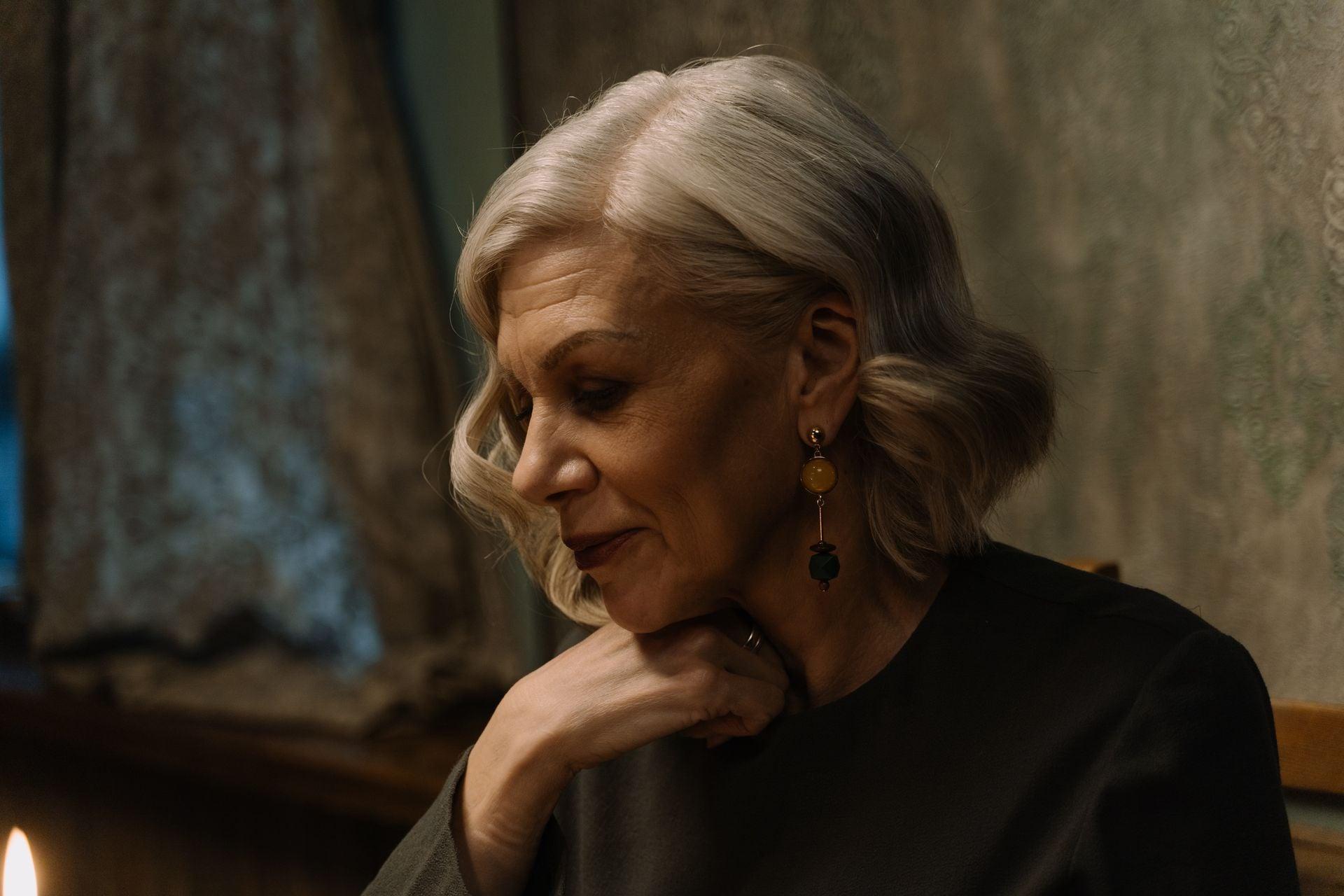
The single biggest upgrade for greying hair is usually a haircut that accounts for its new texture. Coarser, drier hair holds shape well, which is good news: blunter lines, a defined jaw-length bob, a strong fringe, layers that actually move. Very long, very thin, very layered ends tend to emphasise sparseness at the front, where greys often cluster.
If you are growing out colour, ask your stylist about a transition rather than a single dramatic chop. Blended lowlights, a gloss to soften the demarcation line, or simply a shorter cut that shortens the grow-out — there are several routes, and the right one depends on how much pigmented hair you still have and how patient you feel.