Most of us don't have a clothing shortage. We have a visibility shortage. The linen shirt you love is folded under three jumpers, the trousers that fit best are on the wrong side of a crowded rail, and so at 7.40am you reach — again — for the same jeans and the same black top, because they are the only things your hand can find without thinking. Rearranging a wardrobe is not about owning less. It's about making the good decisions the easy ones.
Start by emptying one rail, not the whole room
Wardrobe projects collapse because people pull everything out at once, lose their nerve around lunchtime, and go to bed with a mountain on the bed. Do one zone instead: a single hanging rail, or one shelf, or the drawer where knitwear goes to be forgotten. Take everything out of that zone, wipe the shelf, and put back only what you would genuinely wear this month. Everything else goes into a temporary pile on a chair, to be dealt with at the end.
This works because the smaller the zone, the more honest you get. When you're only deciding about fifteen jumpers, you notice that two of them itch, one has pilled at the underarm, and one you've kept purely because it was expensive. One rail takes forty minutes. The whole wardrobe, done rail by rail, takes a couple of weekends — and it holds.
Give your clothes prime real estate — and a demotion zone
Every wardrobe has a golden middle: the section at eye level and within an easy arm's reach. That space should go to the clothes you wear weekly right now, in this season, in this life. Not the clothes you wore in a previous job, not the beautiful dress for the wedding next summer. Move occasion pieces to the far ends of the rail or the high shelf. Move off-season items out of the wardrobe entirely if you have anywhere to put them — a zipped bag under the bed, a lidded box on top of the cupboard.
Then group by category, and within category by colour: all trousers together, dark to light; all shirts together; all knitwear together. It sounds fussy and it takes twenty minutes, but the payoff is that you start seeing outfits rather than objects. You notice you own four almost-identical grey jumpers and no mid-weight jacket, which is far more useful information than any shopping list you could write.
Fix the small mechanics that cause the mess
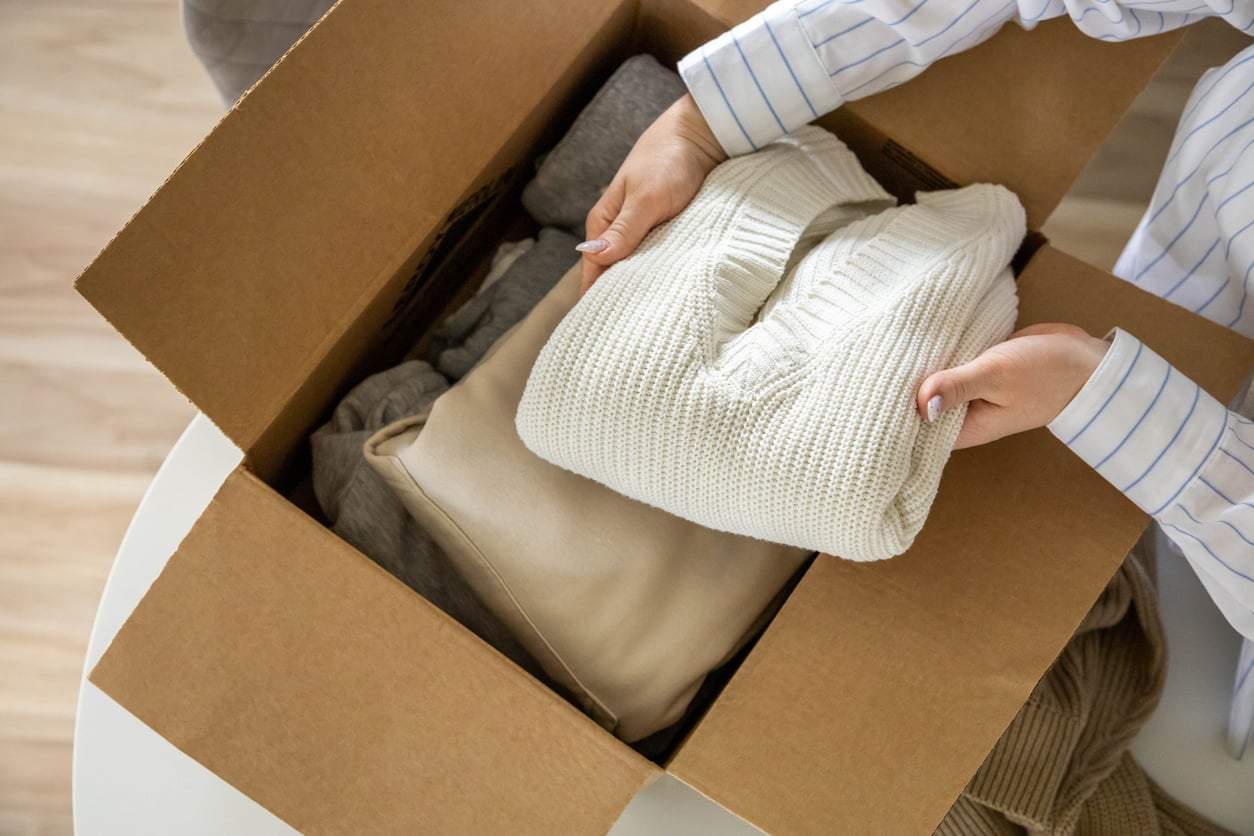
Half of wardrobe chaos is hardware. Mismatched hangers make a rail look like a jumble sale and squash sleeves out of shape; switching to one type — slim velvet ones if space is tight — can buy you several extra inches of rail. Heavy knitwear should be folded, not hung, or it stretches at the shoulder. Shelf dividers stop folded stacks from sliding sideways into each other. A single hook on the inside of the door, used for tomorrow's outfit, removes the morning decision altogether.
The other half is the return journey. Clothes don't end up on the chair because you're disorganised; they end up there because putting them away takes four separate actions. Make the route shorter: a basket for genuinely dirty things, a hook for worn-once-still-fine things, and a rule that the hook gets cleared every Sunday. That one habit keeps a tidy wardrobe tidy longer than any folding technique.
How do I organise a small closet with no extra space?
Go vertical and go seasonal. Add a second hanging rail below the first for shorter items like shirts and skirts, use slim hangers to compress the rail, and store anything out of season somewhere else entirely — under the bed, in a suitcase, on top of the wardrobe — so the hanging space only holds clothes for the next three months. Shoes and bags do better in open shelving or clear boxes than piled in the bottom, where they become an archaeological dig.
How often should I redo my wardrobe?
Twice a year is plenty for the big rotation — once as the weather turns cold, once as it warms up — with a ten-minute tidy at the end of each month to re-hang strays and pull out anything you've stopped reaching for. If you find yourself re-sorting constantly, it's usually a sign there's simply too much in the space, and the answer is fewer items rather than better folding.