I have reorganised my wardrobe more times than I'd like to admit, and for years I did it wrong in a very specific way: I made it beautiful. Everything by colour, hangers matched, knitwear folded into neat architectural stacks. It photographed well and it failed completely, because within ten days I was back to pulling the same four things out of the same corner and leaving the rest untouched.
The useful version looks a little messier and works far better. It starts with a question that has nothing to do with storage: what do you actually wear in a normal week?
Start with a week of evidence, not an edit
Before you pull anything out, spend a few days noticing. What did you reach for on a work morning, a school-run morning, a cold evening out? Most women discover that their real life has three or four modes, and that their wardrobe is organised around a fifth one that barely exists — the formal event, the sudden holiday, the job they had six years ago.
That evidence is what makes the edit painless later. You're not asking "do I love this?", which is a question with no clear answer at nine on a Sunday morning. You're asking "where in my week does this go?" If there's no honest answer, that's information.
Zones beat categories
Here's the single change that made my mornings easier: I stopped grouping by garment type and started grouping by occasion. The clothes I wear on a working weekday live together at eye level in the easiest-to-reach section — not all the trousers in one place and all the shirts in another, but the pieces that genuinely form outfits together.
Next to that, a smaller weekend zone. Then, pushed to the far end or the top shelf, the occasion pieces, the ski layers, the one velvet thing. Within each zone you can still sort by colour if it pleases you, and it does make dressing faster when the choices are limited to a sensible range.
The rule I hold to is that prime real estate — the middle of the rail, the drawer at hip height — belongs to whatever you wear most, even if it's unglamorous. The beautiful coat you wear twice a year does not deserve the best hanger position.
Hang, fold, and stop fighting gravity
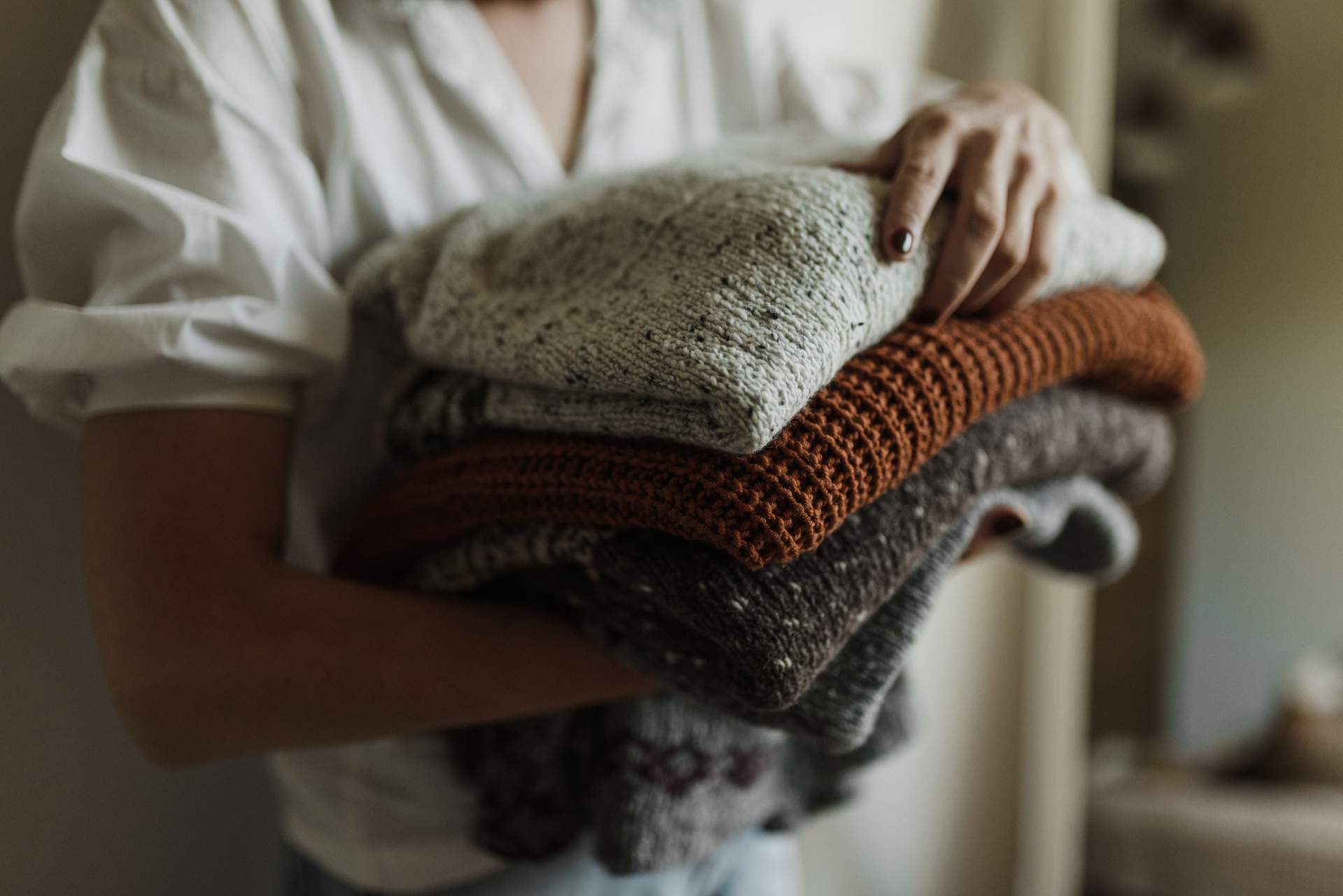
Hang anything that creases or loses its shape in a pile: shirts, dresses, tailoring, anything in a slippery fabric. Fold anything heavy enough to stretch on a hanger, which means almost all knitwear and jersey. Chunky cardigans hung for a season come out with shoulder bumps that no steaming will fix.
Velvet or slim non-slip hangers genuinely earn their keep, mostly because they let you fit more on the rail without everything sliding off. In drawers, file things vertically so you see every item from above instead of excavating a stack; shelf dividers do the same job for folded jumpers on a shelf.
And give the chair a function. There is always a chair. Make it the official home of the half-worn pile — things worn once that aren't ready for the wash — and it stops being a slow-motion landslide.
The seasonal swap, without the drama
Autumn is the natural moment for this. Everything you won't touch before March — linen, sandals, fine summer dresses — goes away clean, in a breathable cotton bag or a lidded box under the bed, never a sealed plastic bag with any dampness left in it. Wash or air anything that's touched skin before storing, because invisible traces of body oil are what attracts moths and sets stains permanently.
In their place, bring the heavy knitwear and boots into the zones that get used daily. The swap takes an afternoon and buys you five months of not pushing a summer dress aside every single morning.
How many clothes should I keep?
There's no correct number, and anyone who gives you one is selling a system. A more useful test is whether every piece on the main rail has a place in your real week and at least two things it works with — a garment with no partners is a decoration, not an outfit. If your rail is so full that hangers won't slide freely, that's a practical cap worth respecting, because clothes you can't see are clothes you don't wear.
What do I do with the things I'm not ready to let go of?
Put them in a box with the date on the lid and store it somewhere out of the dressing routine — a high shelf, a spare room. Nothing in that box is being thrown away, which takes the panic out of the decision, and when you open it in six months you'll feel genuinely neutral about most of it. The pieces you missed go back in the wardrobe; the rest can go to a charity shop or resale without any ceremony at all.