
Family constellation is a powerful tool that, in the right hands, dives way deeper than you might expect. It’s no surprise that more people are opening up to it here at home, and that every practitioner eventually develops their own unique approach. Some stick to the classic Hellinger method, while others blend it with psychodrama, energy work, aromatherapy, or body awareness to create their own magic.
Over the past 4-5 years, I’ve seen a lot of this world. I’ve lost count of how many times I’ve been set up in constellations, played a role, or quietly observed when a particular session didn’t call to me.
I always worked with the same therapist because I deeply trust her. I’ve witnessed how she holds the space and the people together, even when everything seems to turn upside down. Her presence feels safe, and the constellations always go deep—and always help.
Then recently, I felt it was time to explore something new
I’ve done a lot of inner work and grown braver and more open lately. Plus, a few close friends of mine got really excited, and we formed a little intimate “self-discovery crew.” One of us suggested trying something new: yogic family constellation. Since yoga has been on my mind for a while (I’m curious but never really dove in), I jumped at the chance. Maybe this time I’d finally get closer to it!
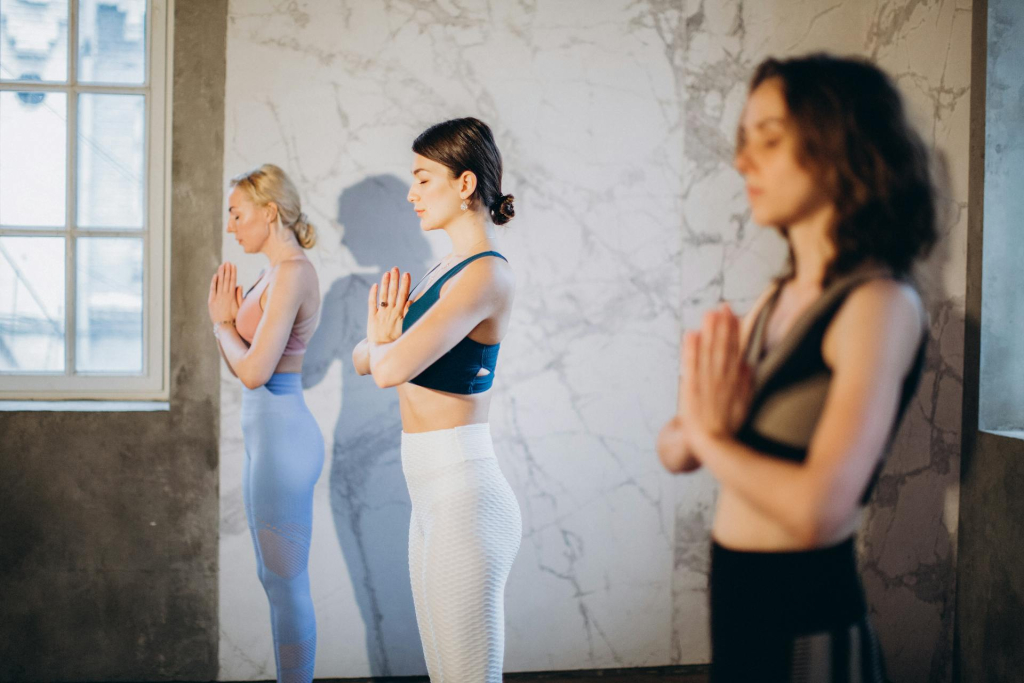
Well… that closeness didn’t happen. Under the yogic label, I expected various asanas and movements—but instead, we only did a seated exercise that felt more like a meditative inward focus.
It wasn’t bad, just not the kind of ritual I had in mind. Later, we did breathing exercises that surprisingly packed a punch. But the mantras and mudras? I honestly didn’t connect with them. I’m not saying they don’t work, but for me, in that moment, nothing special happened.

Guided flow—or lost magic?
What really surprised me was how the session was run. Everything happened behind the scenes—we didn’t discuss beforehand who would represent what. (I actually like that.) But while in my usual circles everyone jumps in somehow—as a representative, participant, or just holding space—here, roles were pre-assigned by numbers or nicknames.
I’ve done this type of setup with my therapist before, but those were always short, focused, “guided” constellations. Usually, we only used them to shed light on a specific detail of a bigger constellation. Here, the entire session was built this way from start to finish—and that felt odd to me. Not bad, just over-controlled.
It felt like the spontaneity, the instinct, that flow I love so much in this method simply vanished.
I couldn’t let my feelings guide me or step into a role just because something stirred inside me. And for me, that’s the most important part of the whole process—so that experience was simply missing.
I don’t want to be unfair: the method clearly worked
One of my friends was set up in a constellation too, and she said a lot fell into place for her—and really, that’s what matters most. It’s also possible that another time, with a different group or mood, the yogic constellation would have offered me something else. But this time—in this form—it just didn’t resonate.
I didn’t leave with a bad feeling, but I also didn’t walk away with that familiar, uplifting sensation I usually carry after a constellation. And that’s okay. One thing I’ve learned over the years is that not every method speaks to everyone—and even less so in every life situation.
What happened wasn’t wasted—perfect as an experience. But now I’m returning to my trusted source and can’t wait for the next constellation, which I already signed up for as soon as the event was announced.