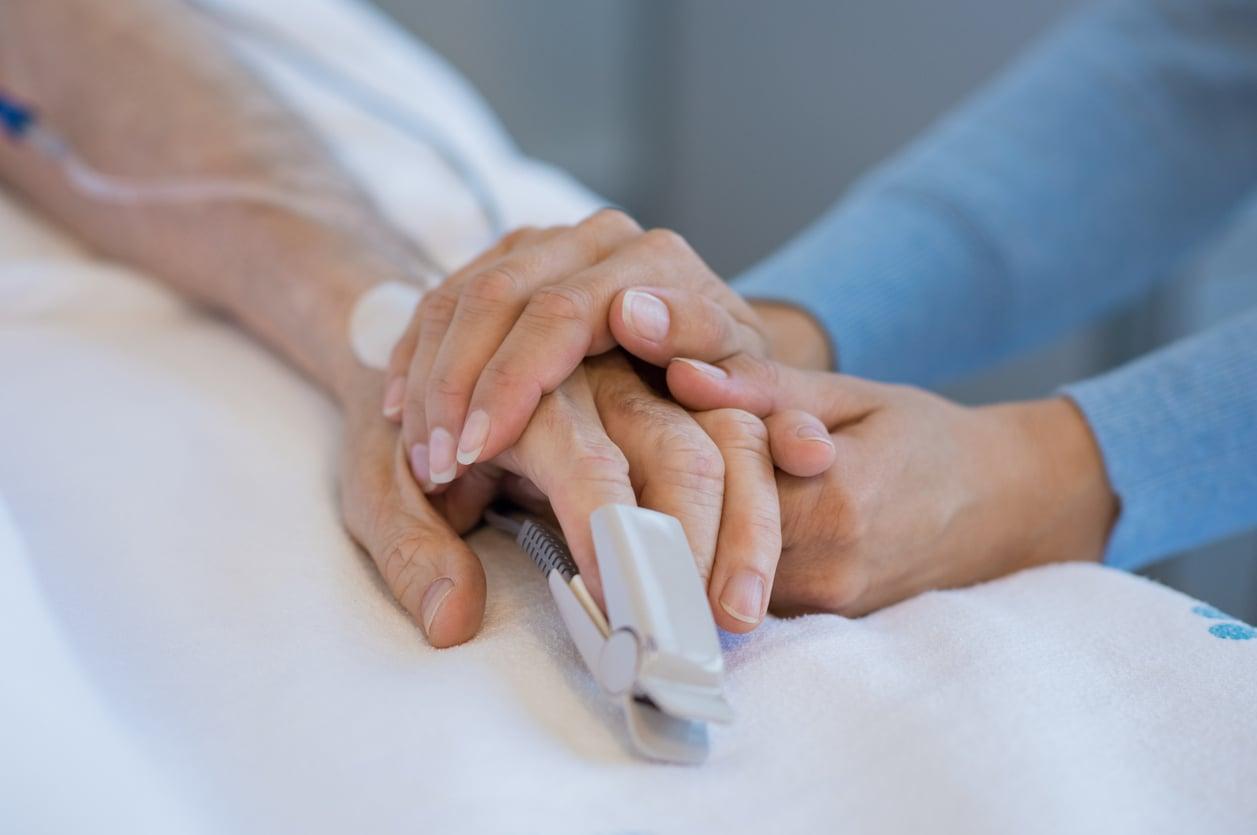
She was lying in the corner bed of the hospital ward — the third one down, where the light from the corridor barely reaches. I remember staring at a plastic cup of water, wondering how long it would stay cold, when my mother suddenly squeezed my hand. Hard. With a strength I hadn't felt in her for a long time.
She had been in that room for two weeks, and we all knew the end was only days away. The monitors beeped softly, rain streaked the window, and somehow we'd stopped talking about her illness. We talked about small things instead — the neighbor's cat that kept escaping, the old apple tree in the garden that needed cutting down in spring. Then she went quiet. And she said there was something she needed to tell me before she no longer could.
The sentence that changed everything
I assumed it would be something practical — a bank account, an old debt, some paperwork she'd forgotten to sort. Instead, she told me that my dad — the man who raised me, who taught me to ride a bike in our yard, who told the same terrible turkey joke every single Christmas — was not my biological father.
"He loved you. That was the truth we chose."
She didn't cry when she said it. If anything, she looked relieved — like she'd been carrying something unbearably heavy for decades and had finally set it down. I sat there in that plastic chair and felt my legs go numb, not from the way I was sitting, but from the realization that a single sentence could dissolve everything you'd always believed was solid ground.
I wanted to ask who, how, when — but the words wouldn't come. She told me, haltingly, that I had been conceived during a brief relationship before she and my dad had gotten together. When he found out, he didn't walk away. He said he would raise me as his own, and there would never be any difference. And there never was. They just never told me.
The father who chose me
There was something strange about suddenly understanding that the person I had only ever known as my father was, in fact, the result of a choice — not the automatic consequence of biology. I thought about all the times he'd said "my daughter," and I couldn't decide whether those words now felt lighter or heavier than before.
We didn't speak about it again that night. My mother fell asleep, and I sat beside her in the dim light, studying her face, searching for my own features in hers — as if in one moment I'd been handed a completely different lens through which to see myself. My nose is definitely hers, I thought. But what about my stubbornness? The way I laugh? Where does that come from?
The secret I have to carry forward
She died two days later. I've returned to that evening many times since, trying to understand why she chose that moment — when there was no time left for questions. Maybe she believed that this kind of truth is only safe to tell when you won't have to live with the fallout alongside the person you've told it to.
I haven't spoken to my dad — the man who raised me — about any of this. Sometimes I look at him like I'm seeing him for the first time. Other times I look at him exactly the way I always have, as if nothing has changed at all. I don't know which feeling is more true. And I'm starting to think I don't have to choose.