Three people share the moment they discovered a family secret they never saw coming — long after they thought they knew everything there was to know.
"I found out on my birthday that my entire family had been lying to me"
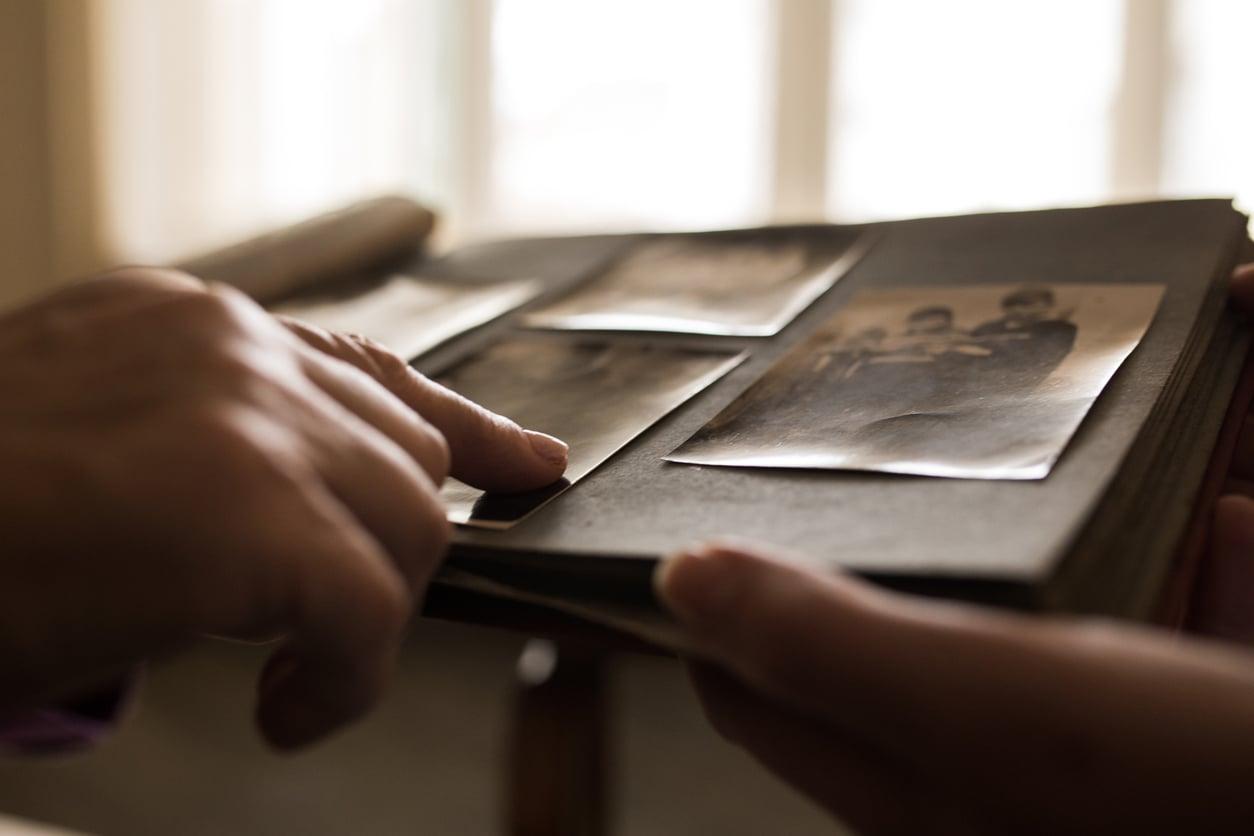
It was supposed to be a celebration. Imola, now 33, spent her 30th birthday surrounded by her whole family at her parents' house. Someone brought out the old photo albums — the kind that always spark laughter and warm stories. Then one comment stopped everything cold.
In a photo of her as a baby, flanked by her parents, a relative looked at the image and said casually: "How lucky that you ended up with them."
Imola didn't understand. She might have let it go — if she hadn't noticed how quickly the room went silent, and how every face in it suddenly changed.
Her parents tried to redirect the conversation. She didn't let them. That evening, she learned she had been adopted as a baby, just a few months old. She had spent three decades with no idea.
"I had no memories of it being any other way. No one had ever said a word," she recalls. The conversation that followed lasted hours. Her parents told her they were afraid — afraid she would see them differently if she knew.
"I'm grateful for the life they gave me. But it still hurts that they took away my right to know my own story — even if they thought they were protecting me."
What stings most, she says, isn't the adoption itself. It's the years she spent not knowing who she was.
"I grew up believing my grandfather had died before I was born"
Tamara, 42, had always been told the same thing: her maternal grandfather passed away very young, long before she came into the world. No one in the family ever spoke about him much. He was simply gone.
She was 19 when she found a postcard tucked inside her mother's wardrobe while searching for an old document. It was written in a man's handwriting, addressed to her mother. The sign-off read: "With love, Dad."
The date on the card was from a year when Tamara was already alive.
Her mother resisted at first. But eventually, the truth came out. The grandfather hadn't died — he had left the family for another woman when Tamara's mother was still a child. Her grandmother, devastated and furious, made a decision: he was dead to her. She cut off all contact and told her children to do the same.
As they grew up, Tamara's mother and her brother absorbed that anger completely. Even as adults, every time their father tried to reach out, they shut him out. And when the grandchildren came along, the story had already been simplified into something easier to say: he died a long time ago.
"What no one added," Tamara says quietly, "was that he'd only died in their eyes."
She has never met him. She doesn't know if he's still alive. But she thinks about him — and about how a grandmother's unspoken grief quietly shaped the story of an entire family.
"I thought I was the oldest child — I wasn't"
Melinda, 36, had always understood herself to be the eldest. Her younger sister was born four years after her. There had never been any mention of another sibling.
At 35, during a family house move, she came across a box of old photographs. In many of them, the same little girl appeared — around three years old in the earliest ones, older in the rest. A face she didn't recognize.
She asked her mother who she was.
After a long silence, her mother said: "Your sister."
Melinda thought she was joking. She wasn't.
Her parents had lost a daughter — their firstborn — to illness at the age of ten. The grief had been devastating. When Melinda was born, and later her younger sister, her parents made a quiet decision: they would start fresh. They would not burden their surviving children with that loss.
"I couldn't be angry with them," Melinda says. "I have a three-year-old daughter of my own now. I can't imagine surviving something like that, let alone figuring out what to do with it afterward."
She has since visited her sister's grave — where, it turns out, her mother had been going alone, in secret, for years.
"Recently, she's started talking about her sometimes. She carried that grief for over 40 years. I think she's only just beginning to heal."
Family secrets rarely start with bad intentions. Most begin with the very human impulse to protect the people we love — from pain, from grief, from a past that feels too heavy to share. But secrets have a way of surfacing. And when they do, they don't just reveal the truth. They rewrite everything that came before it.
Why do families keep these kinds of secrets?
It's almost never about deception for its own sake. Parents who hide an adoption, a death, or a broken relationship are usually trying to shield their children from something painful. But what they don't always consider is the cost: the sense of lost identity, the rewritten past, the quiet grief of not having been trusted with your own story.
These three women didn't fall apart when they learned the truth. They grieved, they questioned, and eventually they found a way to hold both things at once — the love that was there all along, and the ache of what had been kept from them.
If any of this feels familiar, you're not alone. Generational patterns around silence, grief, and family loyalty run deep — and understanding them is often the first step toward something lighter.
Does finding out a family secret always damage relationships?
Not necessarily. As all three women in these stories show, it's possible to feel hurt and still hold onto love. The discovery is painful, but for many people, knowing the truth — even a hard one — ultimately feels better than living inside a story that wasn't quite real.
Is it ever right to keep a secret like adoption from a child?
Most child development experts and adoption specialists today recommend age-appropriate honesty from early on. The research consistently suggests that children who grow up knowing their story tend to develop a stronger sense of identity than those who find out later in life.
What should you do if you discover a family secret as an adult?
Give yourself time to process before reacting. The people who kept the secret were almost certainly acting out of love, even if the impact was painful. Talking it through — whether with family members or a therapist — can help you make sense of what it means for your own sense of self and your relationships.
Can grief over a hidden loss affect an entire family, even across generations?
Yes. As Melinda's story shows, unspoken grief doesn't disappear — it gets absorbed into family behavior, silence, and the stories people tell about themselves. When that grief finally surfaces and is named, healing often becomes possible for the first time.