I'd heard stories like this before — from other parents, in online threads, passed around at playdates. Stories I smiled at politely and then forgot about. I always assumed they happened to a certain kind of person: the ones who see meaning in everything, who fall asleep reading about past lives and the universe's grand design.
That's not me. I'm not someone who believes everything without question — but I'm not someone who dismisses the unexplained out of hand, either. I sit somewhere in the middle, or at least I thought I did. Then came an ordinary Tuesday evening, and I'm not so sure anymore.
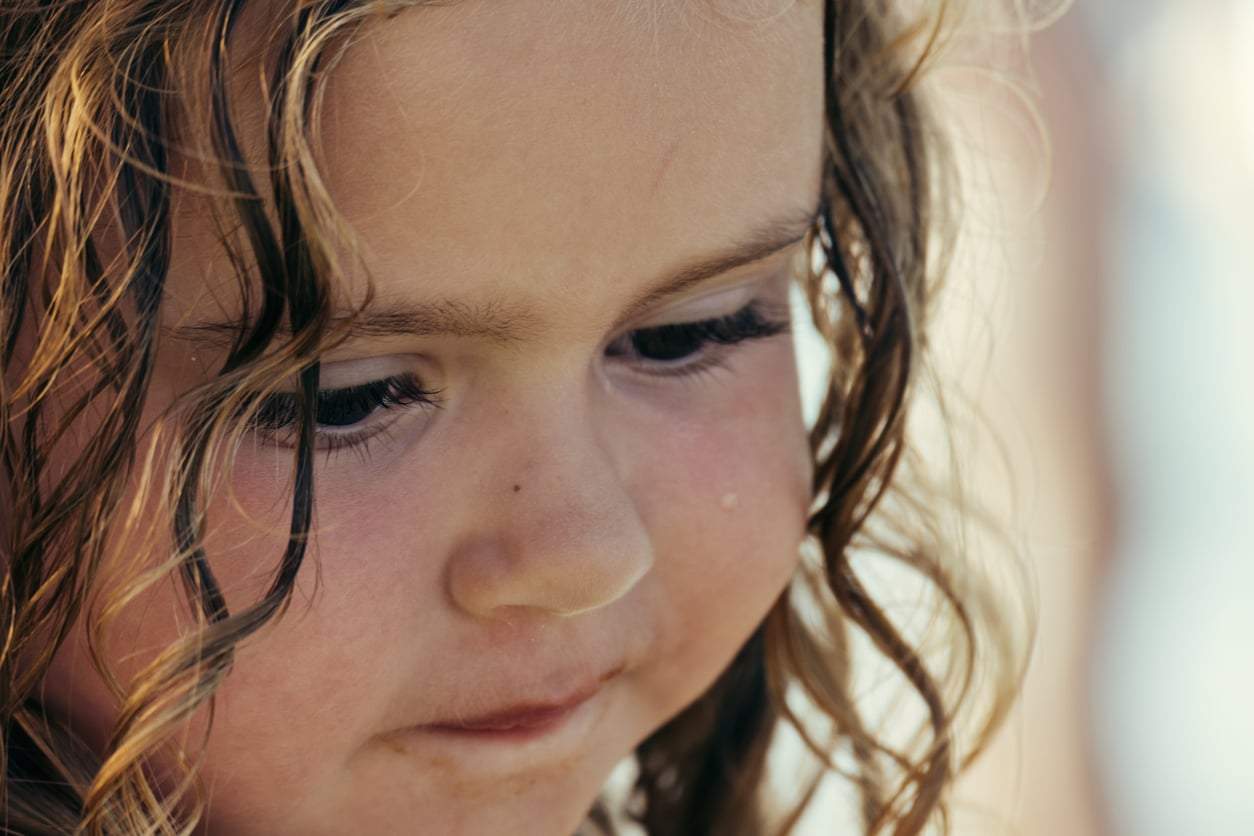
My daughter was four years old
For a few days before it happened, she'd been acting strangely in the evenings. She didn't want to sleep alone, and she'd been saying things I couldn't quite place — phrases that seemed oddly out of reach for a child her age. Sometimes she'd stop mid-play and stare into the distance for whole minutes, as if her mind had traveled somewhere far away. When I asked what she was thinking about, she'd just shake her head and carry on, like nothing had happened.
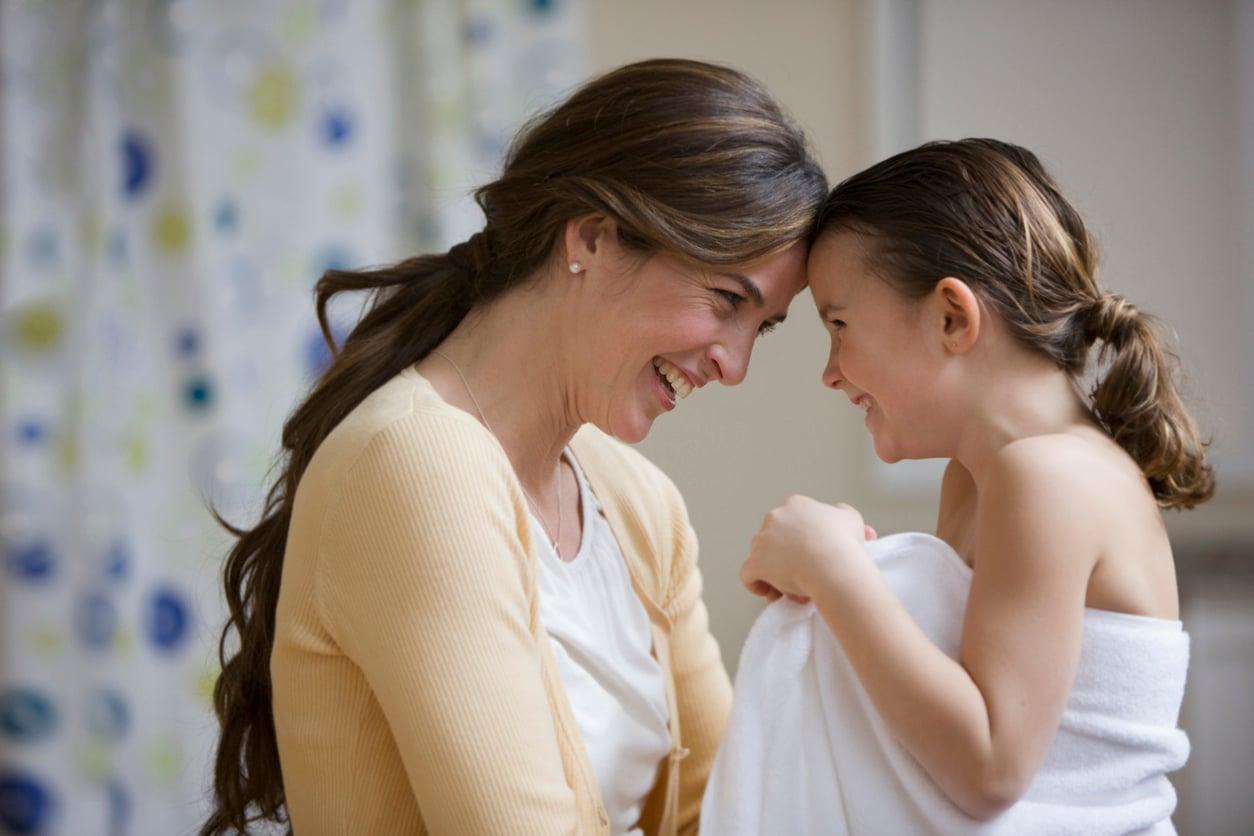
That evening, she was sitting in the bath, splashing around with her rubber ducks, when she looked up at me and said she used to look after me. I assumed at first she was making up a game — something she'd picked up at preschool, the beginning of some little story. So I asked her what she meant.
She answered in a completely calm voice, the way you'd talk about something utterly ordinary. She said that when she was the big one and I was the little one, she used to bathe me — and she used to sing to me at night, the same way I sing to her now.
I sat on the edge of the tub and felt a chill move through me. Not because I instantly believed every word, but because of the certainty in her voice. A four-year-old simply doesn't talk about unfamiliar things with that kind of quiet confidence. There was no hesitation, no glance at me for approval. She just spoke, like someone recalling a memory they'd always carried.
Her voice was different from when she invents stories — slower, more serious, like she was rewinding something inside herself.
I asked her what it was like back then
She said we lived in a small house, and that she read to me every evening because I didn't know how to read yet. Then she added that she missed me terribly when she left — and that she was so happy when she found me again, even though now our roles are switched. I asked what I looked like back then. She thought for a moment and said I was small, and that I cried a lot at night, but she always stayed with me until I fell asleep.
"She missed me so much when she left — and she was happy when she found me again. Only now our roles are switched."
I kept going with the bath. I kept my voice steady. But inside, I was reeling. So many things in those few sentences that I didn't know what to do with. How does a four-year-old know what it means for roles to be switched? Why that image — a small house, nighttime crying — and not a princess or a cartoon character? And why the crying specifically? That detail hit me hardest, because I had never once told her about my own early childhood — but my mother always said I was a baby who barely slept and cried endlessly through the night.
After she fell asleep, I sat beside her bed for a long time and watched her breathe. I thought about how many times, even before she was born, I'd had the strange feeling that I already knew her somehow. I thought about how naturally she settled against me from her very first moments — not like a stranger, but like someone returning. I even remembered how, at just a few months old, she would sometimes look at me with this long, measuring gaze, and my husband and I would laugh and say the baby had such a serious face. We laughed. I'm not laughing about it the same way anymore.
The next morning, it was like nothing had happened
At breakfast she chattered about her cartoons, giggled over her cereal, and every trace of that seriousness from the night before had simply vanished. I carefully asked if she remembered what we'd talked about during her bath. She shrugged and said she didn't know what I meant. It was as if a window had opened briefly inside her — and then quietly closed again.
I'm not the type to go searching for a mystical explanation around every corner. But that sentence — she used to look after me — has stayed with me ever since. Maybe it was nothing more than a child's imagination assembling itself into something coherent for one brief moment. Or maybe there's something in it that simply can't be explained away.
Since then I've talked to other mothers, and a surprising number of them have their own versions of this story — moments where their child said something they couldn't have known, with details that came from nowhere. One woman told me her son named a long-dead relative he'd never met and described exactly what he looked like. Another said her daughter woke her in the middle of the night asking if she remembered the war they'd survived together. Some people laugh these things off. Some, like me, are still quietly thinking about them.
I still don't know what to make of it. What I do know is that when my daughter looked up at me in the bath that evening and told me she used to wash my hair and sing me to sleep, something shifted in me. Now, every time I bathe her, that sentence drifts back. And even though there's no rational proof behind it, somewhere deep down I hold onto the feeling that maybe this wasn't the first time we found each other.
Have other children said things like this?
Yes — many parents report similar experiences, where young children make calm, specific statements about a "previous life" that seem beyond their knowledge or imagination. These accounts are especially common in children between the ages of two and five.
Why do children this age sometimes say unusual things about the past?
Child development experts note that young children have vivid imaginations and absorb more from their environment than we realize. However, some accounts — like the one in this story — include details the child seemingly could not have encountered, which is what makes them so difficult to dismiss.
What should a parent do when their child says something like this?
Most parents in these situations, as described in this article, find it helps to stay calm, ask gentle open-ended questions, and listen without leading. Pressing the child or expressing shock can cause them to shut down — which is exactly what happened the morning after.
Is it common for children to forget these conversations by the next day?
Based on the experiences shared in this article, yes — children often seem to have no memory of what they said, almost as if the moment was isolated from their normal waking awareness. Many parents describe it as a window that opens and closes on its own.