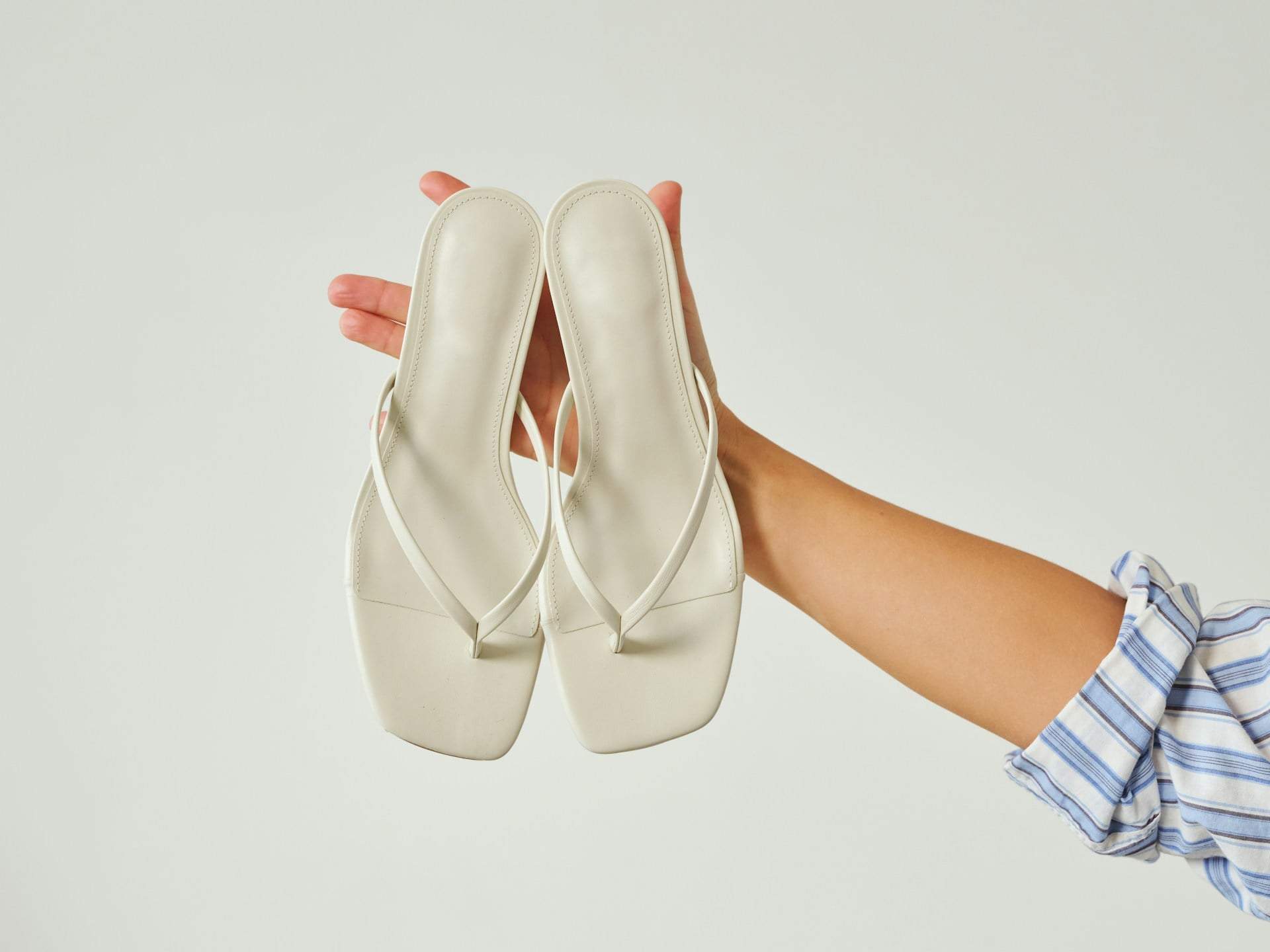
There is a specific shade of grey-brown that a well-loved cork footbed turns by the end of August. Slightly darker where your heel sits, slightly shiny where your toes go, faintly fragrant in a way you would rather not discuss. It looks permanent. It usually isn't — but it becomes permanent if you do the obvious thing and give the sandals a proper wash.
Cork-and-suede footbeds are the one category of summer shoe that punishes enthusiasm. Water is the enemy, not the solution. Here is the method that actually works, in the order that matters, so your sandals come out of storage next May looking like something you would still wear.
The rule that saves the shoe: never soak it
The footbed is layered — suede on top, cork and jute beneath, glue holding it all together. Submerge it and the cork swells, the layers separate, and the glue lets go. Once that has happened there is no home fix. So no bath, no bucket, no rinsing under the tap, and absolutely no washing machine, whatever the internet tells you.
Everything below uses barely damp cloths and dry tools. If your cloth drips when you hold it up, wring it out again.
Step one: dry work first
Take the sandals outside and knock the soles together to shift grit. Then work over the footbed with a stiff dry brush — a suede brush is ideal, a clean nail brush or an old toothbrush will do — using short strokes in one direction to lift the flattened nap. You will be surprised how much of the darkening is just compacted dust.
For shiny, hardened patches, a suede eraser or a clean pencil rubber, used firmly, breaks up the glaze. Brush again afterwards to lift the nap you have just freed. At this point many footbeds already look dramatically better and need nothing wet at all.
Step two: spot-clean, then odour
If marks remain, mix a drop of mild soap into warm water, dip a cloth, wring it hard, and work the stain in small circles. Work the whole footbed lightly rather than scrubbing one patch, or you will end up with a clean island in a grey sea. Blot with a dry cloth immediately — you are damping the surface, not wetting the cork.
For smell, dry is again the answer. Sprinkle bicarbonate of soda generously over the footbed, leave it overnight, and brush it out in the morning. Repeat if needed. Smell lives in the suede, not in the cork, and moisture is what feeds it in the first place, which is why the wet approach makes things worse a week later.
Step three: dry slowly, then seal
Leave the sandals somewhere airy, out of direct sun and nowhere near a radiator. Heat shrinks and cracks cork faster than any amount of wear. Give them a full day, longer if the weather is damp.
Once completely dry, look at the exposed cork edge around the sides. If it is pale, dusty or showing fine cracks, that is the moment for a cork sealer — a thin coat, brushed along the exposed cork only, kept off the suede and the leather straps. Sealing once at the end of each season is genuinely what determines whether a pair lasts three summers or ten.
Straps get their own treatment: smooth leather takes a barely damp wipe then a light conditioner, nubuck and suede straps get the brush-and-eraser routine, and synthetics tolerate soapy water and a cloth. Finally, stuff the sandals loosely with paper and store them upright somewhere dry rather than squashed in a box under three pairs of boots.
Can I put them in the washing machine?
No — and this is the mistake that ends more pairs than years of wear ever do. The drum's water and agitation swell the cork, dissolve the adhesive between the layers and can warp the footbed's shape permanently, and the damage often only shows up a few weeks later when the sole starts to lift at the edge. Dry brushing plus targeted damp spot-cleaning gets you ninety per cent of the same result with none of the risk.
How do I get rid of the smell if the footbed has gone dark?
Start with two consecutive overnight treatments of bicarbonate of soda, brushing thoroughly between them, and give the sandals a full day of airflow in between rather than putting them straight back on. If the darkening is old and even, it is usually oil from your skin rather than dirt, and it will never come back to factory colour — but a brushed, deodorised, sealed footbed reads as worn-in rather than grubby. If the smell persists after that, a cobbler can replace the footbed cover on better-made sandals, which is far cheaper than replacing the pair.