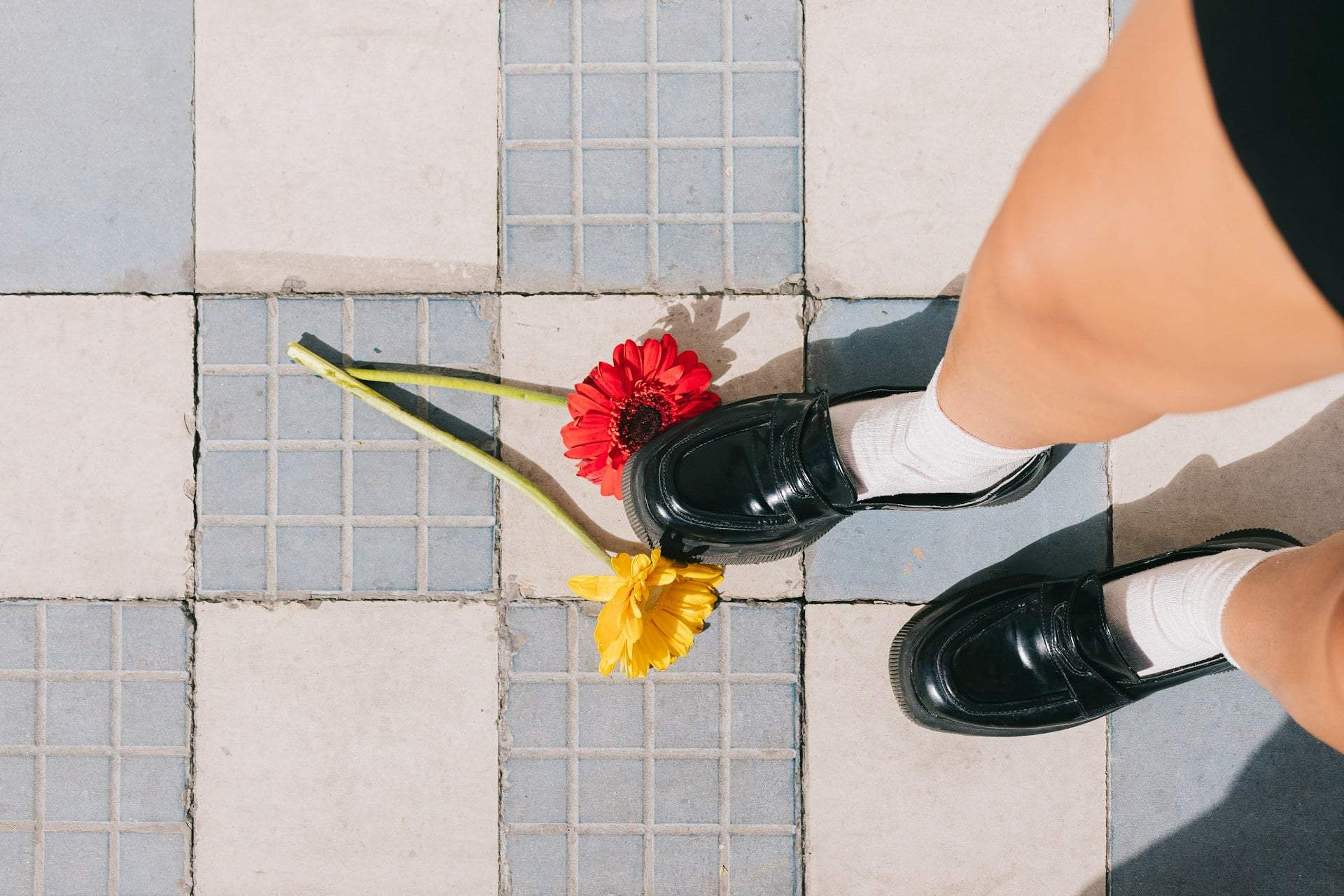
There is a pair of suede boots in most hallways that has quietly fallen out of rotation. Not broken, not worn through — just shiny at the toe, blotched with a tide line of rain, and somehow sad-looking. We stop reaching for them long before we admit they're finished. The good news, after years of refusing to replace things that only look tired, is that suede responds extraordinarily well to dry, patient, low-tech attention.
Rule one: let everything dry first
Whatever has happened to your shoes — mud, puddle, a dropped glass of wine — the first move is to do nothing. Stuff them with newspaper or kitchen roll to hold their shape, and leave them somewhere with moving air, well away from a radiator, the oven, or a hairdryer. Heat is what cracks the leather underneath and stiffens the nap into something that will never go soft again.
Dry mud brushes off cleanly. Wet mud gets pushed into the fibres and sets there. It is genuinely worth waiting a full day.
The brush, the block, the direction
Your whole kit is two things: a suede brush (crepe rubber on one side, soft bristles on the other, sold for very little in shoe shops) and a suede eraser block. A clean pencil rubber will stand in at a pinch.
Start by brushing the whole shoe briskly in one direction to lift the nap and shake out dust. For shiny patches — the toe, the heel crease, where your hand grips the boot — rub the eraser block over the area with firm, short strokes, as if you were rubbing out pencil. The shine is flattened fibres, not dirt, and the friction stands them back up. Finish by brushing again, always in the same direction, so the colour looks even rather than patchy.
Water marks, grease and salt
The counterintuitive fix for a water mark is more water, applied evenly. A tide line looks obvious because one area dried differently from the rest. Lightly mist the whole panel with a spray bottle — damp, not wet — blot with a clean cloth, stuff the shoe with paper and let it dry naturally. Brush when fully dry. The mark usually disappears into the overall tone.
Grease and oil want the opposite treatment. Cover the spot generously with cornflour or talc, leave it overnight to draw the oil out, then brush the powder away. Repeat once if there's a ghost of it left; don't go near it with washing-up liquid.
Winter salt leaves a chalky white crust. Dilute a little white vinegar in water, dampen a cloth, dab along the mark rather than scrubbing, blot, and dry away from heat. Brush up the nap afterwards, and do it as soon as you notice — salt left to sit will eventually bleach the colour out.
Protect, then keep protecting
Once a pair is clean and completely dry, spray it with a suede protector from an arm's length away, in a couple of light passes rather than one soaking. Let it dry, then do a second coat. Reapply every few weeks through a wet season — more often than the tin suggests, because it wears off at the toe first, exactly where the rain hits.
Store them standing upright, not slumped in a heap, and keep a cedar shoe tree or scrunched paper inside if they're tall. Creases that set at the ankle are much harder to deal with than dirt.
Can you clean suede shoes with water?
Yes, but on your terms: a fine even mist across a whole panel is fine, soaking a shoe under the tap is not. Water on its own doesn't ruin suede — uneven wetting and fast drying near heat does, because that's what leaves hard tide lines and stiff, shrunken leather. Never put suede in the washing machine, whatever a video tells you.
How do I get salt stains off suede boots in winter?
Mix white vinegar with an equal amount of water, dampen a soft cloth and dab along the stain from the outside in, then blot with a dry cloth and leave the boots to dry naturally overnight. Brush the nap back up the next morning, and finish with a fresh coat of protector so the next week's grit sits on the surface rather than soaking in.