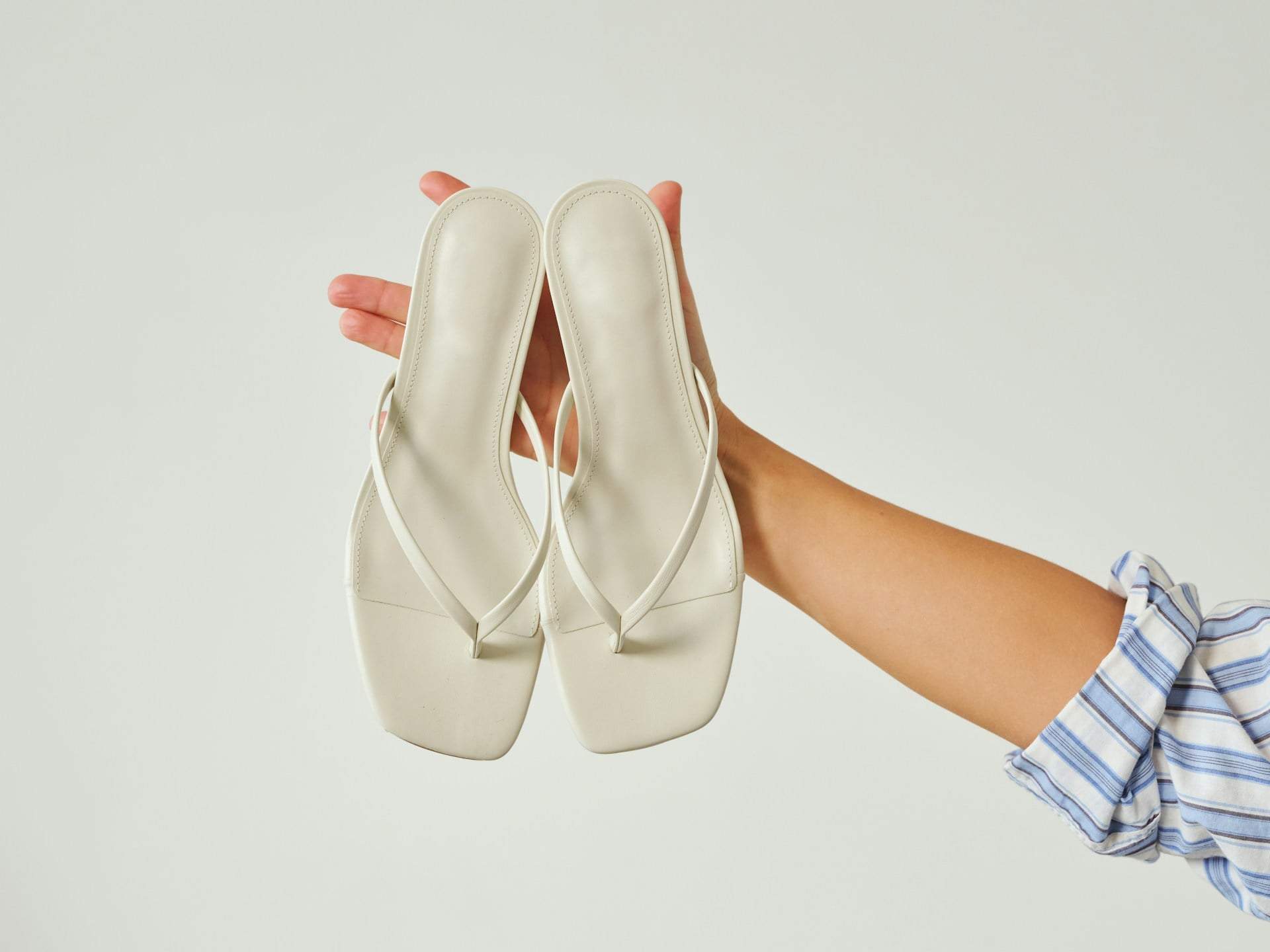
There is a particular moment in early October when you reach for the sandals you wore almost daily in July and realise they look nothing like the pair you bought. The footbed has darkened into the shape of your own foot, the suede lining has gone shiny and grey, the cork edges are pale and dusty, and the straps carry a faint tidemark of sun cream and city pavement. The instinct is to shove them in a box and deal with it in spring. Don't. Shoes that go into storage dirty come out worse, and cork in particular doesn't forgive being left dry and neglected for eight months.
The good news is that this is a twenty-minute job with things you almost certainly already own. No specialist kit required, though a couple of inexpensive extras make it easier.
Start with the footbed, and keep water out of it
The suede-lined footbed is the part that looks worst and the part people most often ruin trying to fix. The rule is minimal moisture. Soaking a cork-and-suede footbed is how you get warping, lifting at the edges and a smell that never quite leaves.
Brush the whole surface first with a dry, stiff-ish brush — an old toothbrush works, a suede brush works better — to lift the loose grime. Then make a very small amount of lather: a drop of gentle soap in a bowl of warm water, whisked until you have foam, and you use the foam, not the water. Apply it with the brush, working in small circles across the darkest areas, especially the heel cup and under the ball of the foot. Wipe away with a barely damp cloth, then press a dry towel over the footbed to pull out moisture.
It will not go back to factory beige. Nothing does. What you're aiming for is even and clean rather than new. Once it's dry — air, never a radiator — brush the nap up again with the dry brush and it will look dramatically better.
The cork rim is the bit that actually fails
Cork is the structural part, and it's the part that cracks if it dries out. Look at the sides of the sole: if the sealant has worn thin, you'll see a slightly fuzzy, matte, crumbly texture rather than a smooth coated edge. That's the point to intervene.
Wipe the cork clean with a dry cloth, then apply a thin coat of cork sealer, which most shoe shops and shoe repairers stock. Thin is the operative word — a heavy coat stays tacky and picks up dirt. Let it dry fully, then add a second thin coat if the first soaked straight in. Avoid getting sealer on the suede footbed; a strip of masking tape along the join makes this easy.
If there's already a hairline crack, a repairer can often fill it. If the cork is crumbling away in chunks, resoling is the honest answer, and it's usually worth it on a pair you wear constantly.
Straps: treat them like what they are
Smooth leather straps want a damp cloth, a little saddle soap or leather cleaner, and then conditioner once dry. Work the conditioner in with your fingers so it reaches the folds where the strap bends over the buckle — that's where cracking starts.
Nubuck and suede straps want the opposite: no cream, no oil. Brush them dry, use a suede eraser on shiny patches, and spot-treat marks with the tiniest amount of foam. Synthetic straps are the easiest of the lot and take soap and water happily.
Buckles get a wipe and a check — a loose rivet caught in October is a cheap fix; caught in July it's a ruined weekend.
What's the best way to get rid of the smell in a footbed?
Odour lives in the suede and the top layer of cork, which means surface cleaning only does half the job. After cleaning and drying, fill the footbed generously with bicarbonate of soda, leave it overnight or longer, then brush and tap it out thoroughly. Repeat if needed. For stubborn cases, a light mist of surgical spirit on the footbed, left to evaporate fully in open air, addresses the bacteria rather than masking them — but keep it off the leather straps and don't make a habit of it, as repeated alcohol dries the suede.
How should I store sandals over winter so they're ready in spring?
Clean, dry, and not squashed. Once the footbed is fully dry and the cork is sealed, stuff the straps lightly with tissue so they hold their shape, and store the pair somewhere cool and ventilated rather than in a sealed plastic box, which traps residual moisture against the cork. A fabric shoe bag or an open shoebox on a shelf is ideal. Avoid lofts and unheated garages where temperature swings are extreme. Then, in May, give them a quick brush and a conditioner top-up and they'll be genuinely ready to wear rather than a project.