The pan I cook with most often was cheap, heavy and second-hand, and for the first two years I treated it like a museum piece. I was afraid of soap. I was afraid of water. I was afraid of the internet, mostly, which had convinced me that one wrong move would strip the surface back to raw metal. What finally fixed my cast iron was not reverence — it was a boring, repeatable routine that takes about ninety seconds after dinner.
Here is the useful truth: seasoning is polymerised fat bonded to the iron. It is not a delicate film sitting on top; it is chemically part of the surface. What destroys it is long soaking, harsh oven-cleaning chemicals, the dishwasher, and neglect. A quick scrub with dish soap does not. Once you understand that, the whole ritual gets much calmer.
The ninety-second routine that keeps it black
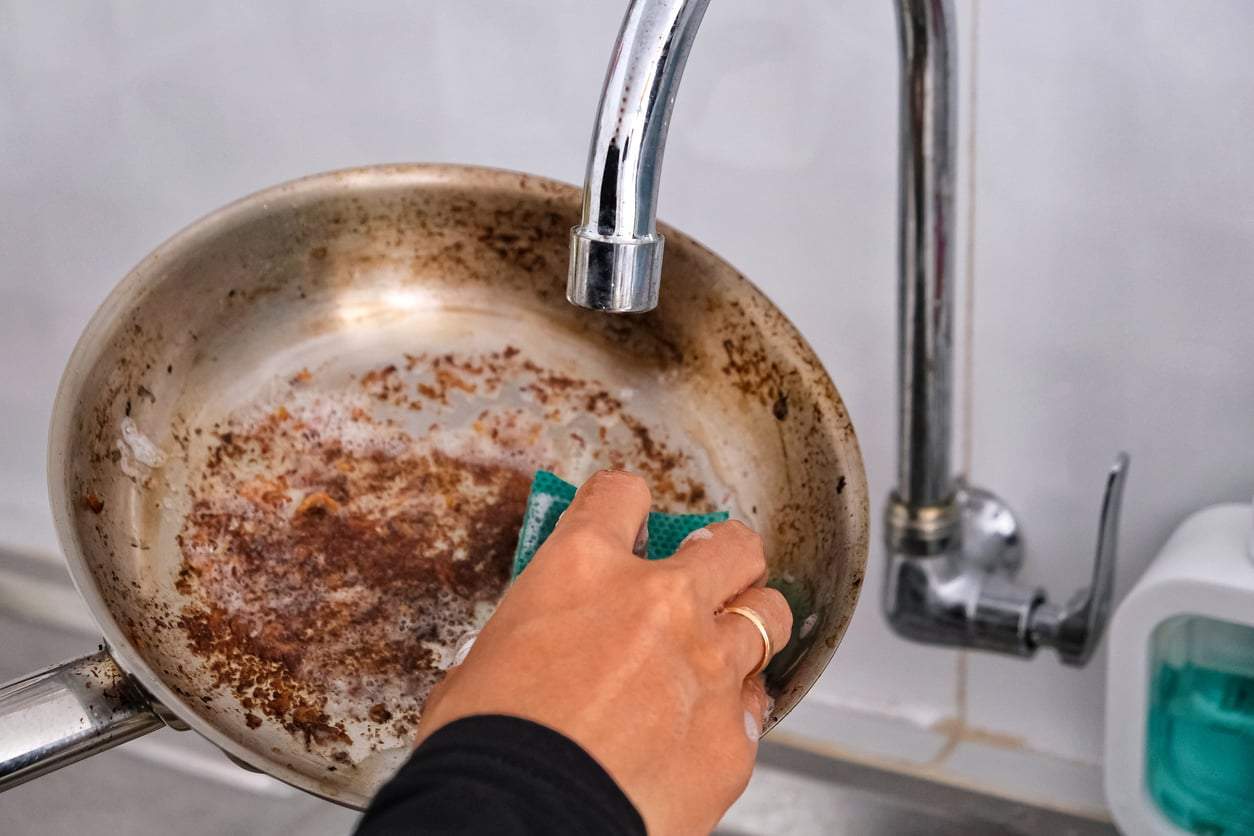
Clean the pan while it is still warm — not searing hot, just warm enough that fat is liquid rather than tacky. Run it under hot water, add a small amount of dish soap if there is grease, and scrub with a stiff brush or a chainmail scrubber. Chainmail looks aggressive and is in fact the gentlest effective tool I own: it lifts stuck food without gouging.
For anything welded on, put a centimetre of water in the pan and bring it to a simmer on the hob for a minute or two. The stuck bits release on their own; scrape with a wooden spoon and pour it away. This is deglazing, essentially, and it is far kinder than attacking cold, hardened residue with metal.
Then the step nobody skips twice: dry it completely. Towel first, then back onto a warm hob for a minute until every trace of moisture has steamed off. Finally, half a teaspoon of neutral oil on kitchen paper, rubbed over the whole cooking surface, then wiped back so hard it looks almost dry. A greasy pan in the cupboard goes sticky and smells of old chips. A barely-oiled pan goes glossier every week.
What to do when it has already gone wrong
Sticky and tacky means too much oil, applied too thickly, and never heated enough to bond. Fix it by scrubbing with coarse salt and a little oil, wiping clean, then heating the pan on the hob until it just starts to smell faintly toasty. Repeat a couple of times with the thinnest possible film.
Orange rust bloom means it went away damp. Scrub the rust off with steel wool or salt and a halved potato — the shape gives you grip — until you see grey metal, wash, dry hard on the hob, then oil and heat. You have removed some seasoning, and it will look patchy for a while. It rebuilds with use. Cook something fatty in it soon: sausages, roast potatoes, a smash burger.
Food sticking constantly usually means the pan is too cool, not that the seasoning has failed. Cast iron heats slowly and unevenly; give it three or four minutes on medium before anything goes in, and let meat sit still until it releases.
The things I genuinely avoid
Dishwashers, because the long wet cycle plus caustic detergent strips the surface and leaves rust. Long soaks in the sink, for the same reason. Oven cleaner and anything caustic, unless I have deliberately decided to strip a pan back to bare iron and start over. Cooking a very acidic tomato sauce for an hour in a young, thinly seasoned pan — a quick tomato deglaze is fine, a long simmer will dull it and can lend a metallic edge. And cold water into a scorching pan, which risks warping or cracking.
Do I need to re-season in the oven?
Only occasionally, and mostly for rescue jobs rather than maintenance. Daily cooking with fat is what builds a good surface; oven seasoning is the reset button after rust removal or stripping. If you do it, oil the pan all over including the handle and base, wipe it back until it looks dry, and bake it upside down at a high temperature with a tray underneath for an hour, then let it cool in the oven. Two thin rounds beat one thick one, every time.
Can I really use soap on cast iron?
Yes — modern dish soap is a mild detergent designed to lift loose grease, not to dissolve bonded polymerised oil. The old warning dates from an era of much harsher lye-based soaps, and it has outlived its usefulness. What actually matters is that the pan spends as little time wet as possible: wash it, dry it on heat, give it the thinnest wipe of oil, and put it away.