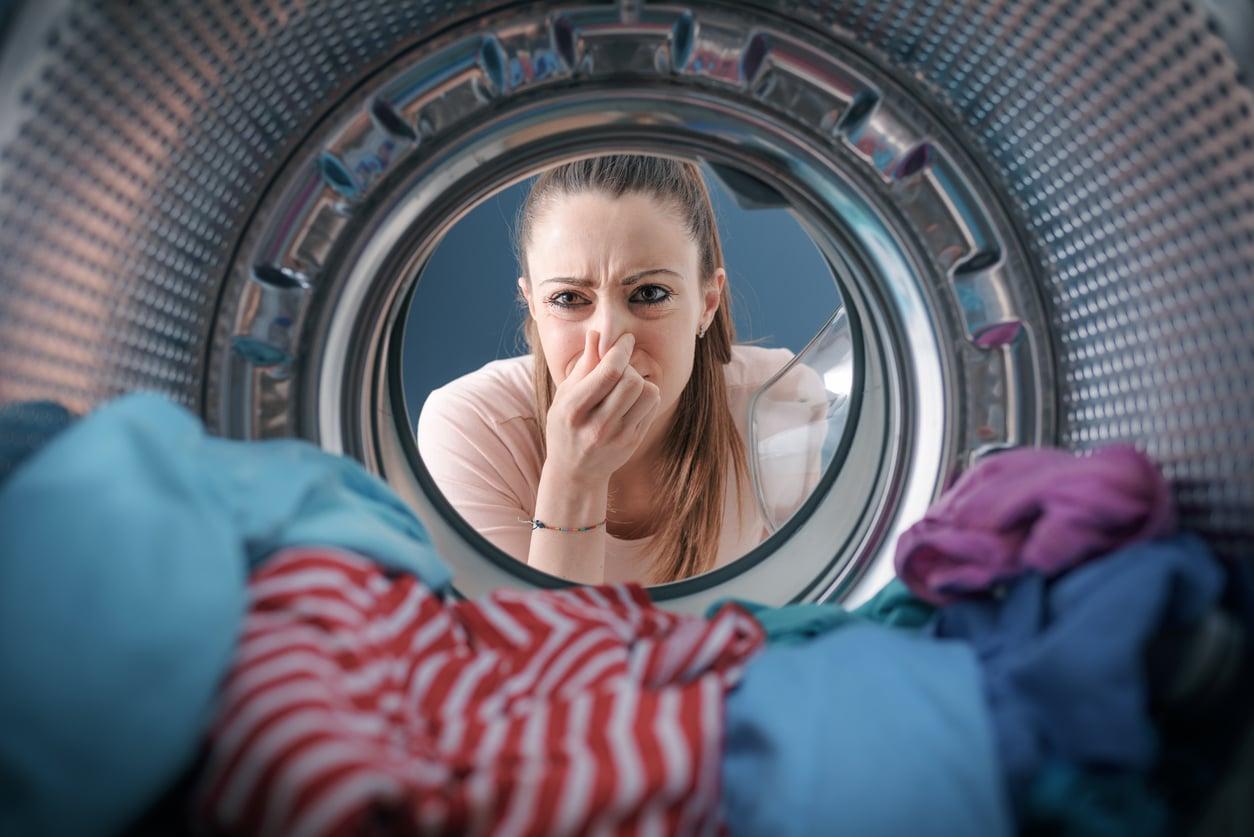
You open the washing machine door expecting fresh laundry — and get hit by something that smells closer to a damp basement. Musty, sour, stale. Suddenly it all makes sense: your "clean" clothes haven't actually been smelling that fresh lately.
A smelly washing machine is one of the most common household problems, but it's also one of the most preventable. You just need to know what's causing it — and what to do about it.
Why does a washing machine start to smell?
The answer is simpler than you'd think. Modern washing machines wash at low temperatures. That's great for your clothes and your electricity bill — but it's also great for bacteria and mold. Inside the drum, conditions are warm, damp, and dark: a perfect environment for unwanted microorganisms to thrive.
Add to that the buildup of detergent and fabric softener residue on the drum, the rubber seal, and the detergent drawer, and you've created a breeding ground for mold. From there, it's a straight line to that unpleasant smell you've been noticing.
The rubber seal — the most common culprit
If your washing machine smells, the first place to check is the rubber door seal — that thick ring of rubber running around the inside of the door. Water, lint, hair, and grime all collect there after every wash cycle.
Wipe it down regularly with a damp cloth, paying close attention to the folds and creases where buildup hides. If you spot visible mold, treat it with a diluted white vinegar solution or a dedicated washing machine cleaner, then dry it thoroughly.
The detergent drawer everyone forgets
The detergent drawer is one of the most neglected parts of the machine — yet it accumulates some of the worst residue. Pull it out completely and rinse it under warm water. You'll likely be surprised by how much gunk comes off, and removing it eliminates one of the main sources of odor.
The hot cycle you should run once a month
Low-temperature washes don't kill bacteria. That's why it's worth running an empty cycle at the highest temperature your machine offers — ideally 194°F (90°C) — once a month, with either a scoop of washing powder or a specialist washing machine cleaner in the drawer. This kills bacteria, dissolves residue buildup, and refreshes the interior of the machine.
If your machine doesn't go that high, a 140°F (60°C) cycle still helps significantly — the hotter, the more effective.
Vinegar and baking soda: surprisingly effective
If you'd rather avoid chemicals, white vinegar and baking soda make a remarkably effective cleaning duo. Pour about ¾ cup (200 ml) of white vinegar into the detergent drawer, sprinkle a tablespoon of baking soda directly into the drum, and run an empty cycle.
The vinegar breaks down residue and kills bacteria, while the baking soda neutralizes odors — leaving your machine genuinely fresh rather than just masked.
The simplest prevention tip almost nobody does
After every wash, leave the washing machine door open. That's it. This one habit makes an enormous difference. A sealed, damp drum is exactly what mold and bacteria need to flourish.
Letting the drum air out after each cycle dramatically reduces the chance of odors developing in the first place.
It's also worth getting into the habit of removing your laundry as soon as the cycle finishes. The longer damp clothes sit in the drum, the more that smell transfers back into the machine.
How often should you actually clean it?
Here's a simple schedule to follow:
- Weekly: Wipe down the rubber door seal with a damp cloth.
- Monthly: Remove and rinse the detergent drawer thoroughly.
- Monthly: Run an empty hot cycle with cleaner or washing powder.
Stick to this routine and a smelly washing machine simply won't be something you have to deal with — on the machine or on your clothes. Once these habits become part of your normal rhythm, you'll barely notice you're doing them. What you will notice is that your laundry finally smells the way it should.
Why do my clothes still smell after washing?
If your clothes come out smelling musty, it usually means the washing machine itself is the source of the odor. Bacteria and mold buildup inside the drum, seal, or detergent drawer transfer directly onto your laundry during the wash cycle.
How often should I clean my washing machine?
Wipe the rubber seal weekly, clean the detergent drawer monthly, and run an empty hot cycle at least once a month. This basic schedule is enough to prevent odors from developing in most households.
Is vinegar safe to use in a washing machine?
White vinegar is generally safe for most machines when used occasionally — it dissolves residue and kills bacteria effectively. For regular maintenance, a dedicated washing machine cleaner is a reliable alternative.
Does leaving the door open really make a difference?
Yes, significantly. Keeping the door ajar after each cycle lets moisture escape, which removes the damp conditions that mold and bacteria need to grow. It's one of the easiest and most effective prevention habits you can build.