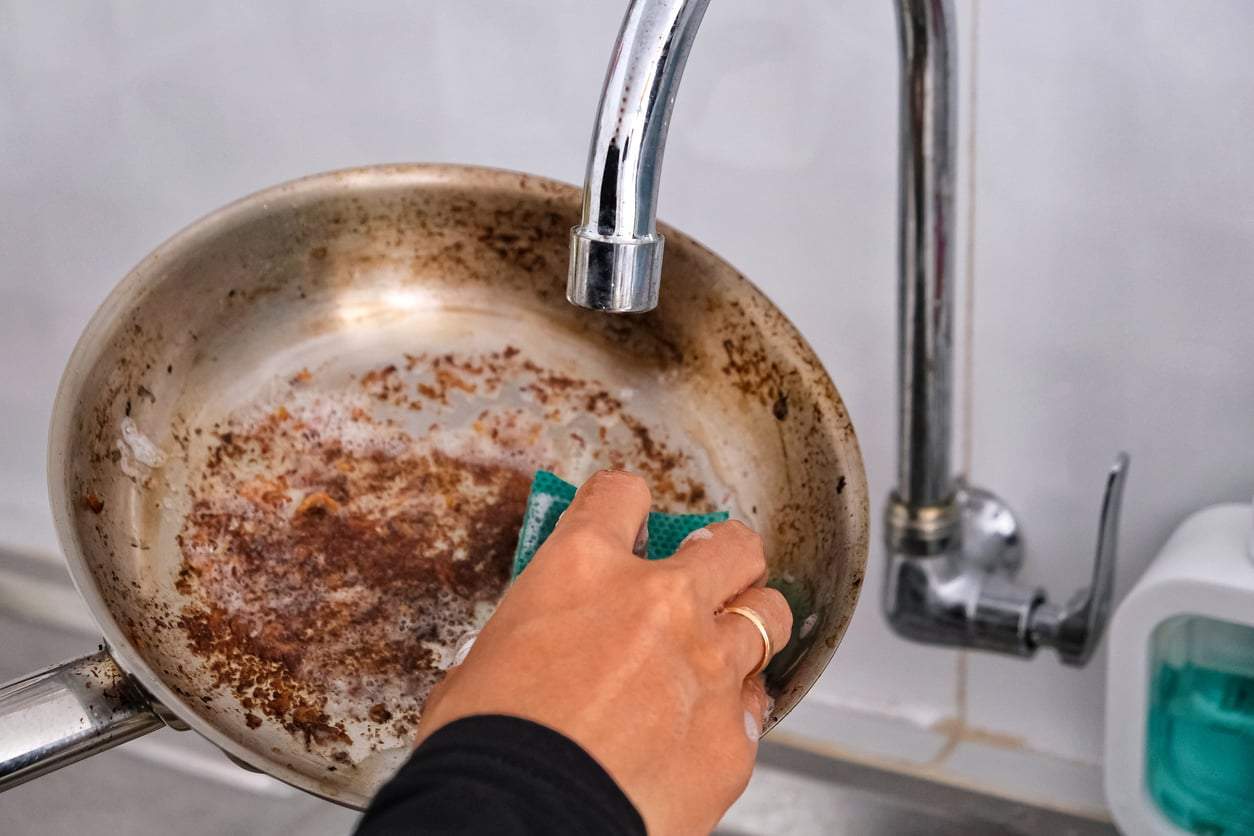
The jars are lined up beautifully on the shelf, the kitchen still smells like summer fruit — and then you look at the pot. A thick, almost black crust is welded to the bottom, laughing at your scouring pad and your fingernails. Most people assume the pot is ruined and throw it away. It isn't. All you need is a little patience and two ingredients that are almost certainly already in your kitchen.
Why does jam burn onto a pot so stubbornly?
Fruit sugars caramelize at high heat, then bond directly to the metal surface. The result is that tar-black, rock-hard layer that looks beyond saving. The longer it sits dry in the pot, the deeper it bakes into the surface — so it's worth starting the soak the same evening, not leaving it until the next day.
The budget fix: baking soda and vinegar
The solution uses just two pantry staples: baking soda and white vinegar. Together they combine an alkaline and an acidic reaction, which loosens the burnt sugar layer without scratching or damaging the pot's surface.
Here's exactly what to do:
- Pour enough water into the pot to cover all the burnt areas.
- Add two to three tablespoons of baking soda.
- Pour in a small splash of white vinegar — about a third of a cup (roughly 3½ fl oz). It will fizz up immediately; that's completely normal.
- Place the pot on the stove and bring it to a boil, then let it simmer gently for 10 to 15 minutes.
During that time, much of the burnt crust will lift away on its own and float to the surface. You'll be amazed at how little effort is needed from that point on.
If one boil isn't enough, soak it overnight
For really stubborn buildup that has been drying for hours, a single boil sometimes isn't quite enough. In that case, take the pot off the heat and leave it to soak in the warm baking soda solution overnight. By morning the crust will have softened so much that a wooden spoon or a plastic scraper will slide it right off the bottom — no force required.
You don't need to scrub hard or buy an expensive chemical cleaner. Patience and a baking soda soak will do most of the work for you.
If the metal still looks dull afterward
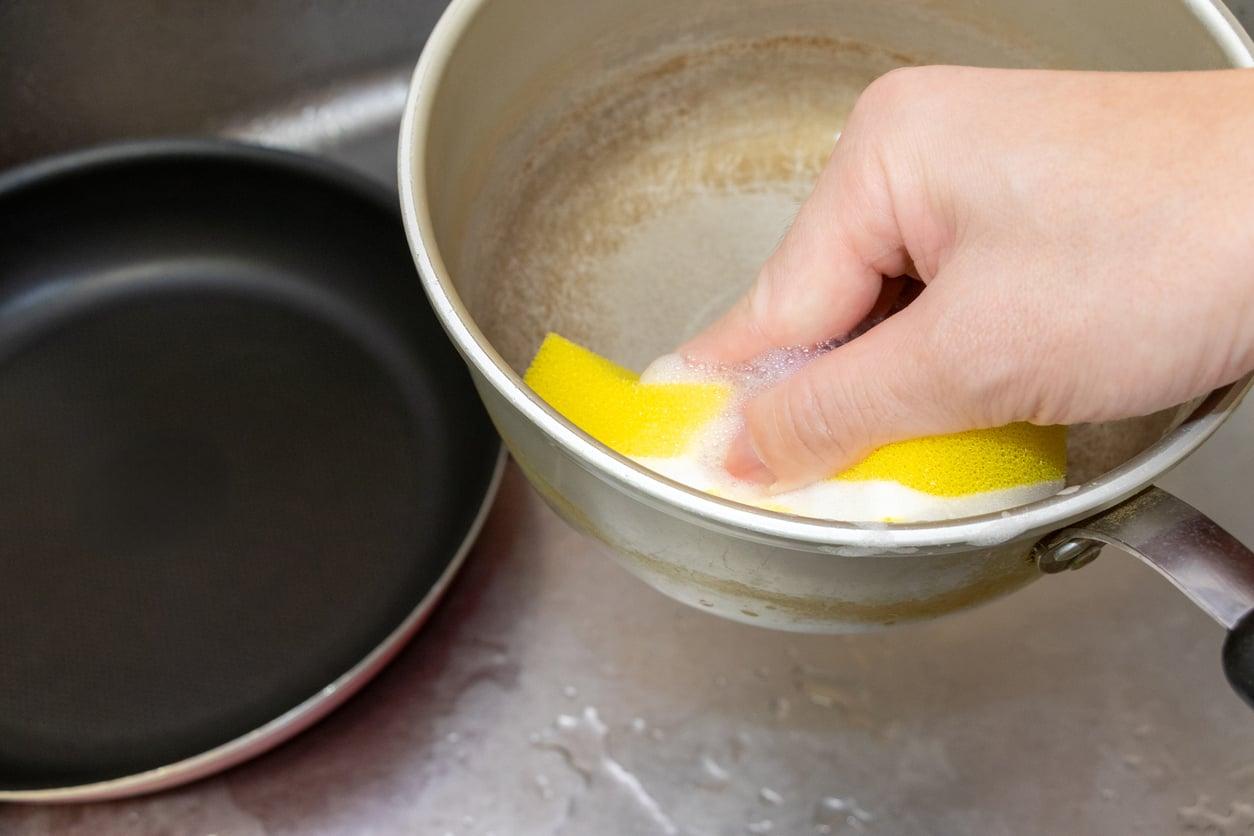
If the bottom of the pot still looks slightly stained or matte after cleaning, sprinkle a small amount of dry baking soda directly onto the surface and work it in with a damp sponge using gentle circular motions. This brings back the shine without thinning the material — which matters especially for stainless steel or enamel-coated pots.
What to avoid
Skip the steel wool and abrasive scourers. They look like a faster solution, but they leave tiny scratches in the surface that make food stick even more readily next time. For the same reason, never try to scrape the crust dry before any soaking has happened — you'll damage the coating far more than the burnt jam ever did.
Jam-making season turns the kitchen into a battlefield, but your pot doesn't have to be a casualty. Don't panic when you see that blackened bottom — just give it time in a baking soda bath and it'll come out looking almost new.
Can I use this method on any type of pot?
Yes — baking soda and vinegar are safe for stainless steel, enamel-coated, and most other common pot materials. Avoid using the method on pots with non-stick coatings, as prolonged boiling can degrade the coating over time.
Do I really have to boil it, or will cold soaking work?
Boiling speeds things up significantly by loosening the caramelized sugar layer faster. Cold soaking alone can work, but you'll need to leave it much longer — ideally overnight — and stubborn crusts may still need a short boil afterward.
What if there's still a faint stain after cleaning?
A gentle dry baking soda polish — applied with a damp sponge in circular motions — usually removes any residual discoloration and restores the surface's shine without causing any damage.
Is white vinegar the only option, or can I use apple cider vinegar?
Plain white vinegar works best because it's colorless and has a consistent acidity. Apple cider vinegar can work in a pinch, but it may leave a slight tint on lighter-colored enamel surfaces.