Almost every woman I know has a version of the same box. Cake forks from a grandmother, a christening mug, a teapot nobody has poured from since the nineties, a set of six spoons wrapped in a tea towel and pushed to the back of a cupboard. It has all gone the colour of weather, and the reason it stays there is not laziness. It is a low, specific fear: that we will do the wrong thing and ruin something that belonged to someone we loved.
So it sits. Meanwhile we buy new things. There is something almost funny about a generation devoted to sustainability keeping its actual heirlooms in a drawer because they look grey. An evening with warm water, a soft cloth and a bit of patience is usually all it takes.
Tarnish is not damage
The grey-to-black film on silver is a chemical reaction with sulphur compounds in the air. It is a surface layer, not corrosion eating into the metal, which is why a properly polished piece looks new again. This also explains why some pieces darken faster than others: kitchens, gas cookers, wool, rubber bands and certain foods — eggs, onions, mustard — all speed it up dramatically.
Understanding that changes your approach. You are not trying to scour a stain out; you are trying to lift a thin film off with the least abrasion possible, because every clean removes a tiny amount of silver. The gentlest method that works is always the right one.
The order of operations
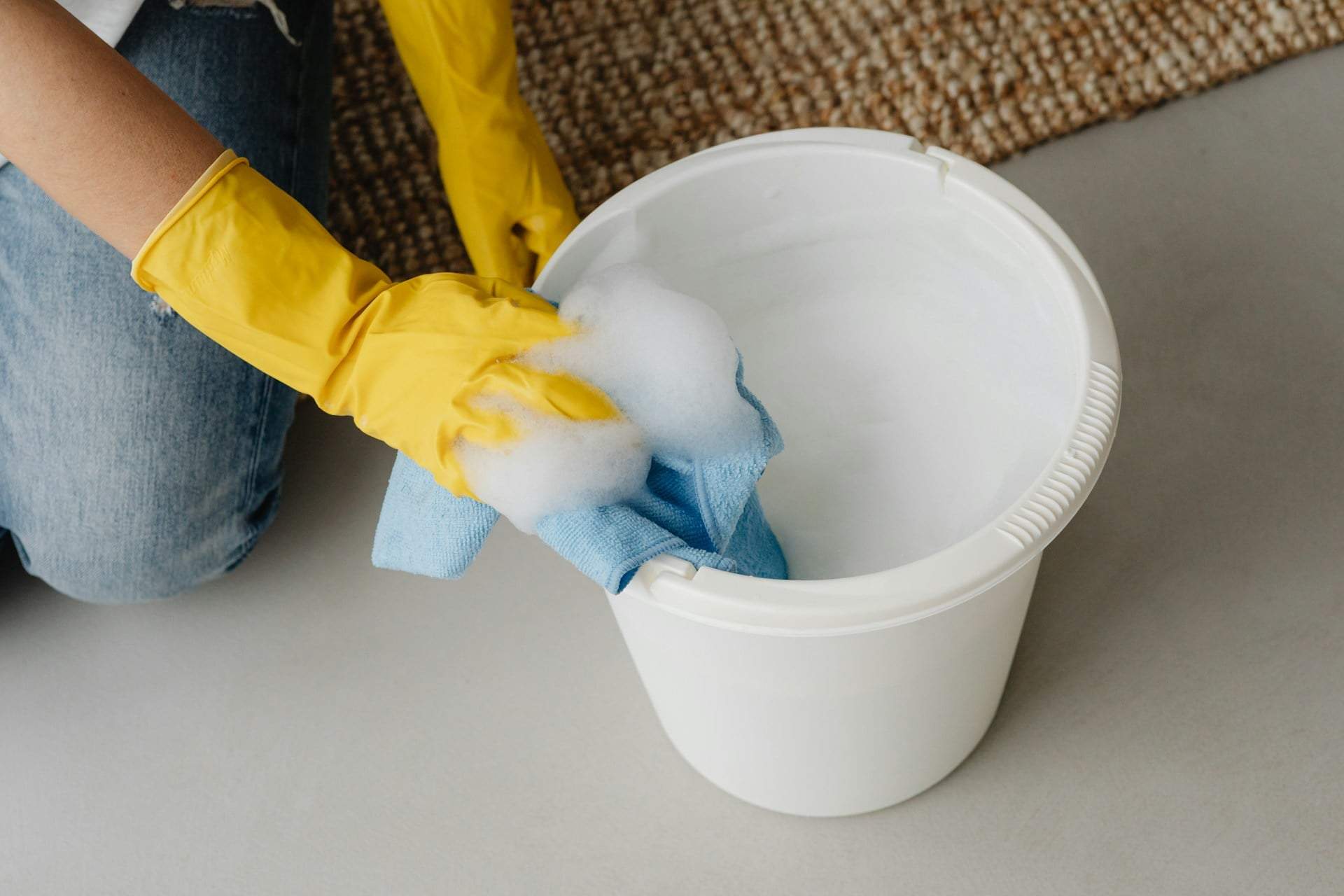
Start with a wash, not a polish. Warm water, a drop of mild washing-up liquid, and hands rather than a brush; polishing over grease and dust simply grinds it into the surface. Rinse in clean warm water and dry immediately and completely with a soft cloth, because water marks and damp are their own problem.
Then treat the tarnish with a product made for silver — a long-term silver polish, cream or an impregnated cloth — applied with a soft cotton cloth or cotton wool, working in straight lines along the length of the piece rather than in circles. Use very little and change to a clean section of cloth as it greys. Buff off with a fresh dry cloth, then wash again to remove polish residue, especially on anything that touches food, and dry thoroughly. For detailed handles and engraved patterns, a soft toothbrush and a cotton bud get into the crevices; keep polish out of the grooves you actually want dark, since that shading is part of the design.
Cutlery with bone, ivory or wooden handles should never be submerged, and the same goes for anything with a hollow, sealed handle where trapped water will eventually push the join apart.
What to never do to good silver
Not the dishwasher: heat, harsh detergent and contact with stainless steel will dull and sometimes pit it. Not scouring pads, bicarbonate paste scrubbed on dry, or general-purpose cream cleaners — silver is soft, and micro-scratches are permanent. Not rubber bands or cling film for storage, and not newspaper, whose ink and sulphur content is unhelpful.
Store instead in acid-free tissue, a soft cloth roll, or a bag designed to resist tarnish, and keep it somewhere dry and not the kitchen. Then, ideally, ignore all of that and use the things. Silver that gets handled, washed and put away regularly barely tarnishes at all. A single silver teaspoon in the morning coffee is not affectation; it is maintenance.
Is the foil-and-bicarbonate trick safe for good silver?
It works — the hot water, foil and bicarbonate reaction genuinely lifts tarnish quickly — but it is indiscriminate, and that is the problem. It strips the deliberate darkening from engraved patterns, can leave an oddly matte, whitish finish, and is risky on plated pieces, hollow handles, glued components or anything with stones. For a tangled pile of modern silver chains it is a reasonable shortcut; for a christening mug or your grandmother's cutlery, use a proper polish and your hands.
How do I tell whether it's solid silver or silver plate?
Look for hallmarks on the underside, the back of a handle or near a rim — solid silver is usually stamped with a purity mark or a set of small assay marks, while plate often carries letters such as EPNS or the words "silver plated". Plate also tends to show a warmer, coppery tone where it has worn thin at edges and high points. If you cannot tell and the piece matters to you, an antiques dealer or jeweller will look at it in a minute, and either way the gentle cleaning method above is the safe one.