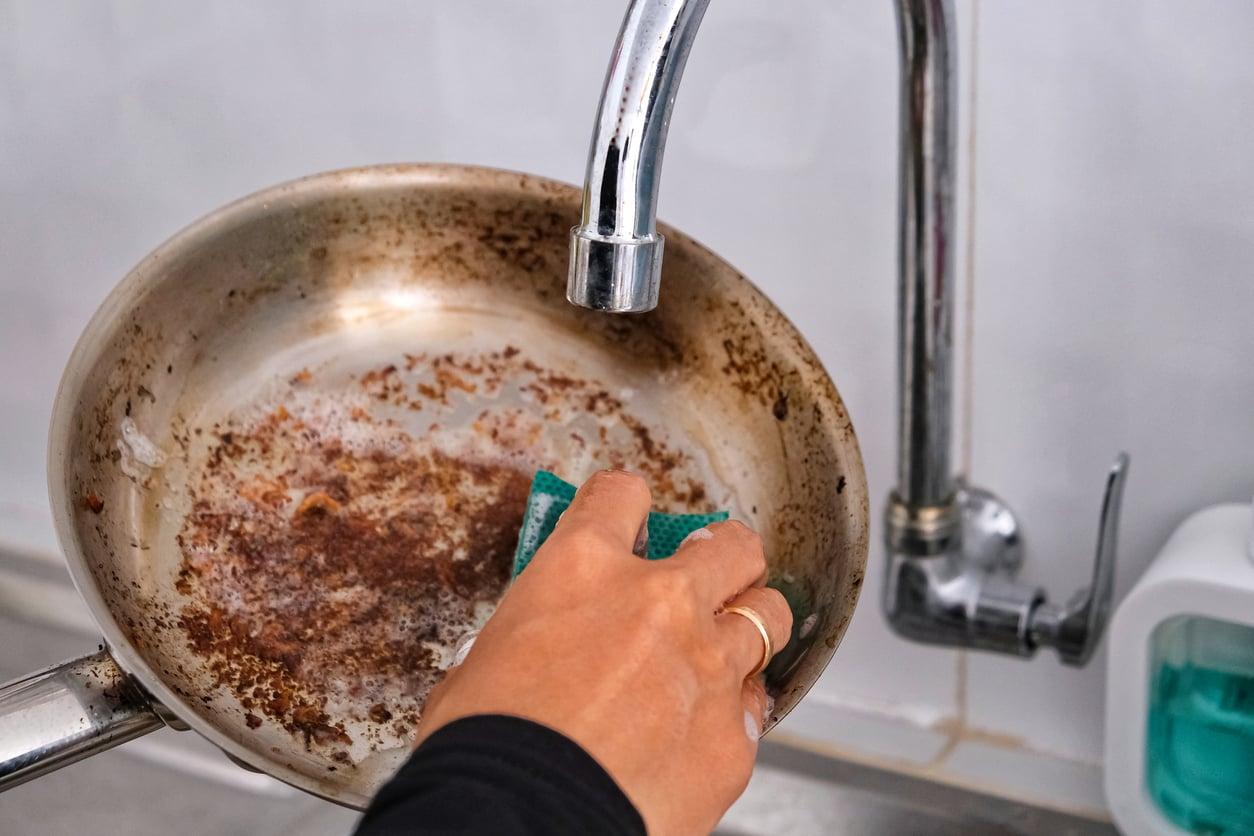
Most of us do it instinctively: the bottom of the non-stick pan is scorched, so we grab the roughest sponge we can find and start scrubbing. But that's exactly what destroys the coating — and makes the problem worse every single time. There's a far gentler solution hiding in your kitchen cabinet right now: a simple white powder and hot water.
Why you should never scrub a non-stick pan hard
Non-stick coatings — most commonly PTFE, known by the brand name Teflon — work because they create an incredibly smooth surface that food simply can't grip. The moment you attack that surface with a metal scrubber, a sharp spatula, or a rough sponge, you create microscopic scratches.
Those tiny grooves are where grease and food particles will burn and stick even more stubbornly next time. So the more you scrub, the worse the pan gets. The goal isn't to force the residue off physically — it's to loosen it chemically, so it practically slides away on its own.
What you'll need
- Baking soda
- Hot water (straight from the kettle or the stove)
- A wooden spoon or silicone spatula
- A soft sponge for the final rinse
Step-by-step method
First, let the pan cool slightly — it shouldn't be scalding hot to handle, but don't let it go fully cold either. Sprinkle a generous layer of baking soda over the burnt area, covering it evenly. Then carefully pour hot water over it until the baking soda starts to fizz, and leave it to soak for at least 20 to 30 minutes.
The combination of hot water and baking soda softens the burnt fat and protein layer, while the alkaline reaction breaks down the bonds holding the residue to the surface. As the pan soaks, you'll actually be able to see the black flakes beginning to lift away from the coating.
After soaking
Once the soak is done, run a wooden spoon or silicone spatula gently across the surface — most of the burnt bits will slide right off. If there are still some stubborn spots, repeat the process: fresh baking soda, more hot water, another rest. Even the most persistent burnt-on messes give up after two or three rounds, without a single scratch left behind.
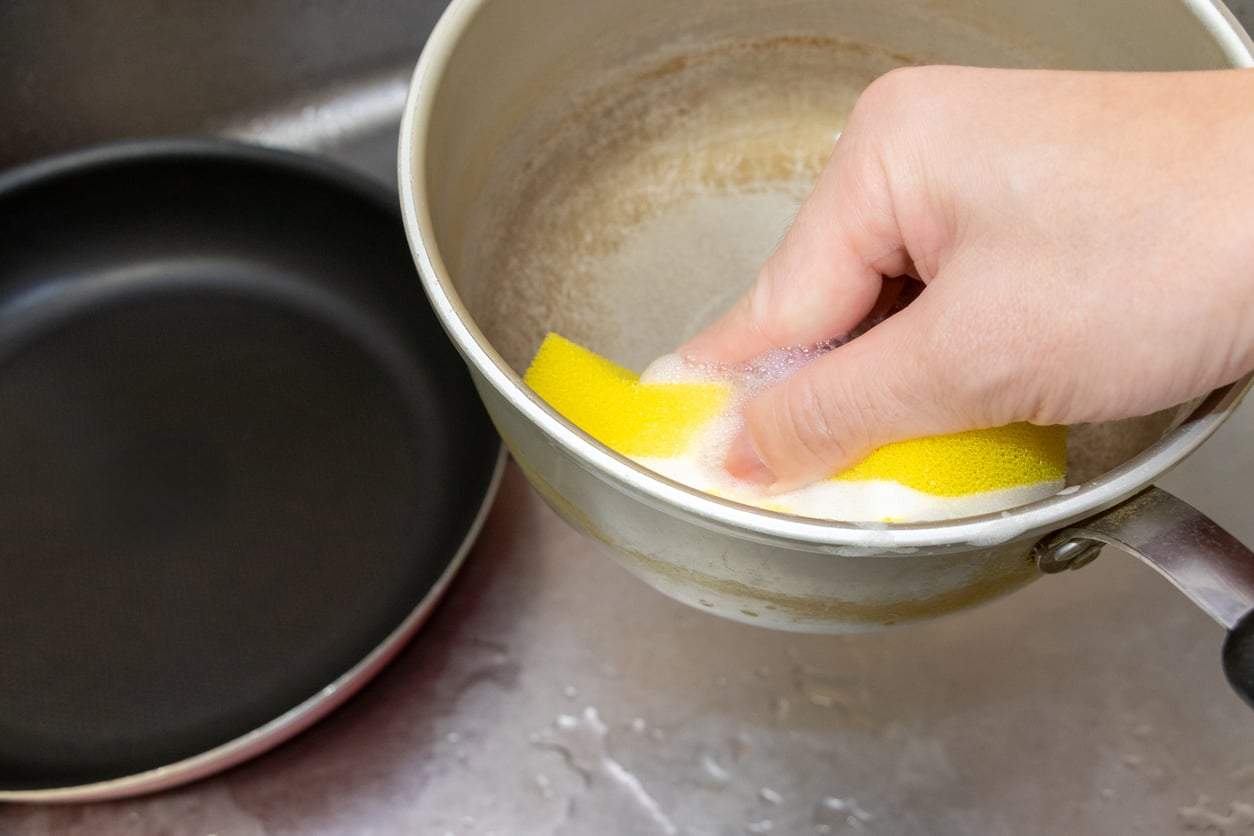
Finish by washing the pan with a soft sponge and a little dish soap, then rinse thoroughly. You want to make sure no baking soda residue is left behind, since it can affect the flavor of food the next time you cook.
What to avoid
Don't use abrasive cleaning powders — their fine particles scratch just as much as steel wool does. Also avoid mixing vinegar and baking soda directly in the same cleaning session: the two neutralize each other and lose their cleaning power. If you'd like to try a vinegar soak, do it as a separate step on a different occasion.
Never plunge a hot non-stick pan into cold water. The sudden temperature shock can warp the pan itself — and it's just as harmful to the coating as aggressive scrubbing.
How to prevent burnt residue next time
The best way to protect a non-stick pan is to always cook on medium heat and avoid the high temperatures needed for searing or charring. Use wooden or silicone utensils instead of metal ones, and always let the pan cool a little before washing it. Build these small habits and you'll rarely need to reach for the baking soda at all.
Frequently asked questions
Can I use this method on any non-stick pan?
Yes — the baking soda and hot water method is safe for any non-stick coated pan because it relies on a gentle chemical reaction rather than physical force. Just make sure to use a soft sponge for the final wash and avoid abrasive tools throughout.
How long should I let the pan soak?
At least 20 to 30 minutes is recommended. For stubborn burnt residue, you can let it soak longer or repeat the process two or three times until the residue lifts away easily.
Why can't I just mix baking soda and vinegar together?
When combined, baking soda and vinegar neutralize each other, which actually cancels out their individual cleaning power. Use them separately — in different cleaning rounds — if you want to get the benefit of both.
Will this fix deep scratches already on my pan?
No — this method cleans burnt residue but cannot repair a damaged coating. If your pan already has deep scratches, cooking on medium heat and using only silicone or wooden utensils going forward will help slow further damage.