Every year, around the last week of September, there's a sort of collective surrender. The cushions go in a bin bag, the herbs get left to their fate, and the balcony becomes a place you look at through glass while drying the washing. I did exactly this for years, until a winter when I was at home a lot with a small child and realised that a four-square-metre concrete rectangle was the only outdoor space I had, and I had voluntarily given it up for six months. Since then I've treated the autumn changeover as a reset rather than a shutdown — and I stand out there far more often than I expected.
Shrink the space on purpose
The trick is not to keep the whole thing going. Pick one zone — usually the corner nearest the door, sheltered on two sides — and make that the winter version of your outdoor space. One chair, or two if there's room. A small table that can take a mug. Everything else gets cleared, cleaned and stored, which makes the working corner feel deliberate instead of neglected.
Shelter matters more than heat. Wind is what actually drives you indoors, not temperature; ten degrees in still air is pleasant with a jumper, while ten degrees in a gusty updraft is miserable. A tall planter, a folding screen, a reed or willow panel cable-tied to the railing on the windward side — any of these change the experience completely. If you rent, the cable-tied panel comes down in five minutes and leaves nothing behind.
Light, texture, and things that survive rain
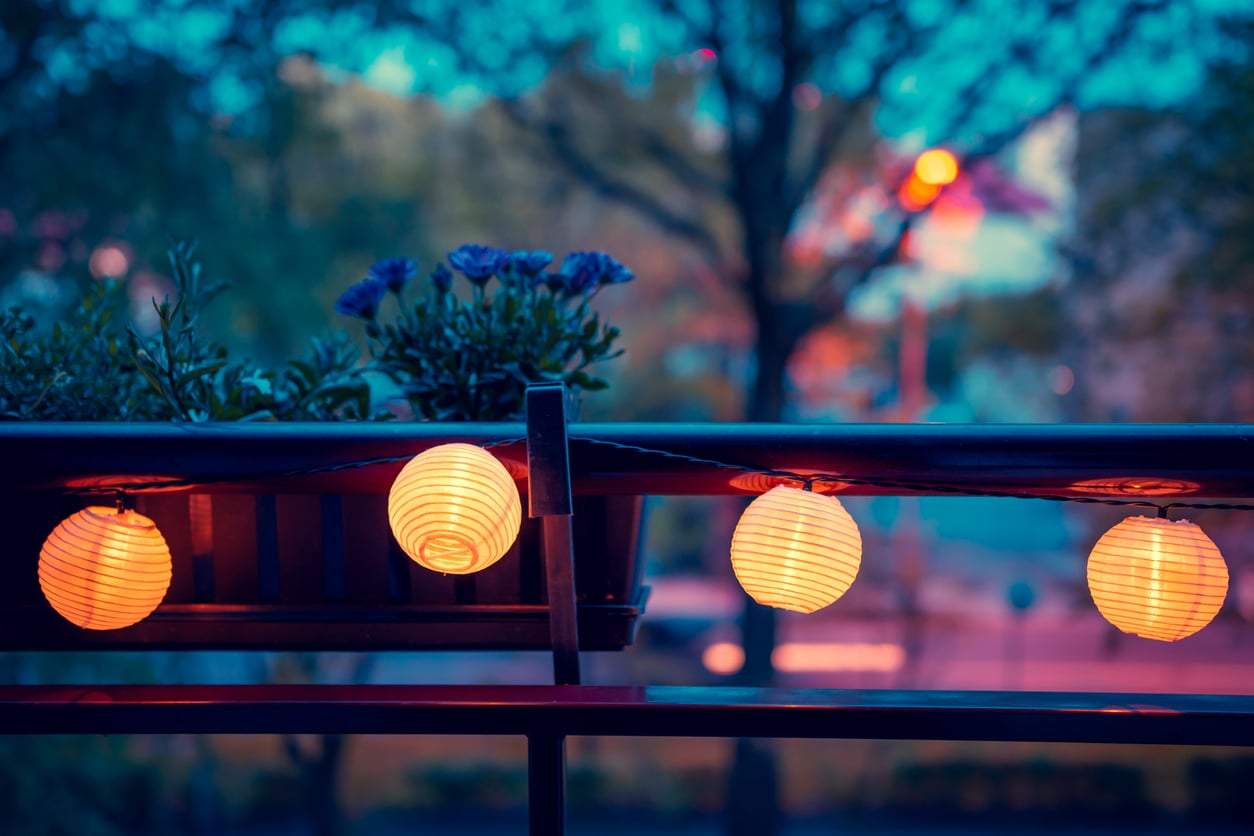
Once the evenings start at five, light is the whole difference between a usable balcony and a dark ledge. Solar string lights are fine in autumn but weaken badly in deep winter, so add battery lanterns with a timer, or a rechargeable table lamp you bring in to charge. Warm light, low down, positioned so you are not staring into it — the effect from inside the room is worth it even on nights you don't go out.
For textiles, be honest about what will get wet. Keep indoor cushions indoors and use genuinely outdoor-rated ones outside, stored in a small bench or a lidded box so they're dry when you want them. A cheap waterproof-backed picnic blanket over the chair does the same job. One heavy wool blanket kept just inside the door, on a hook, is the single item that has got me outside most often — the decision to step out has to be frictionless or it doesn't happen.
The planting that carries you to spring
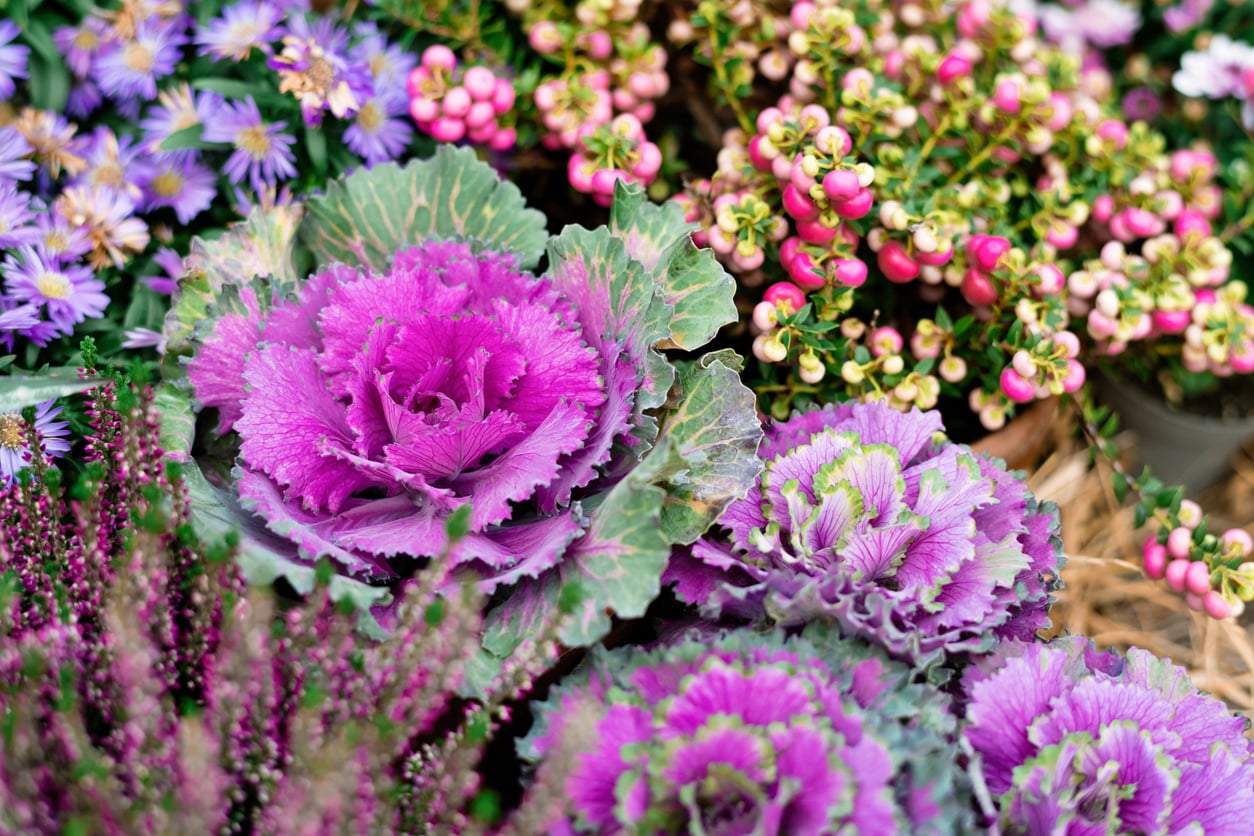
Containers don't have to be empty. Evergreen structure is what you want: a small box or dwarf conifer, ivy trailing over the edge of a pot, heuchera in bronze and plum tones that hold colour through frost. Ornamental grasses look better dead than alive, catching light and rustling in wind, so leave them standing rather than cutting them back in autumn. Hellebores and winter-flowering heathers give you something to look at in the bleakest weeks, and bulbs planted into the top layer of an existing pot now — tulips, crocus, dwarf iris — will surprise you in February.
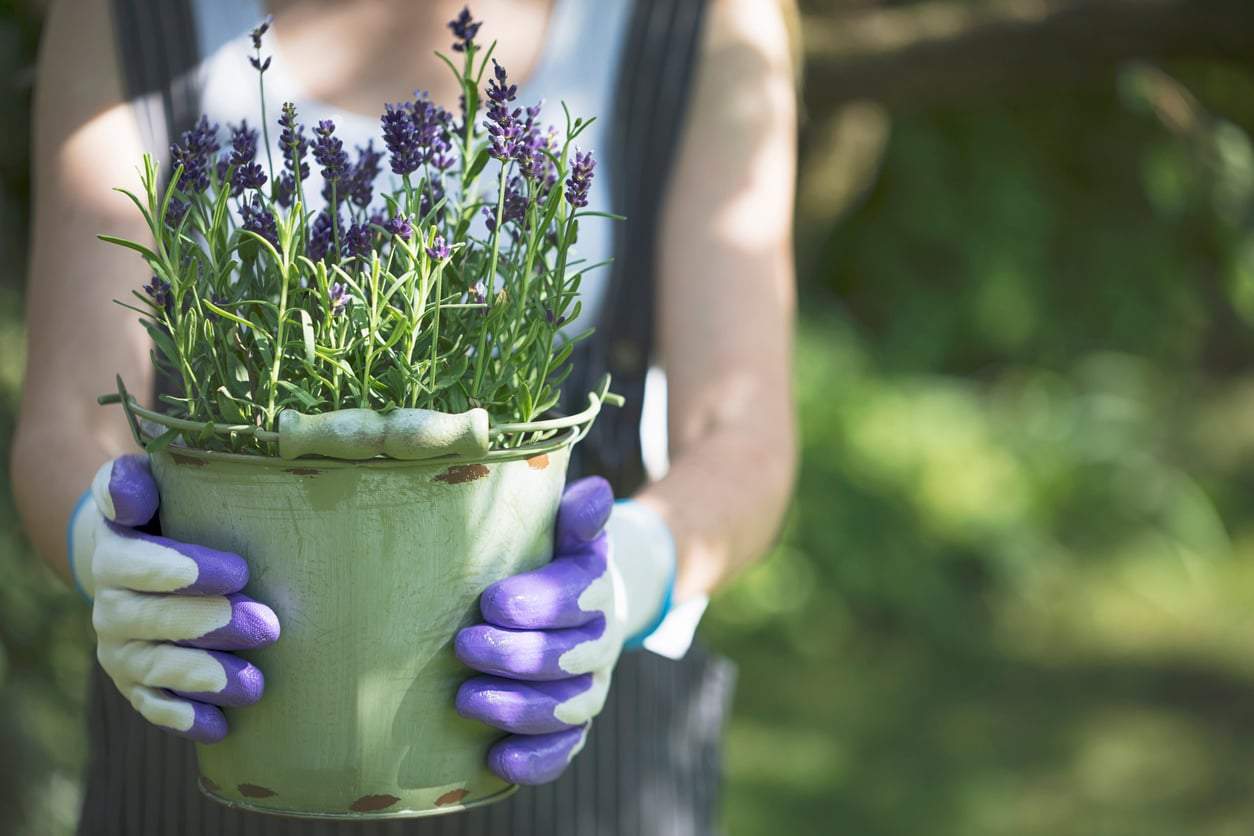
Hardy herbs earn their place twice: rosemary, bay, thyme and sage all cope with cold and mean you can step outside on a December evening for something you actually need. Give all your pots feet or bricks so water drains away and roots aren't sitting in a frozen puddle, group them together against a wall for mutual insulation, and wrap the most vulnerable pot in hessian or bubble wrap. Terracotta is the one to protect — it cracks when wet soil freezes inside it.
What if my balcony gets almost no sun in winter?
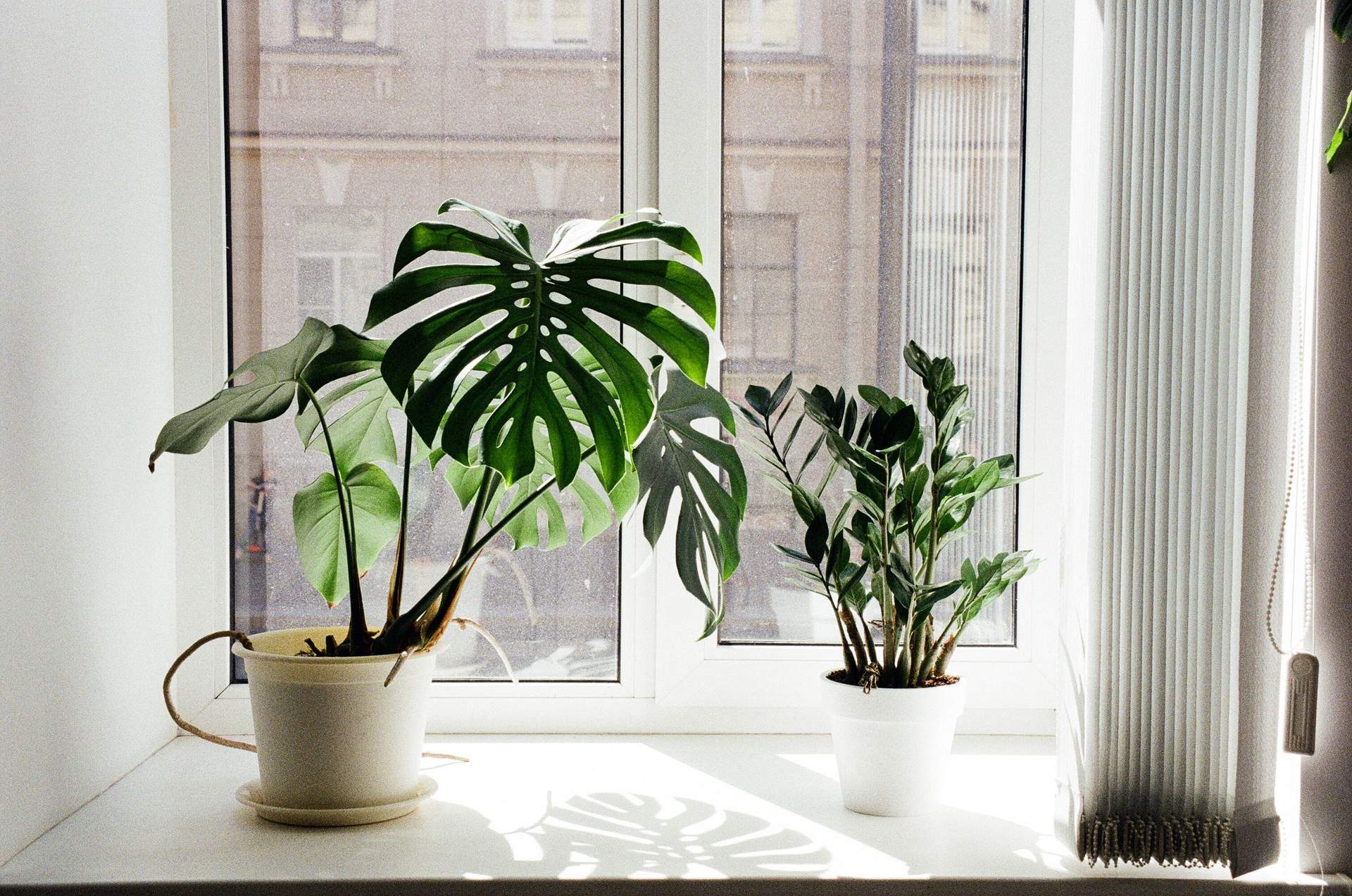
Plenty of winter plants cope with shade better than summer ones do, because they are adapted to woodland conditions: ivy, ferns, heuchera, hellebores and skimmia will all tolerate low light. Focus on foliage and texture rather than flowers, use pale pots and a light-coloured screen to bounce what daylight there is, and lean harder on lanterns for atmosphere. A shaded balcony can be genuinely lovely — it just needs to be a green, textured space rather than a floral one.
Do I need to bring everything indoors when it freezes?
Only the tender things — anything Mediterranean or subtropical, pelargoniums, citrus, olive in a hard frost, and young plants that haven't established roots. Hardy shrubs, grasses and herbs are better left outside, where they expect to be; the real risk to them is waterlogging and wind, not cold. Move pots close to the wall before a cold snap, check that drainage holes aren't blocked, and remember that containers on a windy balcony dry out even in winter, so water occasionally on mild days.