You've sprayed, wiped, and buffed — and yet your windows still look streaky in the sunlight. Sound familiar? The problem usually isn't the product you're using. It's the technique. Professional cleaners follow a handful of small but precise habits that make the difference between a smeared mess and a perfectly clear, streak-free window.
The sun is your biggest enemy
One of the most common mistakes people make is cleaning windows on a bright, sunny day, thinking the warmth will help things dry faster. That's exactly the problem. When the glass is hot, the cleaning solution evaporates before you can wipe it away, leaving behind residue, streaks, and water marks.
Professionals choose to work on overcast days, early in the morning, or late in the afternoon — when the glass surface is cool and the solution has time to do its job before drying on its own.
A squeegee, not a cloth, is the real secret
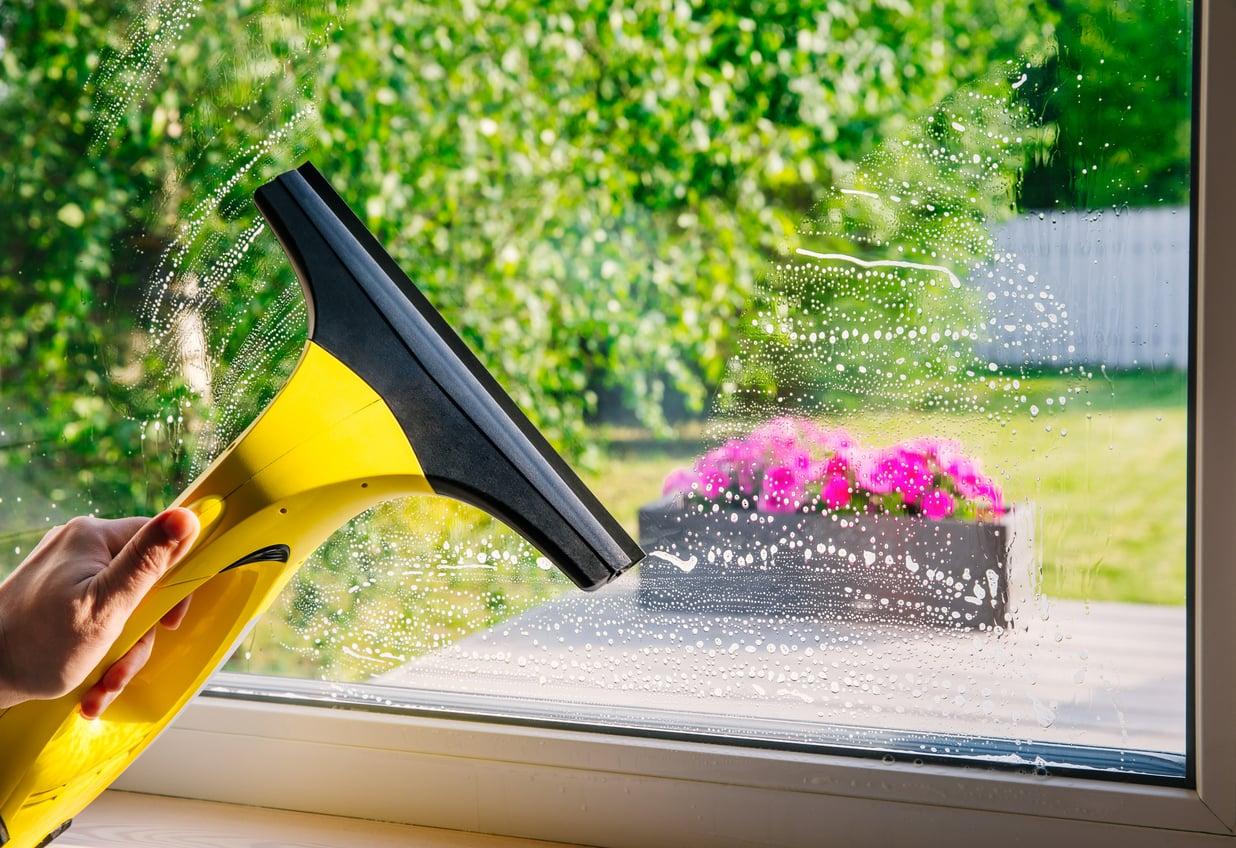
Most of us reach for a rag, a paper towel, or an old T-shirt. The problem? These leave lint behind and smear tiny water droplets across the glass rather than removing them. Professional window cleaners almost universally rely on a rubber squeegee instead.
The technique is simple: pull the squeegee in a single, uninterrupted stroke from top to bottom. No back-and-forth, no hesitation.
Direction is everything. Always move the squeegee the same way, and after each stroke, wipe the rubber blade clean with a dry cloth — otherwise the dirt it picked up will just get smeared right back onto the glass.
Less product, more water
It's tempting to assume that more cleaning solution means a cleaner result. In reality, the opposite is true. Too much product leaves a thin chemical film on the glass that attracts dust and makes every fingerprint visible within days.
Professionals keep it simple: a bucket of lukewarm water with a few drops of dish soap or a small splash of white vinegar. That mild, slightly soapy solution is genuinely all you need for most windows.
Hard water is a hidden trap
If your tap water is hard — which it is in many parts of the US — the minerals in it can leave whitish, chalky spots on the glass after it dries, no matter how good your technique is. To get around this, professional cleaners often use distilled or filtered water, especially for the final rinse or to dampen the squeegee blade.
It's a small extra step, but it makes a genuinely noticeable difference when you're aiming for a truly streak-free finish.
The direction trick that tells you exactly where you went wrong
Here's a classic pro tip that's been around for decades and still works perfectly: wipe the inside of the window with horizontal strokes, and the outside with vertical strokes (or vice versa). If a streak appears once everything dries, you can immediately tell which side it's on — no guessing, no re-cleaning the whole surface. Just go back and fix the right side.
A microfiber cloth for the finishing touch
Even with a squeegee, small drops tend to collect along the edges of the glass, in the corners, and along the window frame. This is where a dry, high-quality microfiber cloth comes in. It absorbs residual moisture without leaving lint or smearing the surface — something paper towels notoriously fail at, thanks to their tiny fibers that always seem to leave something behind.
Streak-free windows aren't about buying the most expensive cleaner on the shelf. They're the result of a few small, deliberate habits that professionals have refined over years: the right timing, minimal product, the proper tools, and a consistent technique repeated the same way every time.
What's the best time of day to clean windows?
Early morning or late afternoon on an overcast day is ideal. Direct sunlight and heat cause the cleaning solution to evaporate too quickly, which is what causes streaks in the first place.
Do I really need a squeegee, or can I use paper towels?
A rubber squeegee is strongly recommended. Paper towels leave tiny fibers on the glass and tend to smear water rather than remove it. Microfiber cloths are a better alternative if you don't have a squeegee handy.
Why does my window look worse after cleaning?
The most likely culprits are too much cleaning product, hard tap water leaving mineral deposits, or cleaning in direct sunlight. Try using less solution, switching to distilled water for the final rinse, and cleaning at a cooler time of day.
Is vinegar actually effective for cleaning windows?
Yes — a small amount of white vinegar mixed into a bucket of lukewarm water works well and doesn't leave the chemical film that can come from overusing commercial sprays.