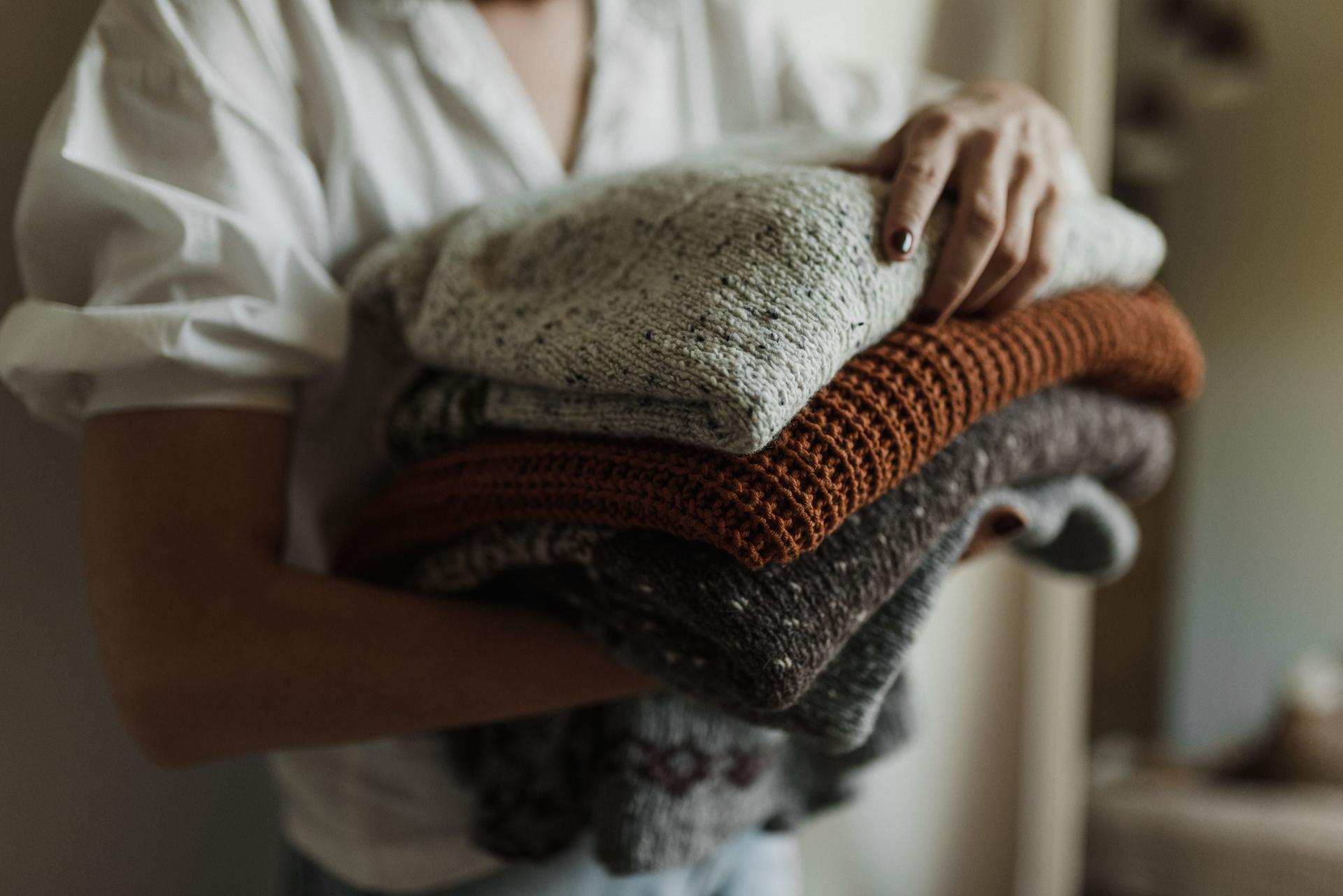
Every beloved knitted sweater eventually develops those annoying little fuzz balls on the surface. But that doesn't mean it's time to retire it. With one simple trick, you can restore it to almost-new condition in just a couple of minutes — right at home. Here's exactly what to do.
Why do sweaters pill in the first place?
Pilling happens because of friction between fabric fibers. Every time your sweater rubs against itself, your coat lining, or a bag strap, the shorter and weaker fibers break loose and tangle together on the surface, forming those telltale little bobbles.
This is especially common in blended fabrics — where cotton, acrylic, or polyester is mixed with wool — because fibers of different lengths and textures slip out of the weave more easily.
Areas under a bag strap, against a jacket lining, or anywhere the sweater layers under another garment tend to pill the fastest.
The most reliable fix: a fabric shaver
A fabric shaver (also called a lint shaver or de-piller) is a small handheld device with rotating blades that neatly trim the bobbles off the surface without cutting the underlying fibers. You can find one at most drugstores, homeware shops, or online for under $15. And yes — it really does take just one to two minutes on a standard-sized sweater.
Here's how to use it properly:
- Lay the sweater flat on a table or firm surface so the fabric isn't bunched or wrinkled.
- Gently stretch the fabric taut with one hand to create a smooth, even surface.
- Glide the shaver in one direction using light, steady strokes — don't press down hard.
- Empty the collection chamber regularly so the blades don't get clogged.
The most important thing: don't rush. Moving too fast or pressing too firmly can snag or even create holes in more delicate knits.
No fabric shaver? Try these alternatives
If you don't have one on hand, a regular disposable razor can work in a pinch — just be more careful with it. Lay the sweater flat the same way, hold the fabric taut, and use very light, almost-skimming strokes to shave off the pills. The blade should barely graze the surface, not dig in.
For thicker, chunkier wool sweaters, many people swear by fine-grit sandpaper or even a wide-tooth comb, both of which can lift surface bobbles gently when swept in a single direction.
What to avoid
- Don't pick pills off by hand — you'll almost always pull out good fibers along with them, which can lead to holes.
- Avoid stiff fabric brushes on fine or delicate knits — they're too aggressive and can damage the weave.
- Skip the high-spin cycle when washing — the tumbling friction inside the washing machine is one of the biggest causes of pilling in the first place.
How to prevent pilling from coming back
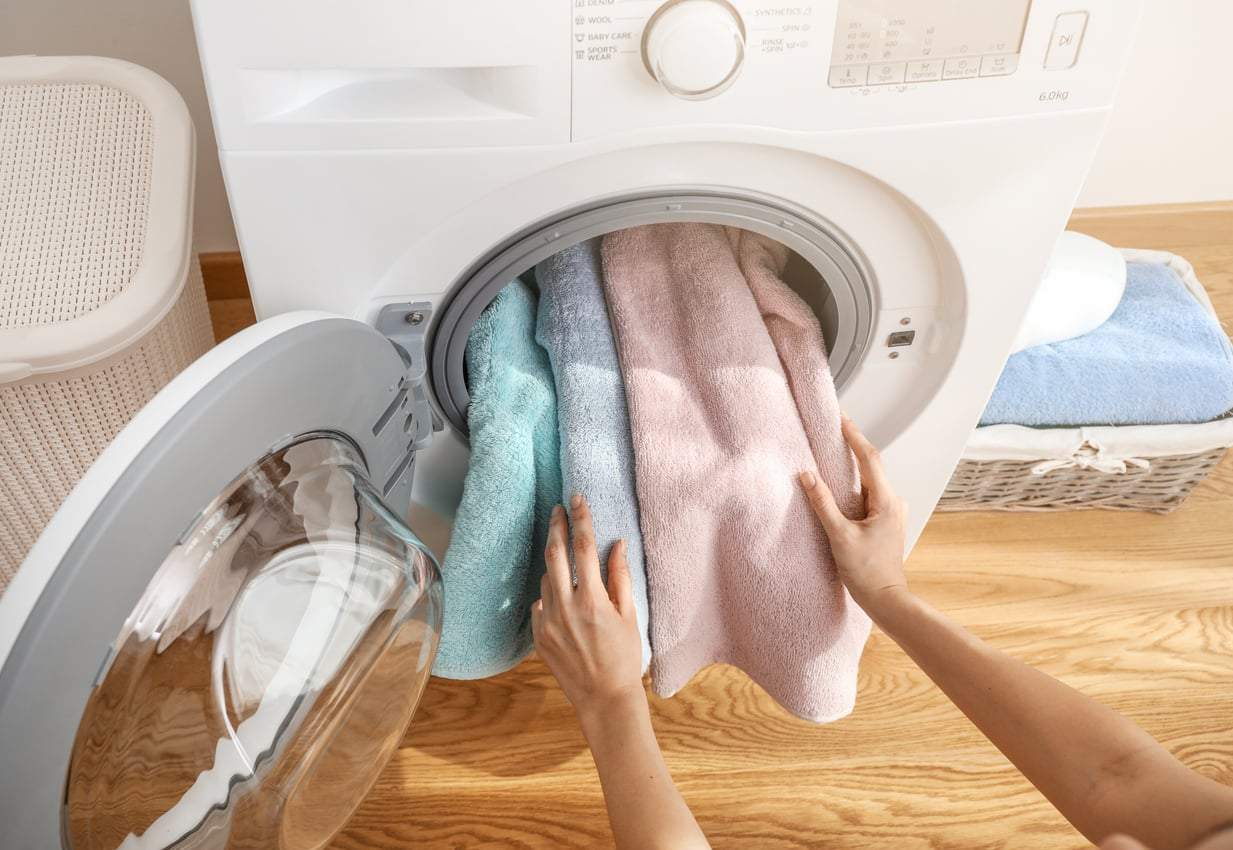
Using a mesh laundry bag makes a real difference — it stops knitted pieces from rubbing directly against other clothes in the wash. It also helps to turn your sweater inside out before washing, use a gentle or delicate cycle, and keep the spin speed low.
When drying, always lay the sweater flat on a clean towel rather than hanging it. Hanging a wet knit lets gravity stretch the fibers under their own weight, which weakens them over time and speeds up future pilling.
Higher-quality sweaters with a greater wool content are naturally more resistant to pilling than fully synthetic ones — but even the best knit will eventually show some wear. That's not a flaw in the sweater; it's just how textile fibers work. And now you know it's a two-minute fix, not a reason to throw it away.
How do I know if my sweater is too delicate for a fabric shaver?
Very loosely knitted or open-weave sweaters need extra care. Test the shaver on a small, hidden area first — like the inner hem — and use the lightest possible pressure. If the fabric catches or stretches, stick to the fine-sandpaper or comb method instead.
How often should I de-pill my sweaters?
There's no set schedule — simply de-pill whenever the bobbles become noticeable. For frequently worn sweaters, that might be once or twice a season. Regular maintenance keeps them looking newer for longer.
Does washing a sweater less often help prevent pilling?
Yes. Every wash cycle creates friction, which is a key cause of pilling. Spot-clean when possible, air the sweater out between wears, and only machine-wash when truly necessary — using a mesh laundry bag and a gentle cycle.
Can pilling be a sign of poor fabric quality?
Not necessarily. Even high-quality wool sweaters pill over time — it's a natural result of fiber friction during wear. Blended fabrics with synthetic fibers do tend to pill faster, but pilling alone doesn't mean a sweater is low quality.