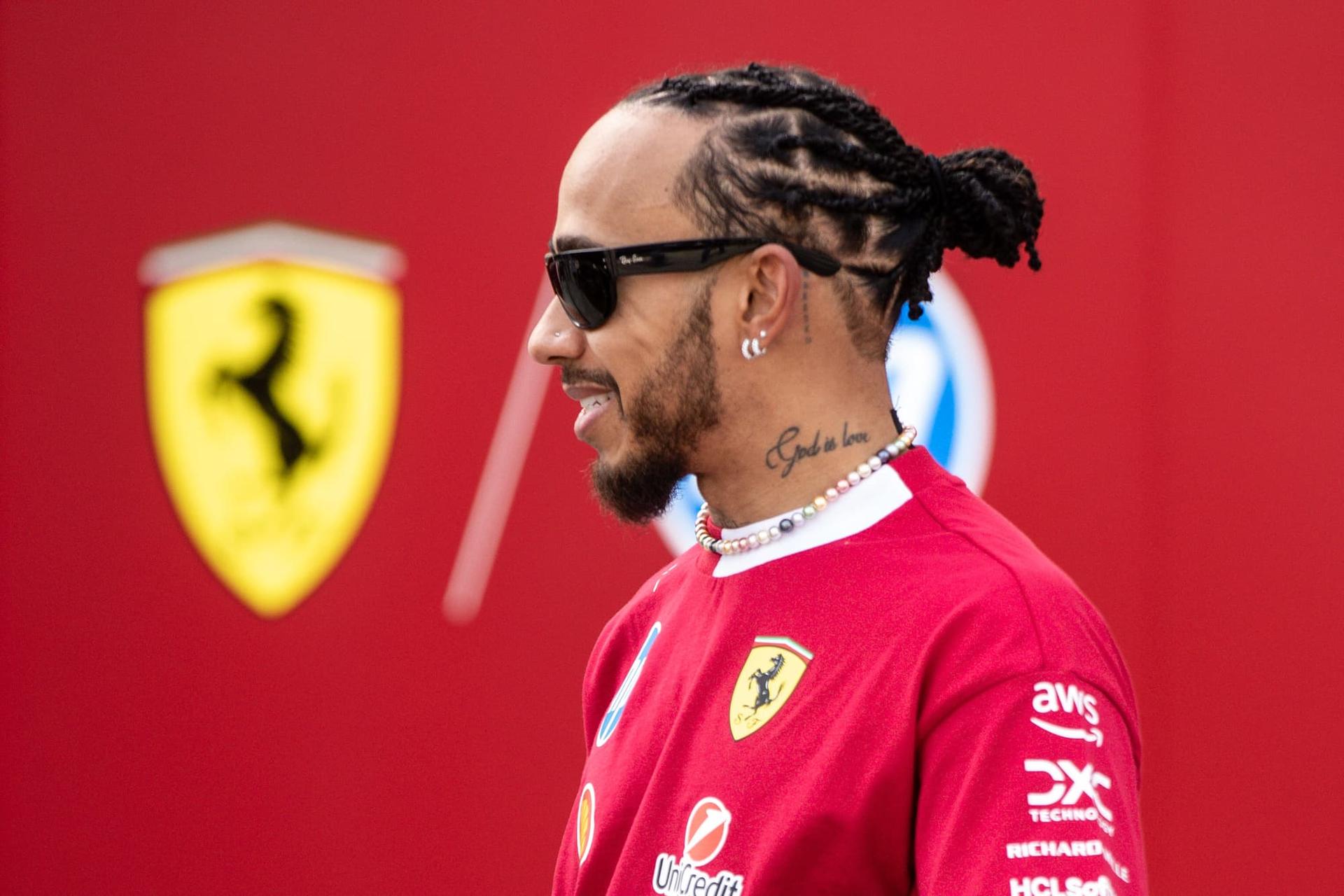
Seven world titles. Countless records. A place among the greatest names in motorsport history. On paper, Lewis Hamilton has nothing left to prove.
And yet he chose a brand-new challenge. After a long and glorious era at Mercedes, he signed with Ferrari — and even after a difficult first season, he refused to dwell on disappointment. Instead, he focused on building something new.
His story is about far more than racing. It's about the idea that success isn't a finish line, but a constant process of growth — and that sometimes the bravest decision of all is to start over.
The 2026 Formula 1 Hungarian Grand Prix runs from July 24 to 26 at the Hungaroring, so fans can follow the next chapter of Hamilton's Ferrari journey up close.
Leaving the comfort zone for the unknown
Few athletes take such a huge risk at the peak of their careers as Lewis Hamilton. For more than a decade he was the face of Mercedes, racking up championship after championship — before making the switch to Ferrari in 2025.
Many saw the move as a dream transfer. But that first shared season was anything but easy. The breakthrough everyone expected never came. In fact, for the first time in his career, Hamilton finished an entire Formula 1 season without a single podium.
At that point, plenty of drivers would start thinking about retirement. Hamilton reacted in a completely different way.
It's not the failure that counts — it's what you do with it
According to Formula1.com, Hamilton used the winter break to consciously close the door on that difficult period. He and Ferrari drew their lessons from that first year together: they left the mistakes behind and kept building on what actually worked.
The British driver insists the goal hasn't changed one bit: to win. In his view, that's the only way to get the maximum out of every single weekend. He also stressed that the new technical regulations pose serious challenges for every team — which makes adaptability more important than ever.
This mindset can teach us plenty far beyond the racetrack. A project that flops, a job change, or a tough life transition doesn't automatically mean you made the wrong call. Often, you simply need time to find your footing in a new environment.
Positive thinking isn't something you're born with
In recent years, Hamilton has spoken more and more openly about the importance of mental health. During the off-season, he made a point of deliberately building a positive mindset.
The support of the people around him — his family and friends — played a big part in that. But so did regular training and honest self-reflection. By his own account, he reminded himself of the kind of person he wants to be and the values he wants to race by.
Sports psychology backs up this approach: mental resilience — the ability to refocus after a setback — is one of the most important ingredients of long-term performance.
He doesn't only grow on the track
Hamilton has always been known for one thing: an endless curiosity about the world. Alongside racing, he writes music, makes business investments, works on fashion projects, and actively seeks out new spaces where he can create.
In past interviews, he's talked about how dangerous it is for an athlete to define themselves through a single role. He's consciously preparing for the day when he's no longer racing in Formula 1 — which is why he keeps picking up new skills.
Today, that outlook is one of the cornerstones of building a lasting career. Continuous learning isn't just an advantage in the job market — it also gives you the confidence to face change head-on.
In Formula 1, creative thinking matters too
Few people realize that Hamilton doesn't just drive the car — he's actively involved in developing it. At his previous teams, he worked hand in hand with the engineers on things like the steering wheel design, fine-tuning his seating position, and improving the ergonomics.
It's a great reminder that success rarely comes down to a single talent. The truly exceptional people don't just carry out their tasks — they're curious about how to make the whole system better.
More than an athlete
Hamilton's name is no longer known for racing alone. Over the past few years, he has consistently stood up for diversity, equal opportunity, and access to education. His own foundation, Mission 44, aims to open doors for disadvantaged young people in education and technology, while — alongside Mercedes programs — supporting the participation of women and underrepresented groups in motorsport.
His opinions sometimes divide public opinion, but he consistently champions the causes he believes in. That's part of why he's now seen not just as a world champion, but as a genuine voice worth listening to.
What we can all learn from Lewis Hamilton
Hamilton's story is a reminder that success doesn't guarantee permanent security — not even when you've already achieved everything in your field. Growth sometimes requires letting go of the familiar, embracing uncertainty, and becoming a beginner all over again.
Perhaps that's the most powerful message in the story of the seven-time world champion who joined Ferrari: the biggest victories often aren't won on the podium, but in the moment when — after a disappointment — we believe in ourselves again and dare to start over.
Why did Lewis Hamilton leave Mercedes for Ferrari?
After more than a decade as the face of Mercedes, Hamilton chose a fresh challenge and signed with Ferrari in 2025 — a move many saw as a dream transfer, even though the first season proved difficult.
Did Hamilton's first Ferrari season go well?
Not as hoped. It was the first time in his career that he finished an entire Formula 1 season without a single podium. Rather than dwelling on the disappointment, he focused on building for the future.
What is the Mission 44 foundation?
Mission 44 is Hamilton's own foundation, which aims to open doors for disadvantaged young people in education and technology, while also supporting greater diversity in motorsport.
When is the 2026 Hungarian Grand Prix?
The 2026 Formula 1 Hungarian Grand Prix takes place from July 24 to 26 at the Hungaroring, where fans can follow the next chapter of Hamilton's Ferrari career in person.