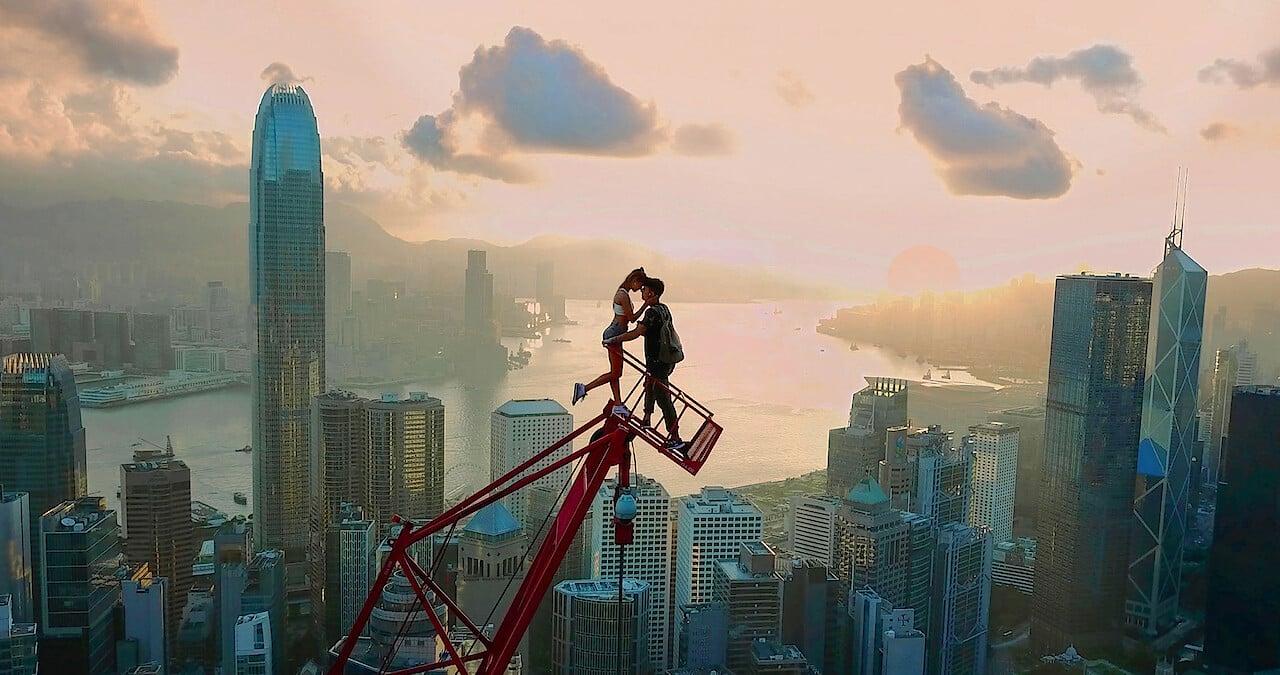
Cover image: TUDUM by Netflix
Some love stories begin with a candlelit dinner, a shared trip, or one unforgettable first meeting. Others are written hundreds of feet above the ground, on the very edge of a skyscraper.
Netflix's documentary Skywalkers: A Love Story opens a window into the strange, hard-to-fathom world of Angela Nikolau and Ivan "Vanya" Beerkus. They're the young couple who climb to the top of the world's tallest buildings to capture breathtaking images — often with barely any safety precautions, and always at enormous risk.
At first glance it looks like a straightforward extreme-adventure film. But the further the story goes, the clearer it becomes: this isn't really about height. It's about two people who feel they always have to get "higher."
The real question isn't the height — it's what drives us
The film's most unforgettable moments are, without question, the ones where Angela and Ivan stand on top of the world. Yet the story's true power lies somewhere else. The most compelling scenes are the ones that let us get close to this unusual way of living — and hint at what might sit behind their choices.
Because you can't help but ask: why would anyone want to put themselves in such dangerous situations?
The answer probably isn't one single thing. There's likely a craving for freedom, curiosity, adrenaline, self-expression — and maybe something deeper, a need to prove something.
It's hard not to wonder how much of this ties back to a person's past. In Angela and Ivan's story, you sense that very familiar feeling: the urge to prove "I'm here, I matter, I'm capable of something."
We can't say for certain what role their pasts played in how they live today, but human experience tells us that early memories, hardships, and the longing to feel accepted often stay with us for years. Some people quietly search for their place in the world; others want to climb so high that everyone is forced to notice.
Of course, we can't know exactly what goes on inside them — and maybe that's one of the film's most interesting questions: could conquering skyscrapers actually be the visible sign of a much deeper inner struggle?
When psychology hides behind extreme risk
Psychologists have long studied why some people seek out the very situations others would do anything to avoid.
The personality trait known as sensation seeking describes people who feel an especially strong pull toward new, intense, and complex experiences. According to clinical psychologist Kenneth Carter, a professor at Emory University, high sensation seeking doesn't simply mean someone loves danger. Instead, these people are often chasing the powerful feeling that comes from overcoming a serious challenge.
That helps make sense of Angela and Ivan's world, too. The question that mattered to them may not have been just how high they could climb, but who they could become up there.
A love where trust can be a matter of life and death
One of the most fascinating layers of Skywalkers is the relationship itself.
In an everyday partnership, trust means you can count on the other person on a hard day, in an argument, or when facing a big decision. For Angela and Ivan, though, trust reaches an entirely different level.
When you're standing on the roof of a building hundreds of feet high, the other person's presence isn't just emotional support — it becomes part of your sense of safety.
As director Jeff Zimbalist points out, love always carries the risk of getting hurt. But for Angela and Ivan, that danger isn't only emotional: their lives can literally depend on it.
Stunning to watch, dangerous to imitate
Skywalkers is undeniably a mesmerizing film. The visuals are gorgeous, the locations are staggering, and it's hard not to admire the courage Angela and Ivan show as they face their fears head-on.
Still, it's crucial to separate admiration from imitation.
These kinds of building climbs are extraordinarily dangerous — and they don't just endanger the people doing them. An accident can put others at risk too, from rescue workers to security staff and bystanders who have to deal with the fallout.
The film's real question may not be how far we dare to go, but why we want to get there at all. Skywalkers invites us to reflect on our own motivations: what are we actually looking for in our challenges, and who are we trying to prove ourselves to?
The deepest thing here isn't the height
Skywalkers: A Love Story isn't simply the tale of two daredevils. It's far more a film about how we try to find ourselves, how we long to connect with someone, and how we try to defeat the fears living inside us.
You can find Angela and Ivan's world breathtaking and terrifying at the same time. You can understand their motivations while knowing full well that these stunts are life-threatening and absolutely not to be copied.
Maybe that's what makes this documentary so gripping. It doesn't ask how high we can climb. It asks what we're truly searching for when we're determined, at any cost, to push past our own limits.
What is Skywalkers: A Love Story about?
It's a Netflix documentary following Angela Nikolau and Ivan "Vanya" Beerkus, a couple who scale the world's tallest buildings to capture extreme photos. Beneath the stunts, it's really a story about love, trust, and the desire to prove ourselves.
Are the climbs in the film dangerous?
Yes — extremely. These building climbs can endanger not only the people performing them but also rescuers, security staff, and bystanders. The article stresses separating admiration from imitation; they are not examples to follow.
Why do people take on this kind of extreme risk?
Psychologists point to a trait called "sensation seeking," a strong pull toward intense, complex experiences. According to professor Kenneth Carter, it's often less about loving danger and more about the powerful feeling of overcoming a serious challenge.
What role does their relationship play in the film?
Trust between Angela and Ivan becomes a matter of survival, not just emotion. High above the ground, the other person's presence is part of their sense of safety, which gives their love story its unusual intensity.