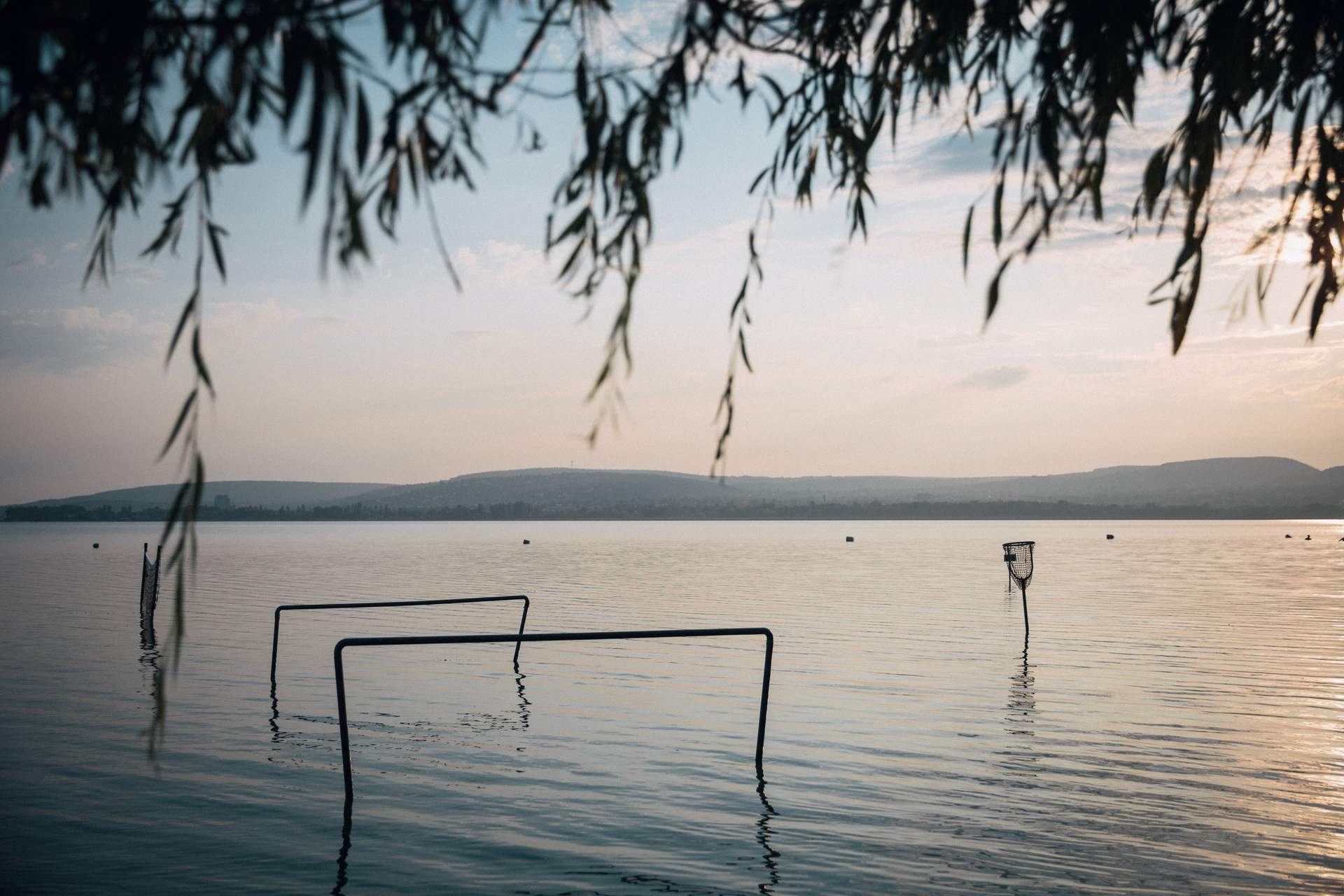
The famous lakes are magnificent and, in high summer, exhausting. What I have come to prefer is the second-tier water — a reservoir behind a village, a flooded gravel pit with willows leaning in, a lake that appears on maps with no name attached and no car park to speak of. There is one within an hour of almost every city, and September is when it comes into its own: the light goes low and gold, the reeds turn the colour of straw, and the families who filled the shoreline in August have gone back to school timetables.
How to find water nobody is writing about
Start on a satellite map rather than a travel site. Zoom out to an hour's radius from your front door and look for blue: not just the labelled lakes, but the small irregular shapes on the edges of villages, the neat rectangles of old gravel workings, the pale margins where a reservoir has dropped in summer. Then zoom in on the shoreline itself, because the map tells you what a listicle cannot — whether there is a track leading to the water, a bench, a jetty, a path around the edge, or nothing but private fields and a fence.
Two other sources are gold. Angling clubs list waters obsessively and describe access, depth and banks in plain language, and their pages are usually about lakes no travel writer has ever mentioned. Nature reserve and birdwatching sites do the same, with the added bonus of telling you what you will hear at dusk. And my most reliable rule: go one lake past the famous one. If everybody drives to the big lake with the promenade, the water twenty minutes further along the same road will have a fraction of the cars and most of the same view.
Check the boring things before you drive
Access is the thing that ruins otherwise perfect plans. Before you commit, confirm three practicalities: how you get to the water on foot from wherever you can legally park, whether the shoreline is public or held by a fishing club or private estate, and whether the surrounding land is a protected reserve with restrictions on where you can walk. Look at photographs of the bank too — reed beds are beautiful and impossible to sit on, and a soft mud margin means wellies, not sandals.
Then check the human infrastructure, or the absence of it. Off-radar lakes often have no toilets, no café, no bin and no phone signal, all of which is fine if you know in advance and grim if you do not. Note the nearest village with a shop, and note the time the light goes, because unlit tracks are a different proposition in the dark.
What to pack for a cool-weather lake day
Autumn lake days are made or broken by warmth. I bring one layer more than I think I need — the temperature drops fast the moment the sun leaves the water — plus a waterproof, a hat, and something dry to sit on, because bank grass holds dew until midday and again by five. A flask of something hot matters more than any picnic centrepiece.
Food-wise, keep it robust and hand-held. Thick sandwiches with something salty inside, a wedge of frittata cooked the night before, boiled eggs, a bag of grapes, a bar of dark chocolate. Bring more water than you plan to drink, a bin bag for everything you brought in, and binoculars if you have them; September brings migrating birds through, and half an hour of watching a heron work the shallows is the whole point of the day. Then, crucially, sit still for longer than feels natural. Unhurried water does not reveal much in the first ten minutes.
Is it safe to swim in a lake in September?
Open water cools quickly once the nights draw in, and cold water affects your breathing and your strength far faster than most people expect, so treat September swimming as a short, deliberate dip rather than a long summer float. Never go in alone at an unfamiliar lake, check local rules first because many waters prohibit swimming for good reasons, enter slowly, stay close to the bank, and have warm clothes and a hot drink ready on shore. If you have any heart or circulation concerns, ask your doctor before taking up cold-water swimming at all.
What is the best time of day to arrive?
Arrive either just after sunrise or around mid-afternoon. Early gives you mist on the surface, absolute quiet and the birds at their most active; mid-afternoon lets you stay through the golden hour, which at a small lake in autumn is genuinely spectacular, then leave while there is still enough light to find your way back to the car.