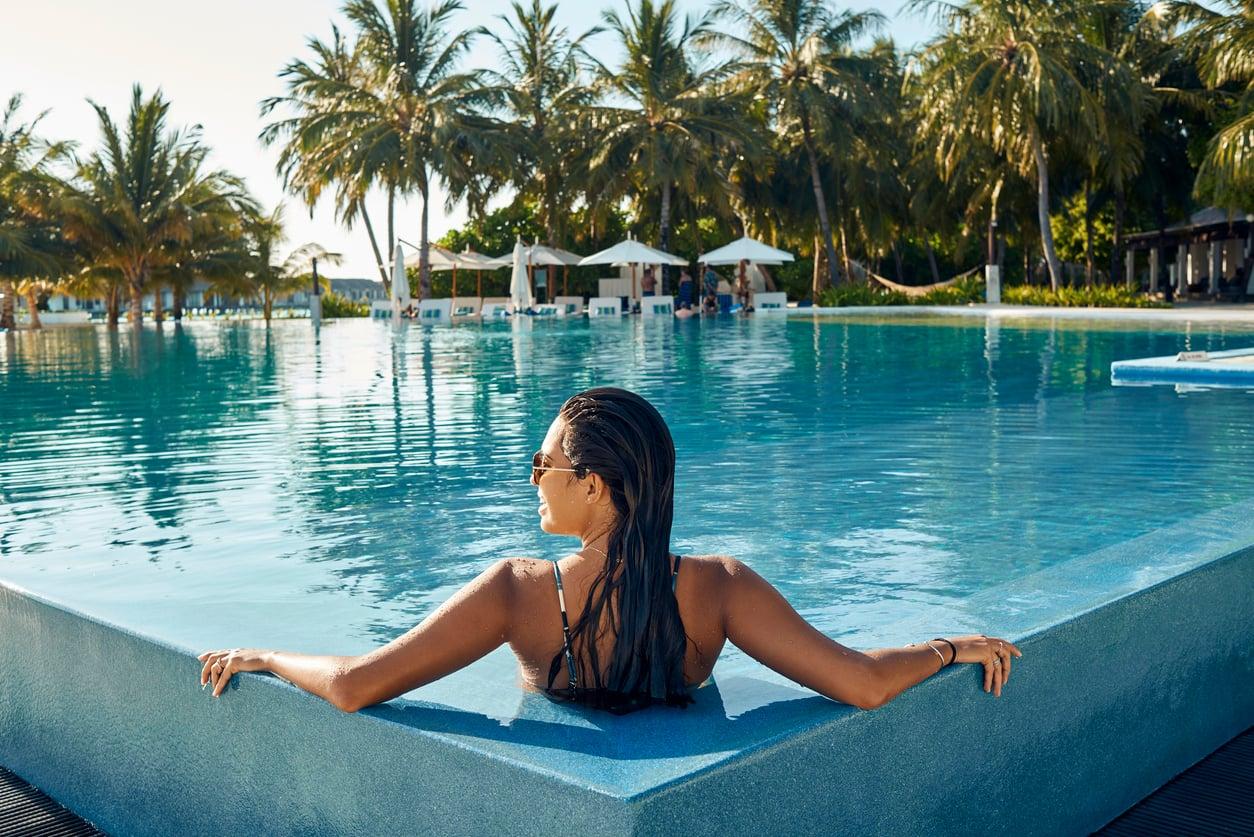
The best swim I had this summer was forty minutes from my own front door, at a small reed-fringed lake I had driven past for years without registering it. There were four other people there: two fishermen who nodded, a woman doing a slow breaststroke in a swim cap, and a teenager reading on a towel. No queue, no music, no car park attendant. It cost the price of a bus ticket and half a Thursday, and it did more for me than the two-week holiday I spent planning in February.
Every region has these places. They are not secret so much as unmarketed — municipal beaches, reservoirs with a swimming section, old gravel pits turned into fishing lakes, waterside stretches of a country park nobody photographs. Late August and the first fortnight of September are the ideal window: the water is at its warmest of the entire year, and the crowds thin the day the school term starts.
How to actually find them
Start with the satellite view rather than the map view, zoomed out to cover an hour's travel in every direction from home. Blue shapes stand out immediately, and satellite imagery shows you the things a map label never will: whether there is a beach or a bank of trees, whether there is a car park, whether paths reach the water. Note every candidate, then switch to searching each one by name and see what comes up.
From there, three sources are worth more than any listicle. Your local authority or county park pages, which say plainly where swimming is permitted and where it is not. Local outdoor-swimming and wild-swimming groups, where people post conditions, parking realities and which entry point is muddy. And angling club pages, which know every body of water within fifty miles even if they do not want you swimming in it. Village noticeboards and the counter of a rural shop remain shockingly good technology.
The safety part, honestly
Open water deserves respect and a bit of humility. Swim where it is permitted, ideally where others are around, and check for any current local advisory about water quality — after heavy rain in particular, runoff and algae are real considerations, and blue-green algal blooms mean you and the dog stay out entirely. Never dive or jump into water you have not waded into first; submerged branches and shelving bottoms do not announce themselves.
Enter slowly rather than plunging, even on a hot day, because even warm-looking lake water sits well below body temperature and cold shock is what makes strong swimmers panic. Stay parallel to the shore instead of heading for the far side. Get out while you still feel good, not when you are shivering. If you have any heart or circulation condition, have that conversation with your doctor before you take up open-water swimming rather than after.
Pack for a good day, not an expedition
A quick-dry towel, a proper change of clothes including dry underwear, water shoes if the bottom is stony, and a brightly coloured tow float if you are swimming any distance — it does not hold you up, it makes you visible. Then the part I care about most: food that travels well and tastes like an occasion. A loaf, a wedge of hard cheese, a jar of tomatoes dressed at home in oil and salt, peaches, a thermos of coffee. A frozen bottle of water doubles as a cool block and becomes your drink by mid-afternoon.
Take your rubbish home, including fruit stones and cigarette ends, and keep your voice and speakers down. The quiet is the amenity. It survives only if visitors behave like guests.
How do I know whether a lake is safe to swim in?
Look for official permission first — a designated swimming area, signage or a local authority page confirming bathing is allowed — and treat unmarked water with caution rather than assumption. Then use your eyes on the day: avoid water with a paint-like green scum, foam, a strong smell or visible discharge, and skip swimming in the day or two after heavy rainfall.
When is the best time of day to arrive?
Before ten in the morning or after five in the afternoon, on a weekday if you can manage it. Early gives you flat, glassy water and empty parking; late afternoon gives you the warmest water of the day and the crowd leaving as you arrive, which is a particularly satisfying kind of timing in September.