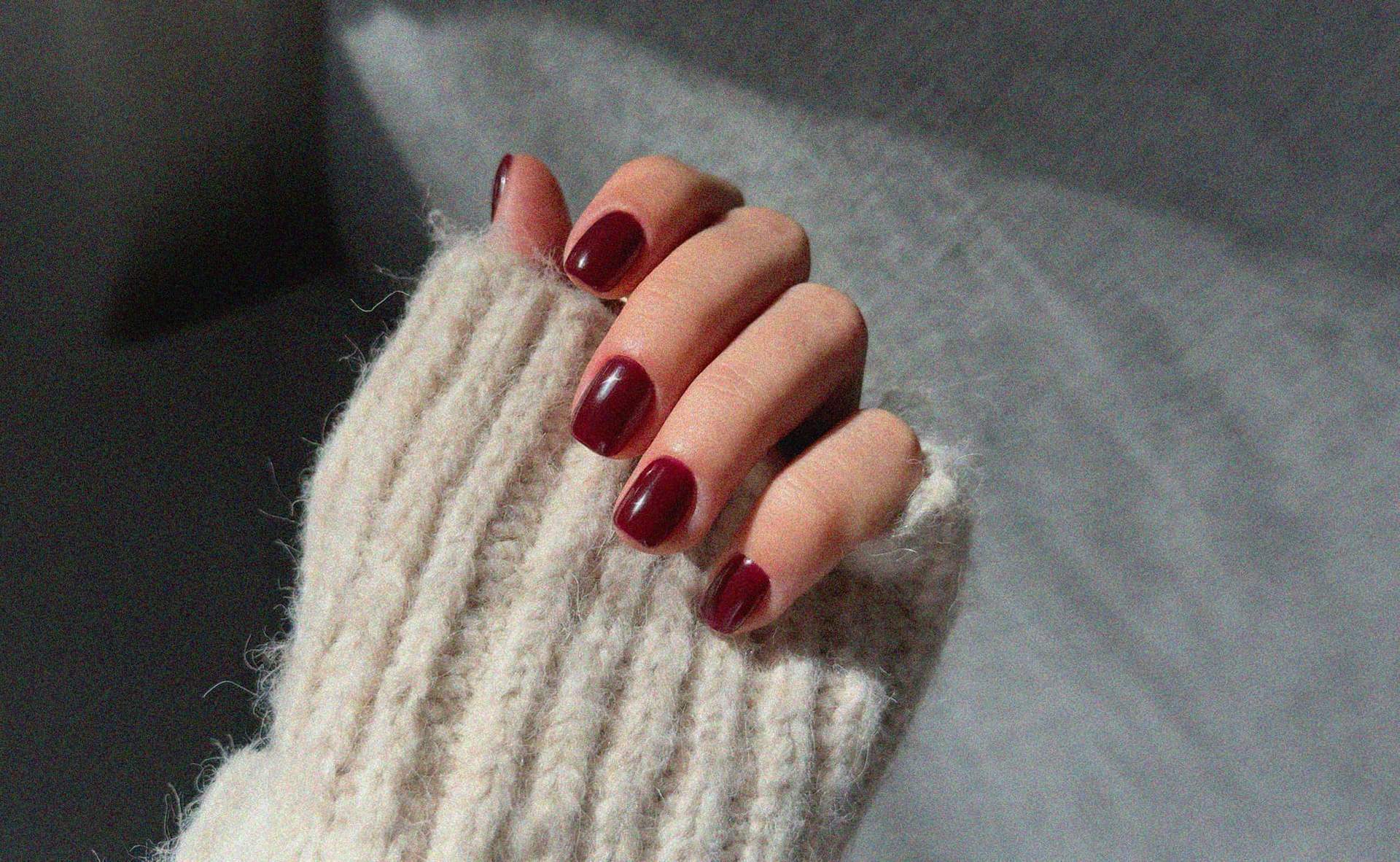
The finishing touches: cuticles, buffing, and one sheer coat
Push the cuticle back gently with a wooden stick after soaking, and leave the actual skin alone — cutting it invites inflammation and gives you that red, irritated border. Cuticle oil is the most underrated product in the category. Applied at night, it keeps the skin soft so it stops flaking, and it makes the whole nail look hydrated rather than chalky.
Buff the surface lightly with the softest side of a buffer, no more than once a fortnight, until the nail catches the light. Then, if you want the just-left-the-salon effect without colour, one coat of a sheer nude or a glossy clear over clean nails does it. It also seals the surface, so cooking spices and cleaning products don't stain. Speaking of which: wear gloves for washing up and for anything involving soil. A pair of rubber gloves protects a manicure better than any product on the shelf.
Why do my nails look dirty even right after washing my hands?
Usually it isn't dirt at all — it's soap residue and water trapped under the free edge, which dries to a whitish film and reads as grime. Hand soap also tends to sit in that gap because we rinse the tops of our hands and neglect the tips. Rinse with your fingers pointing down, then dry underneath deliberately. If the discolouration is yellow-toned and persistent, it's more likely staining from dark polish worn without a base coat.
Can bare nails ever look as good as a salon manicure?
Yes, and often better, because you're not hiding anything under a thick layer. The look depends on three things: an even shape across all ten nails, a tidy cuticle line, and a healthy shine — polish is optional once you have those. Keep a file, a soft brush and a bottle of cuticle oil somewhere visible, do the ten-minute reset on the same day each week, and bare nails start to look like a choice rather than a lapse.