It always happens the same way. One corner lifts, you worry at it through a long phone call, and by the end of the afternoon you are looking at ten nails that feel like wet paper. There is a whole conversation online right now about rescue treatments for exactly this moment, and I understand the appeal — but before you buy anything, it helps to know what you've actually done to your nails, because the fix follows from that.
What picking really takes off
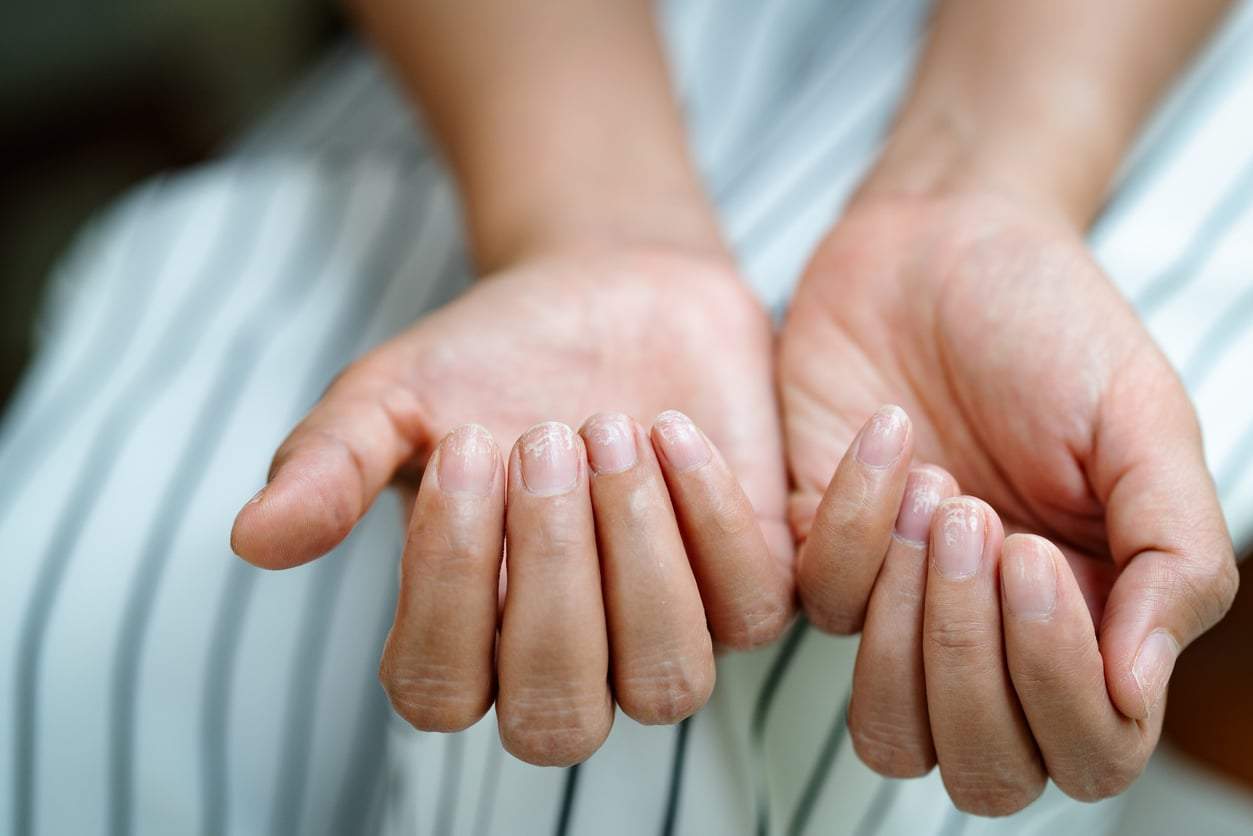
Gel doesn't simply sit on top of the nail. It's keyed to a surface that has been lightly buffed, which means when you peel it off in one satisfying sheet, you take layers of the nail plate with it. That's why the nail underneath looks dull and whitish, feels thin and bends when you press a button. It isn't dryness, and no cream will "repair" it, because the nail plate is made of dead keratin and cannot knit itself back together.
Which sounds grim, but it's actually freeing. There is nothing to heal — there is only new nail to grow, and your job is to protect what's there while it does. Once you accept that, the plan gets very short and very doable.
The two weeks of leaving it alone
Give yourself a fortnight with nothing on the nail. No gels, no builder, no strengthening polish with formaldehyde in it that makes the nail feel hard for a week and then brittle. Keep them short — shorter than feels elegant. Length is leverage, and leverage is how thin nails snap at the side wall and tear into the skin.
File in one direction with a fine-grit file rather than sawing back and forth, and round the corners slightly so nothing catches on wool. If a nail splits, don't tear it; file it down or, in an emergency, hold it together with a tiny strip of tape until you can tidy it properly.
Oil is the unglamorous thing that works
If you do one thing, make it oil — and not just at bedtime. A penetrating oil such as jojoba sinks into the nail plate and the surrounding skin, which makes the nail more flexible and far less likely to split. Flexible is what you want; hard is what cracks.
The trick is frequency, not product. Keep one bottle by the kettle, one in your bag, one on your desk, and use it whenever you notice your hands. Apply hand cream after washing up, and wear gloves for washing up at all — repeated wetting and drying is what turns a thin nail into a peeling one. If your cuticles are ragged, push them back gently after a shower and leave them attached. They're a seal, not decoration.
Get the next set taken off properly
When you go back to gels, and most of us do, the damage is almost always done at removal rather than application. A proper soak-off takes time: acetone, wraps or a bowl, and then gentle lifting of softened product, never scraping at something that's still stuck. If a technician is forcing it with a metal tool and you feel heat or drag, that's your cue to speak up.
Ask for minimal buffing before application, and consider a break between sets rather than an endless cycle of infills. And if a nail lifts away from the bed, becomes painful, changes colour or the skin around it swells, that's one for a doctor or a dermatologist rather than a beauty aisle — nail changes occasionally signal something that needs proper attention.
How long does it take for damaged nails to grow out?
Fingernails grow slowly — it generally takes several months for a nail to travel the full distance from base to free edge, so expect the ridged, thin section to be visible for a good chunk of that time. The encouraging part is that you'll see healthy, normal-looking nail emerging at the cuticle within a few weeks, which is the proof that the plan is working even when the tips still look rough.
Can I have a manicure while my nails recover?
Yes, and it often helps, because a tidy short nail gets knocked about less than a snagged one. Stick to a regular polish you can remove with an acetone-free remover, keep a base coat on to stop staining, and skip anything that needs filing of the natural nail to apply. A plain buffed nail with oil worked in daily looks far better than a chipped gel you're picking at in traffic.