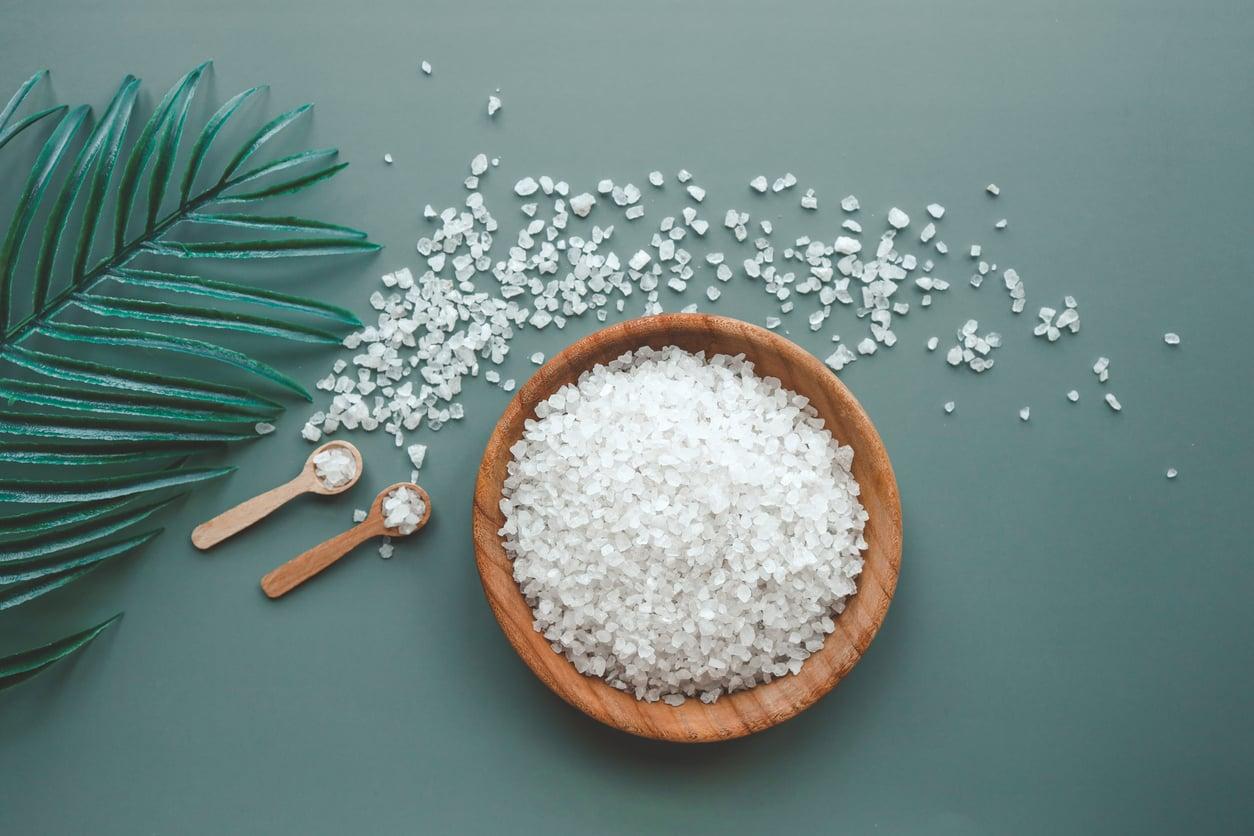
Walk down the bath and body aisle at almost any drugstore and your eyes will land on a plain white crystal, sold as Epsom salt or magnesium sulfate. It looks unremarkable. It costs next to nothing. And yet it keeps quietly reappearing in bathtubs and foot baths all over the world.
It's not a luxury cosmetic. It's not the latest wellness fad. But for years now, it has been a faithful companion to anyone who craves a little calm at the end of a long day.
What Epsom salt actually is
Despite the name, Epsom salt isn't table salt at all. It's magnesium sulfate, which is chemically very different from the stuff you cook with. The name comes from the English town of Epsom, where the mineral was reportedly first drawn from a natural spring.
Today, drugstores mostly sell it as a bath salt for body care — in its pure form, or scented, or blended with other minerals.
What people use it for most
For most people, it comes out when they want to unwind after a tiring day — usually in a bath or a foot soak. Popular ways to use it include:
- sprinkled into a warm bath for full-body relaxation
- in a foot bath, to rest tired feet after a long day of standing or walking
- in smaller amounts as a local compress for weary muscles
- and some even use it in the garden to feed their plants, since magnesium and sulfur can benefit the soil too
One thing worth remembering: Epsom salt applied to the skin or added to bathwater is not medicine, and it's no substitute for medical treatment. Think of it as a small comfort ritual, not a cure.
How to use it the right way
Always follow the instructions on the packaging, since the recommended amount can vary from brand to brand. As a rough guide, a full bathtub usually takes a few cups stirred into the warm water and mixed well before you climb in. A foot bath needs far less — a couple of tablespoons in a large basin is often enough to change how the water feels.
The point isn't the quantity. It's the quiet — the ten or fifteen minutes of stillness a bath can carve out of your day.
Many people like to pair it with warm water, because the heat alone helps loosen tense muscles, and the salt simply adds to that soothing, wind-down feeling. After your bath, rinse off with plenty of fresh water — leftover crystals on the skin can dry it out, especially if your skin is on the sensitive side.
How much does it cost
The price at the drugstore is surprisingly friendly. A larger pack, enough for several baths, typically starts at just a couple of dollars and climbs from there depending on the size and brand.
Choose a scented version or one enriched with other minerals and you'll pay a little more than for the plain, unscented type — but overall, this is still one of the cheapest ways to make bath time feel a bit more special.
Who should be careful
Plenty of people use it without any trouble at all, but there are a few things worth keeping in mind.
If your skin dries out easily, or is broken or irritated, it's better to skip the soak until things settle down. And if you're pregnant, living with a chronic condition, or under dermatological care, it's always wise to check with your doctor or pharmacist before making it a regular habit. Every body has different needs, and Epsom salt isn't a one-size-fits-all answer.
So no, walking past those drugstore shelves you won't find a miracle. Just a simple, long-familiar mineral that generations have quietly slipped into their bathwater — whenever the end of the day calls for a little silence and a little slowing down.
Is Epsom salt the same as regular table salt?
No. Despite the name, Epsom salt is actually magnesium sulfate, which is chemically very different from the salt you cook with.
How much Epsom salt should I add to a bath?
As a general guide, a full bathtub takes a few cups stirred into warm water, while a foot bath needs far less — around a couple of tablespoons in a large basin. Always follow the instructions on the packaging, as amounts vary by brand.
Should I rinse off after an Epsom salt bath?
Yes, rinsing with plenty of fresh water is recommended. Leftover crystals on the skin can dry it out, especially if your skin is sensitive.
Who should avoid using Epsom salt?
If your skin dries out easily or is broken or irritated, it's best to wait. Anyone who is pregnant, has a chronic condition, or is under dermatological care should check with a doctor or pharmacist first.