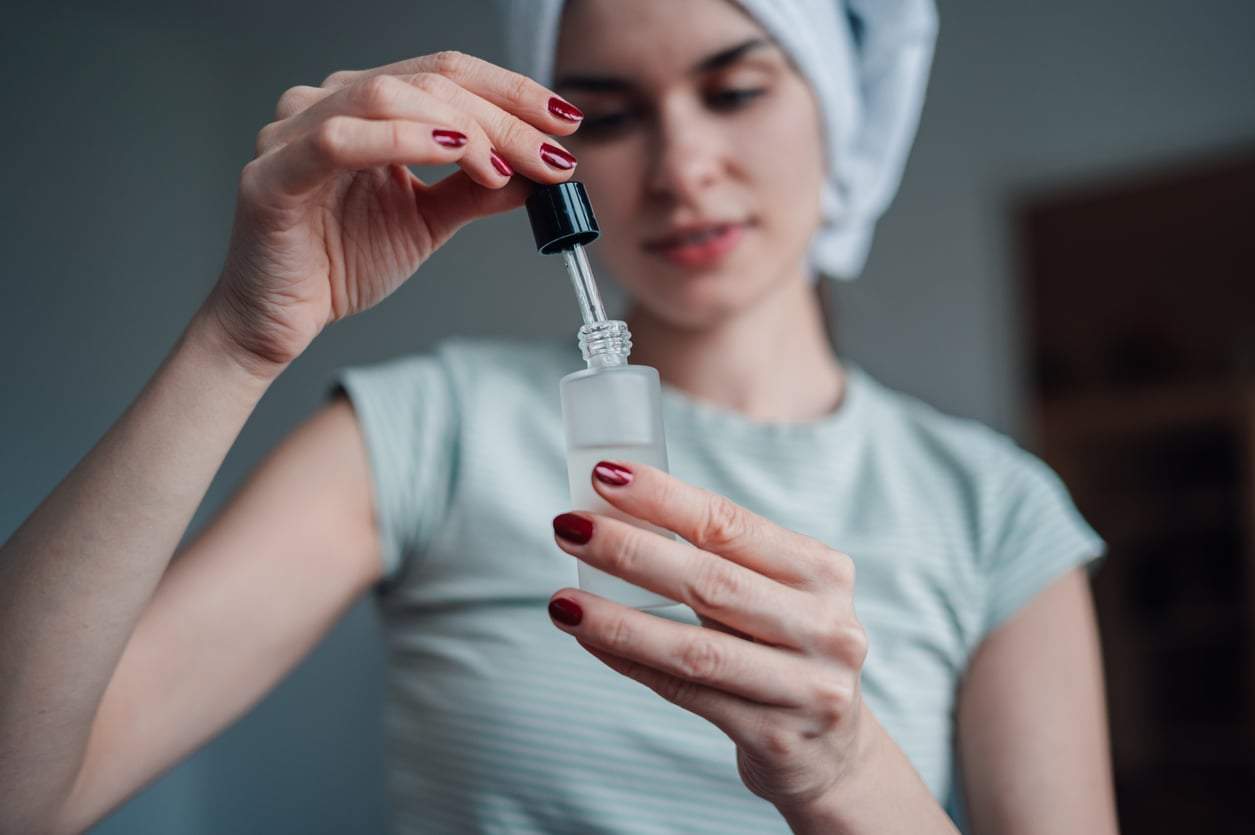
You're standing in front of the bathroom shelf, moisturizer in hand, and a website is already open on your phone so you can type in the Latin name of every ingredient. Then the panic hits. One word you don't recognize, another you read something scary about on a forum, and suddenly the whole product feels suspicious — even though two minutes ago you loved the way it felt on your skin. Sound familiar? You're far from alone.
When awareness turns into anxiety
Over the past few years, more of us are paying attention to what we put on our skin, and that's genuinely a good thing. The trouble starts when mindful shopping tips over into something else: constant vigilance, endless doubt, the nagging feeling that you can never really be sure what's in the jar.
Scrolling ingredient lists slowly becomes a ritual — a lot like someone who keeps checking their symptoms online and always expects the worst from every little sign.
The skincare world is packed with content that singles out one ingredient to frighten you, while the full formula, the concentration, and your own skin's reaction matter at least as much.
A long, complicated-looking list of names isn't automatically dangerous — just as a short, "natural"-sounding list is no guarantee that it's good for your skin.
Why fear feels so magnetic
Our brains are wired to hold on to negative information more tightly than the neutral or positive kind. Read one alarming article about a certain substance, and that image sticks — even when calmer, more balanced explanations come along later.
On top of that, there's our craving for a sense of control: if we check everything, we feel safe. But in skincare, over-checking does the opposite — it quietly takes away your peace of mind.
Many of us fall into this trap because social media speaks in fast, simple messages: good or bad, toxic or clean. Reality is far more nuanced — but fewer people click on a nuanced answer than on an alarming headline.
What happens when everything looks suspicious
Treat every single ingredient as a threat, and sooner or later you lose the joy of the routine itself. Your evening skincare — once a relaxing moment just for you — starts to feel tense.
Some people get so spooked that they abandon products that were working fine, then switch to new, unfamiliar brands they know even less about. And the whole cycle starts over.
This kind of anxious consumer behavior often means losing exactly the stability your skin needs. Because skin doesn't love constant switching and endless experimenting — it thrives on a predictable, well-tested routine.
How to find your way back to a calmer approach
This isn't about shutting your eyes and not caring what goes on your face. It's about finding the balance between attention and trust. It helps to pick one or two reliable sources you read regularly, instead of chasing fresh, unverified opinions every single time.
If a product works for you, if your skin responds well to it, that's at least as meaningful a signal as any list online.
When you try something new, it's enough to watch how your skin reacts: is there itching, redness, discomfort? That's far more reliable feedback than a random forum comment. Good dermatological advice tends to lean on this too — not on demonizing a single ingredient.
Rebuilding trust in small steps
It really helps to consciously limit how much time you spend combing through ingredient lists. Just as an endless stream of news eventually wears you out, constant ingredient-hunting drains the energy you could be pouring into your skincare — and into simply enjoying the moment.
Smoothing on a cream can be a few carefree minutes, not another decision where you're bound to get something wrong.
Over time, it's worth giving some of that trust back to yourself, too. You know your skin best — your own experience, what works and what doesn't. That kind of inner knowledge is worth just as much as any outside flood of often-contradictory information.
Is a long ingredient list a bad sign?
Not at all. A long, complex-looking list isn't automatically dangerous, and a short, natural-sounding one doesn't guarantee it's good for your skin. The full formula, the concentration, and how your skin reacts all matter more than the length of the label.
Why do I always expect the worst when I read about ingredients?
Our brains hold on to negative information more strongly than neutral or positive facts. One scary article can stick with you even after you read calmer, more balanced explanations later on.
How can I tell if a new product actually suits me?
Pay attention to how your skin responds — watch for itching, redness, or discomfort. That direct feedback is far more reliable than an unfamiliar forum comment.
Is it bad to switch skincare products often?
Skin generally prefers a predictable, well-tested routine over constant switching and experimenting. Abandoning products that work for you can cost you the very stability your skin needs.