Your nails are one of the body's most sensitive early-warning systems — often reacting to an internal imbalance months before any other symptom appears. Thyroid dysfunction is one of the most commonly overlooked causes of nail problems, and doctors say it's frequently misread for years while people keep reaching for vitamin supplements. The real issue, however, may lie in that small, butterfly-shaped gland in your neck.
The five signs below show up repeatedly in people living with thyroid disease — and that's no coincidence. If several of them appear at the same time, it's worth talking to your doctor rather than treating your nails in isolation.
1. Vertical ridges running down the nail
If you notice thin parallel lines running from the base of your nail to the tip, this pattern is often linked to hormonal imbalance. An underactive or overactive thyroid can slow down or speed up nail cell division, resulting in an uneven, ridged surface. Many people try to buff them away — but because these ridges originate in deeper layers, they won't truly improve until the underlying cause is addressed.
2. Peeling, splitting nails that break at the slightest thing
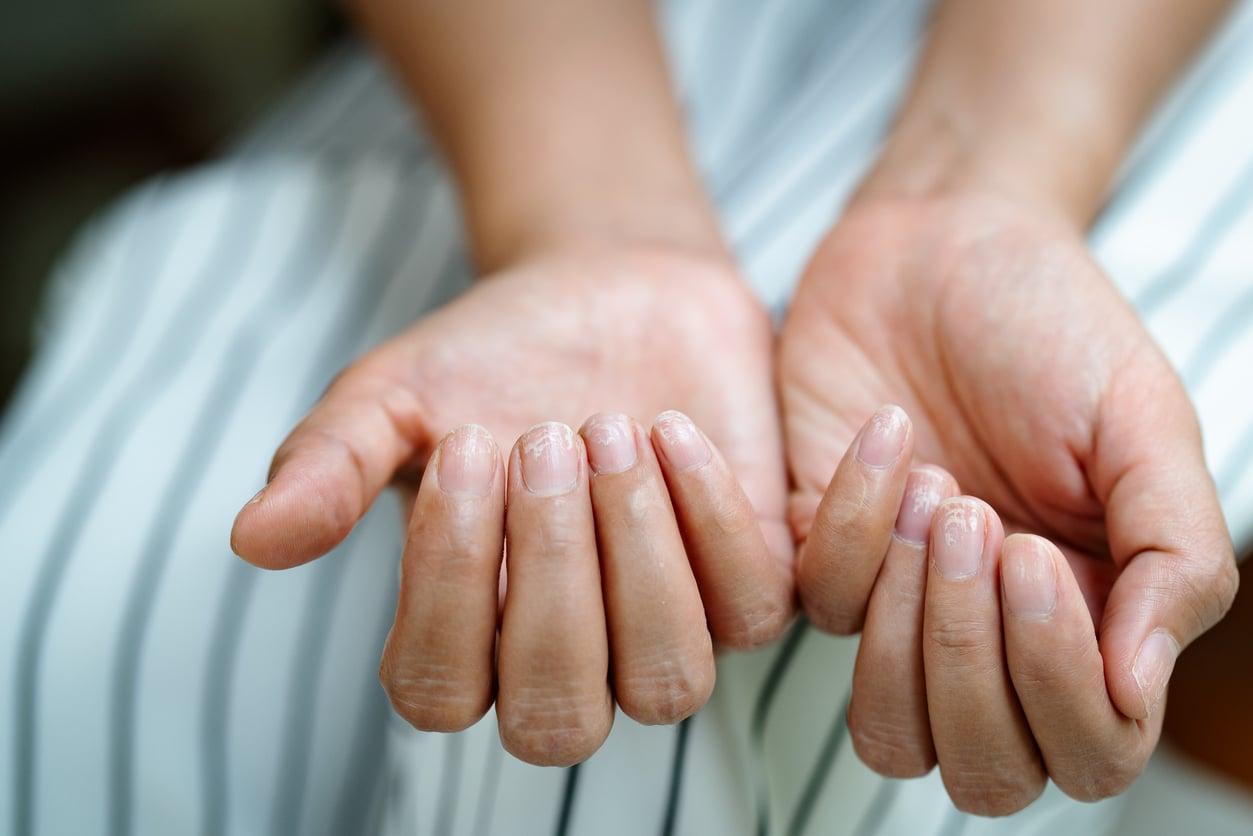
When your nail starts splitting into thin, papery layers, it's easy to blame dryness or too many manicures. But in cases of hypothyroidism, keratin production slows down, leaving the nail plate thinner and structurally weaker. Even the most ordinary movements — washing dishes or pulling open a lid — can cause a break. This symptom tends to be especially noticeable when the skin on your hands is also drier and flakier than usual.
3. The nail lifting away from the nail bed (onycholysis)
In a condition called onycholysis, the front edge of the nail separates from the pink nail bed beneath it, leaving a white or yellowish gap. It's often mistaken for a fungal infection — and a secondary infection can indeed develop — but in cases of hyperthyroidism, the root cause is often excess thyroid hormone disrupting blood supply to the nail bed. If your nail painlessly but persistently lifts and doesn't respond to antifungal treatment, a blood panel may be in order.
4. Spoon-shaped nails (koilonychia)
Koilonychia is easy to recognize: the center of the nail dips inward while the edges curve upward, giving it the look of a tiny spoon. It's classically associated with iron-deficiency anemia, but medical literature also links it to autoimmune thyroid conditions like Hashimoto's thyroiditis — because hormonal disruption can impair the body's ability to absorb nutrients properly. If your nail shape doesn't improve even after addressing iron levels, it may be worth looking further.
5. Yellowish discoloration combined with unusually slow growth
If your nails are growing noticeably more slowly than before and have taken on a pale yellow or grayish tint, this is a classic pattern seen in hypothyroidism, where a sluggish metabolism affects nail cell turnover. Nail polish or closed-toe shoes can easily hide it — but if the discoloration and slow growth appear on multiple nails at once, it's worth pairing that observation with other low-thyroid symptoms like persistent fatigue, cold sensitivity, or thinning hair.
A single broken nail means very little on its own — everyday wear, dishwashing, or a bad manicure is more than enough to explain it. But when these signs appear together, return month after month, and your skin, hair, or energy levels are also shifting, your nails may be the one part of your body quietly trying to tell you something important.
Can nail changes really indicate a thyroid problem?
Yes. The nail plate is highly sensitive to hormonal shifts. Thyroid dysfunction — both underactive and overactive — can alter nail cell growth, keratin production, and blood supply to the nail bed, all of which show up as visible changes in the nails.
How many of these signs need to be present before I see a doctor?
If two or more of these nail changes appear at the same time, especially alongside other symptoms like fatigue, hair thinning, or unusual sensitivity to cold or heat, it's a good idea to get a thyroid function test. A simple blood test can rule it in or out quickly.
Will treating the thyroid problem fix my nails?
In most cases, yes. Once the underlying hormonal imbalance is properly managed, nail health tends to improve gradually over several months — since nails grow slowly, it takes time for the healthier new growth to replace the affected nail plate.
Is onycholysis always a sign of thyroid disease?
Not always — it can also be caused by fungal infections, trauma, or certain medications. However, if it persists and doesn't respond to antifungal treatment, thyroid dysfunction is worth investigating as a possible root cause.
Could these nail signs be caused by something else entirely?
Yes, some of these signs — like spoon-shaped nails or vertical ridges — can have other causes, including iron deficiency or normal aging. The key signal is when several of these changes occur together over months, especially alongside other systemic symptoms.