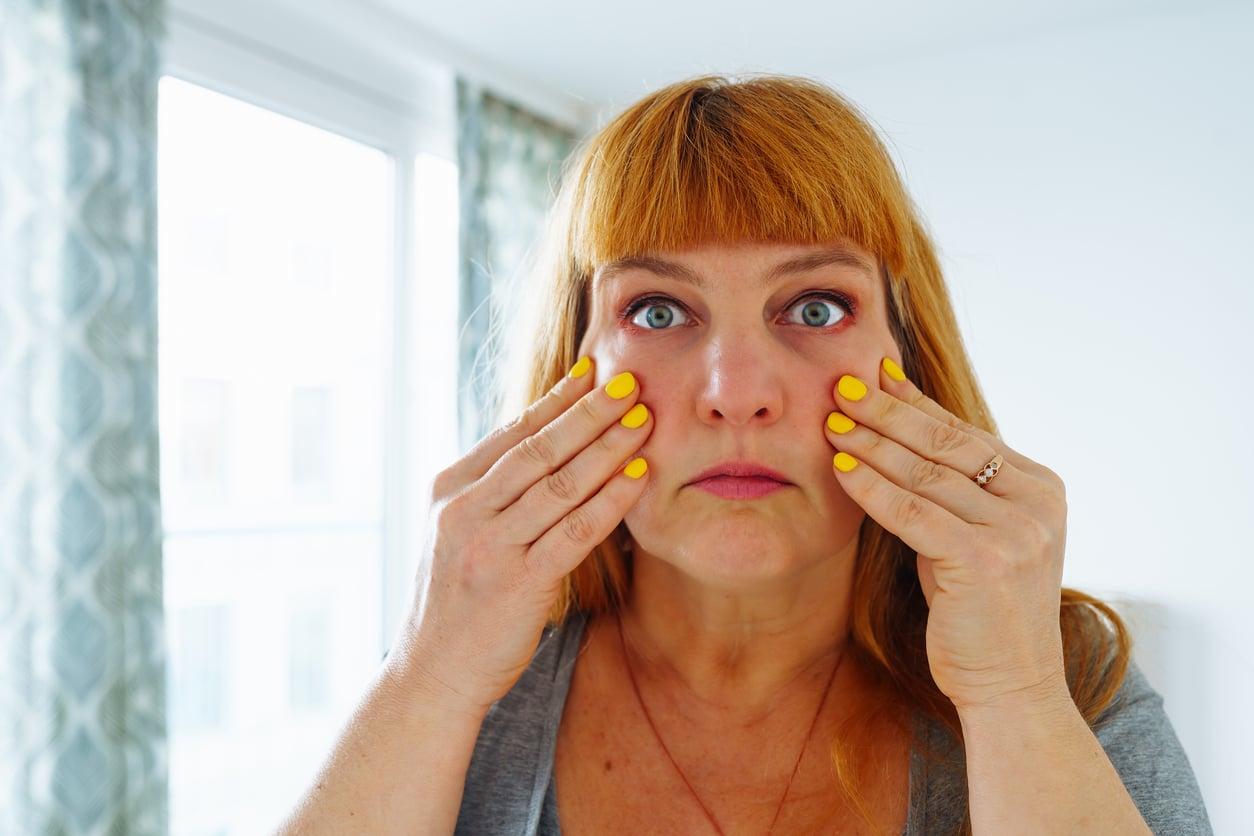
The liver is one of the hardest-working organs in the body — constantly filtering toxins, breaking down fats, and regulating hormones. But when it becomes overloaded, the first warning signs often don't show up where you'd expect. Instead, they appear on the most delicate area of your face: the skin around your eyes.
Traditional Chinese medicine has linked liver health to eye health for thousands of years. Western medicine, meanwhile, studies the connections between skin changes and markers like cholesterol levels, bilirubin, and liver enzyme panels. The two approaches differ in method, but agree on one thing: the area around your eyes can reveal a great deal about what's happening inside your body. Here are the three signs worth paying attention to.
1. A yellowish tint in the whites of your eyes
This is one of the most recognizable — and medically well-documented — signs of liver stress. When the liver can't process and eliminate bilirubin fast enough (the yellowish pigment produced when red blood cells break down), it builds up in the body's tissues. The first place it typically becomes visible is the whites of the eyes, medically known as the sclera.
This is called jaundice — or icterus in medical terminology. A mild case doesn't automatically signal a serious problem, but if it persists, it should never be ignored.
The underlying causes can range from bile duct obstruction and liver inflammation to simple overload triggered by poor diet, alcohol consumption, or certain medications. It's worth knowing that a slightly yellowish tint in the whites can sometimes have harmless explanations — like dehydration or poor sleep — so this sign alone isn't a diagnosis. But if it sticks around for more than a few days, see a doctor.
2. Persistent dark circles and brownish pigmentation under the eyes
Dark circles are a staple of beauty magazine troubleshooting, almost always blamed on lack of sleep or tiredness. But the reality is more nuanced. According to traditional Chinese medicine, the under-eye area is energetically connected to the liver and kidneys — and stubborn, long-lasting bluish-brown discoloration in that zone is often associated with a slowdown in the liver's detoxification function.
Western dermatology explains this through hyperpigmentation and microcirculation disruption, both of which can be worsened by chronic stress, a high-sugar or high-fat diet, and poor hydration — exactly the same factors that put extra strain on the liver. If your dark circles don't budge despite good sleep and plenty of water, it may be worth looking more closely at your diet and liver health. The two are more connected than most people realize.
3. Small, yellowish fatty deposits on the eyelids
This third sign is less well-known but medically well-described: xanthelasma. These are small, slightly raised, yellowish, fat-containing deposits that appear on the eyelids — typically near the inner corner of the eye. They're made up of cholesterol and lipid buildup, and while they're painless on their own, they frequently occur alongside elevated blood lipid levels — something the liver directly controls, since it's responsible for both producing and breaking down cholesterol.
Ophthalmology and dermatology literature have long flagged xanthelasma as a visual signal worth investigating. The deposits themselves aren't dangerous, but they warrant a check of your blood lipid levels and liver function, as they can indicate an underlying disruption in the body's metabolic balance. Many people treat them as a cosmetic issue and have them removed — without ever addressing the root cause.
What should you do if you notice these signs?
If you spot even one of these three signs on yourself, the first step is not to panic — but to pay closer attention to your body. The liver has a remarkable ability to regenerate, and in many cases, lifestyle changes alone can make a real difference: a more balanced diet, adequate hydration, cutting back on alcohol, and reducing processed foods. That said, if any of these signs persist or worsen, a medical evaluation is essential. These changes around your eyes are signals, not diagnoses — only blood work and a proper examination can identify the true cause.
Can dark circles really be a sign of liver problems?
They can be, especially when they're persistent and don't improve with rest or hydration. Traditional Chinese medicine and Western dermatology both recognize a connection between liver function and under-eye discoloration, though a proper diagnosis always requires medical testing.
Is jaundice always a serious medical emergency?
Not always. Mild yellowing of the eye whites can sometimes have harmless causes like dehydration or sleep deprivation. However, if the yellowing is persistent or worsening, it should always be evaluated by a doctor, as it can point to bile duct issues, liver inflammation, or other conditions.
What is xanthelasma and should I be worried about it?
Xanthelasma are small yellowish deposits of fat and cholesterol that appear on the eyelids. They're not painful or dangerous on their own, but they can signal elevated blood lipid levels and a strain on the liver's ability to regulate fat metabolism, so it's worth getting a check-up if you notice them.
Can improving my diet really help these symptoms?
In many cases, yes. Since the liver is central to fat metabolism, detoxification, and hormone regulation, dietary changes — reducing alcohol, processed foods, and excess sugar while increasing hydration — can genuinely support liver recovery. Persistent symptoms, however, always need professional medical attention.